Loading...
Done
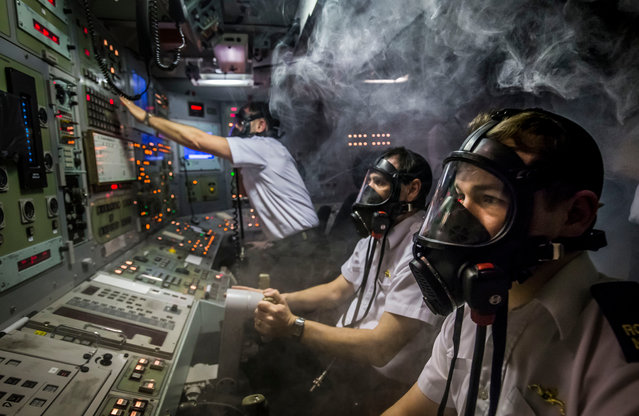
Members of the Royal Navy respond to a simulated fire in a Vanguard-class submarine control room training facility at Clyde naval base in Faslane, Scotland on January 21, 2016. (Photo by Photograph: Danny Lawson/PA Wire)

Members of the Royal Navy respond to a simulated fire in a Vanguard-class submarine control room training facility at Clyde naval base in Faslane, Scotland on January 21, 2016. (Photo by Photograph: Danny Lawson/PA Wire)
Details
22 Jan 2016 11:14:00
Charlize Theron attends the “Atomic Blonde” World Premiere at Stage Theater on July 17, 2017 in Berlin, Germany. (Photo by Alamy Stock Photo)

Cast member Charlize Theron attends the “Atomic Blonde” World Premiere at Stage Theater on July 17, 2017 in Berlin, Germany. (Photo by Alamy Stock Photo)
Details
23 Jul 2017 07:47:00
2012 MOSCOW THERMONUCLEAR APOCALYPSE

2012 MOSCOW THERMONUCLEAR APOCALYPSE
Details
05 Jun 2012 13:38:00
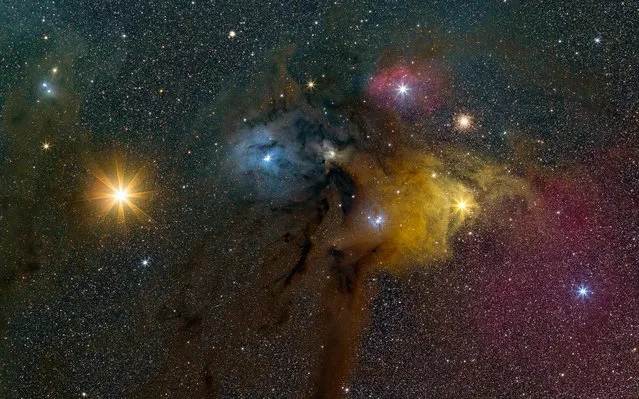
Mars and its Rival Antares and the Rho Ophiuchi cloud complex. (Photo by Phil Hart/CWAS/The Guardian)

These spectacular images of the universe are the finalists in the 2016 CWAS “David Malin” awards. The annual competition, which celebrates the best astronomy images taken by Australian photographers, is part of AstroFest 2016. The winners will be announced on 16 July. An associated exhibition opens the following day at the CSIRO Parkes Observatory visitors centre, and a second exhibition will also travel to selected venues around Australia. Here: Mars and its Rival Antares and the Rho Ophiuchi cloud complex. (Photo by Phil Hart/CWAS/The Guardian)
Details
12 Jul 2016 12:08:00
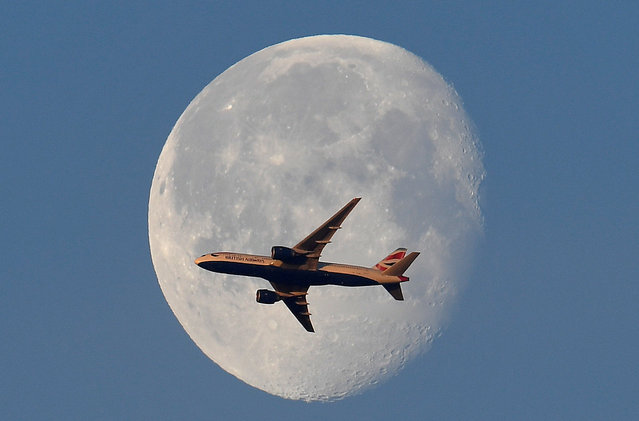
A British Airways passenger plane flies in front of the moon above London, Britain, May 3, 2018. (Photo by Toby Melville/Reuters)

A British Airways passenger plane flies in front of the moon above London, Britain, May 3, 2018. (Photo by Toby Melville/Reuters)
Details
21 Feb 2019 00:03:00
Juno, a Beluga whale, greets a young viewer at the Mystic aquarium in Connecticut, USA on December 5, 2015. (Photo by Tim Clayton/Corbis)

Juno, a Beluga whale, greets a young viewer at the Mystic aquarium in Connecticut, USA on December 5, 2015. (Photo by Tim Clayton/Corbis)
Details
07 Dec 2015 12:05:00
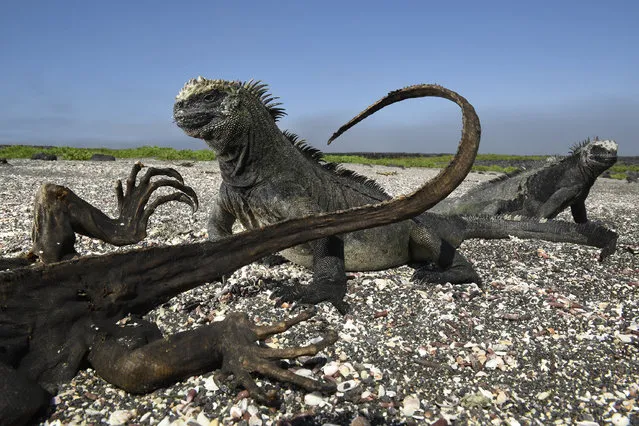
Galapagos – Rocking the Cradle: Four major ocean currents converge along the Galapagos archipelago, creating the conditions for an extraordinary diversity of animal life, April 25, 2016. The islands are home to at least 7,000 flora and fauna species, of which 97 percent of the reptiles, 80 percent of the land birds, 50 percent of the insects and 30 percent of the plants are endemic. The local ecosystem is highly sensitive to the changes in temperature, rainfall and ocean currents that characterize the climatic events known as El Niño and La Niña. These changes cause marked fluctuations in weather and food availability. Many scientists expect the frequency of El Niño and La Niña to increase as a result of climate change, making the Galapagos a possible early-warning location for its effects. (Photo by Thomas P. Peschak for National Geographic/World Press Photo)

Galapagos – Rocking the Cradle: Four major ocean currents converge along the Galapagos archipelago, creating the conditions for an extraordinary diversity of animal life, April 25, 2016. The islands are home to at least 7,000 flora and fauna species, of which 97 percent of the reptiles, 80 percent of the land birds, 50 percent of the insects and 30 percent of the plants are endemic. (Photo by Thomas P. Peschak for National Geographic/World Press Photo)
Details
16 Apr 2018 00:01:00
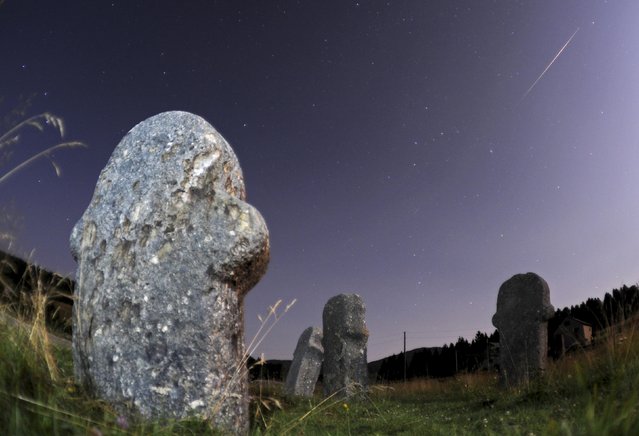
A meteor streaks over the sky during the Perseid meteor shower at the Maculje archaeological site near Novi Travnik August 12, 2014. According to NASA, the annual Perseid meteor shower reaches its peak on August 12 and 13 in Europe. The fireballs from the meteorites are fast and plentiful, although a nearly full moon (Supermoon) makes it difficult to view them this year, the agency adds. (Photo by Dado Ruvic/Reuters)

A meteor streaks over the sky during the Perseid meteor shower at the Maculje archaeological site near Novi Travnik August 12, 2014. According to NASA, the annual Perseid meteor shower reaches its peak on August 12 and 13 in Europe. The fireballs from the meteorites are fast and plentiful, although a nearly full moon (Supermoon) makes it difficult to view them this year, the agency adds. (Photo by Dado Ruvic/Reuters)
Details
14 Aug 2014 10:45:00