Loading...
Done
In this June 29, 2015 photo, forlorn buildings are seen at Hashima Island, commonly known as Gunkanjima, which means “Battleship Island”, off Nagasaki, Nagasaki Prefecture, southern Japan. (Photo by Eugene Hoshiko/AP Photo)

In this June 29, 2015 photo, forlorn buildings are seen at Hashima Island, commonly known as Gunkanjima, which means “Battleship Island”, off Nagasaki, Nagasaki Prefecture, southern Japan. The island is one of 23 old industrial facilities seeking UNESCO's recognition as world heritage “Sites of Japan's Meiji Industrial Revolution” meant to illustrate Japan's rapid transformation from a feudal farming society into an industrial power at the end of the 19th century. UNESCO's World Heritage Committee is expected to approve the proposal during a meeting being held in Bonn, Germany, through July 9. (Photo by Eugene Hoshiko/AP Photo)
Details
01 Jul 2015 13:41:00
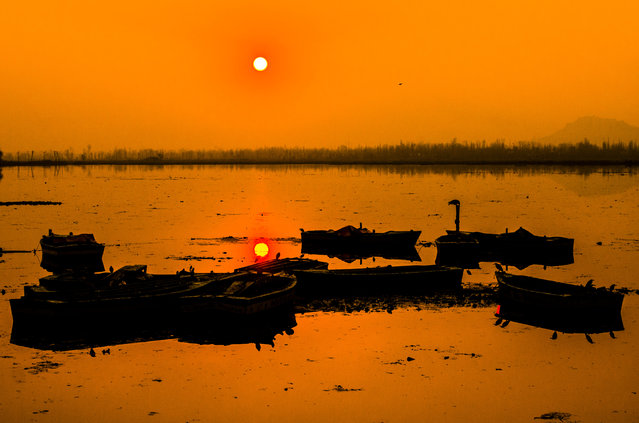
Boats moored in the middle of Dal lake are silhouetted against the setting sun on January 15, 2018 in Srinagar, the summer capital of Indian administered Kashmir, India. Kashmir, the Muslim majority state, known as the “Paradise on Earth” has for centuries captured the imagination of many writers, poets and film makers and is integral to the tourist trade. Kashmir has been a contested land between nuclear neighbors India and Pakistan since 1947, the year both the countries attained freedom from the British rule. (Photo by Yawar Nazir/Getty Images)

Boats moored in the middle of Dal lake are silhouetted against the setting sun on January 15, 2018 in Srinagar, the summer capital of Indian administered Kashmir, India. Kashmir, the Muslim majority state, known as the “Paradise on Earth” has for centuries captured the imagination of many writers, poets and film makers and is integral to the tourist trade. Kashmir has been a contested land between nuclear neighbors India and Pakistan since 1947, the year both the countries attained freedom from the British rule. (Photo by Yawar Nazir/Getty Images)
Details
03 Mar 2018 00:01:00
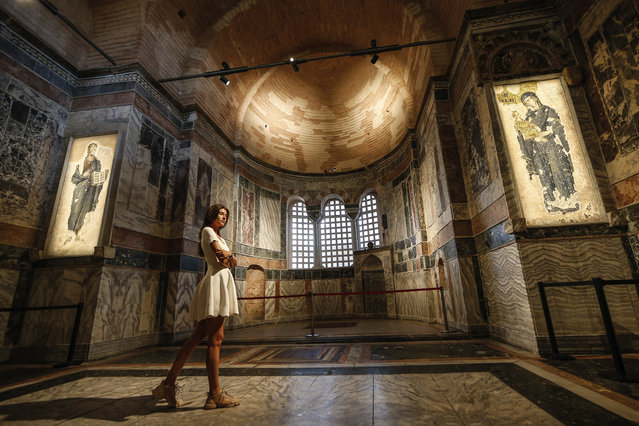
A woman visits St Savior in Chora church, known as Kariye in Turkish, in Istanbul, Friday, August 21, 2020. Turkey on Friday formally converted former Byzantine church, St Savior in Chora, into a mosque, a month after it similarly turned Istanbul's landmark Hagia Sophia into a Muslim house of prayer, drawing international rebuke. (Photo by Emrah Gurel/AP Photo)

A woman visits St Savior in Chora church, known as Kariye in Turkish, in Istanbul, Friday, August 21, 2020. Turkey on Friday formally converted former Byzantine church, St Savior in Chora, into a mosque, a month after it similarly turned Istanbul's landmark Hagia Sophia into a Muslim house of prayer, drawing international rebuke. (Photo by Emrah Gurel/AP Photo)
Details
09 Sep 2020 00:05:00
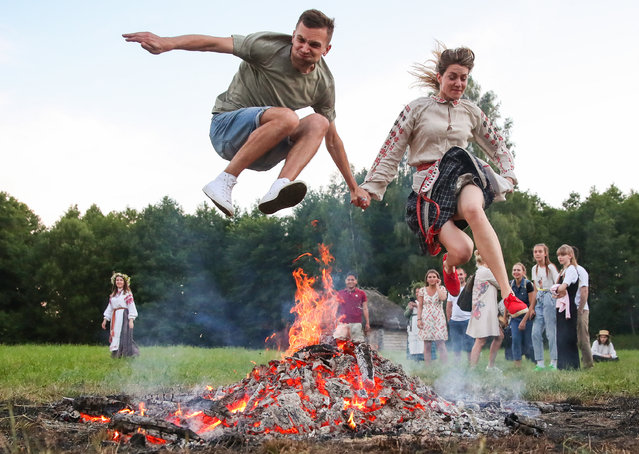
A man and a woman jump over a bonfire during Ivan Kupala Day celebrations held by the Belarusian State Museum of Folk Architecture and Rural Lifestyle in the village of Ozertso near Minsk, Belarus on July 4, 2020. Ivan Kupala Day, also known as Ivana-Kupala or Kupala Night, is a traditional pagan holiday celebrated in eastern Slavic cultures. Various rituals are traditionally performed on Kupala Night, including making flower wreaths, fortune-telling, jumping over bonfires, and burning a wheel-like effigy symbolizing the sun. (Photo by Natalia Fedosenko/TASS)

A man and a woman jump over a bonfire during Ivan Kupala Day celebrations held by the Belarusian State Museum of Folk Architecture and Rural Lifestyle in the village of Ozertso near Minsk, Belarus on July 4, 2020. Ivan Kupala Day, also known as Ivana-Kupala or Kupala Night, is a traditional pagan holiday celebrated in eastern Slavic cultures. Various rituals are traditionally performed on Kupala Night, including making flower wreaths, fortune-telling, jumping over bonfires, and burning a wheel-like effigy symbolizing the sun. (Photo by Natalia Fedosenko/TASS)
Details
23 Jan 2021 09:53:00
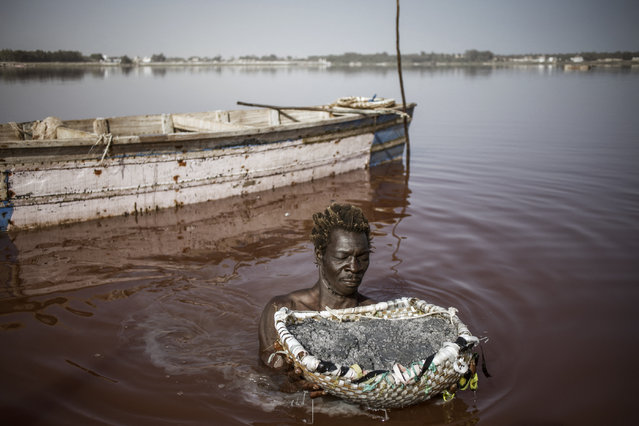
Toure, a Gambian salt harvester, holds a basket filled with  the salt collected from the crust of the bottom of the Lake Retba (Pink Lake) in Senegal on March 16, 2021. Lake Retba, divided from the Atlantic Ocean by a narrow corridor of dunes, owes its name to the pink waters caused by the Dunaliella salina algae and is known for its high salt content, up to 40% in some areas. (Photo by Marco Longari/AFP Photo)

Toure, a Gambian salt harvester, holds a basket filled with the salt collected from the crust of the bottom of the Lake Retba (Pink Lake) in Senegal on March 16, 2021. Lake Retba, divided from the Atlantic Ocean by a narrow corridor of dunes, owes its name to the pink waters caused by the Dunaliella salina algae and is known for its high salt content, up to 40% in some areas. (Photo by Marco Longari/AFP Photo)
Details
24 Mar 2021 10:29:00
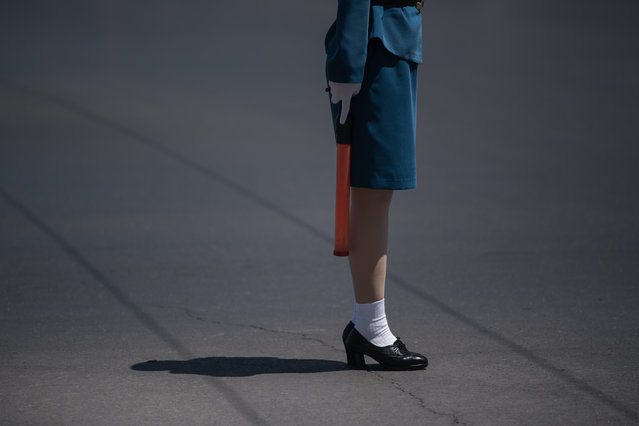
In a photo taken on June 5, 2017 a traffic security officer stands on duty at an intersection in Pyongyang. Officially known as traffic security officers but universally referred to as traffic ladies, they are chosen for their looks in a society that remains traditionalist in many respects. They must leave the role if they marry, and have a finite shelf-life, with compulsory retirement looming at just 26. The 300-odd ladies are unique to Pyongyang, which North Korean authorities are always keen to present in the best possible light despite their nuclear-armed country's impoverished status, and ensure a steady supply of photogenic young women who are the favourite subject of visiting tourists and journalists. (Photo by Ed Jones/AFP Photo)

In a photo taken on June 5, 2017 a traffic security officer stands on duty at an intersection in Pyongyang. Officially known as traffic security officers but universally referred to as traffic ladies, they are chosen for their looks in a society that remains traditionalist in many respects. They must leave the role if they marry, and have a finite shelf-life, with compulsory retirement looming at just 26. (Photo by Ed Jones/AFP Photo)
Details
21 May 2018 00:03:00
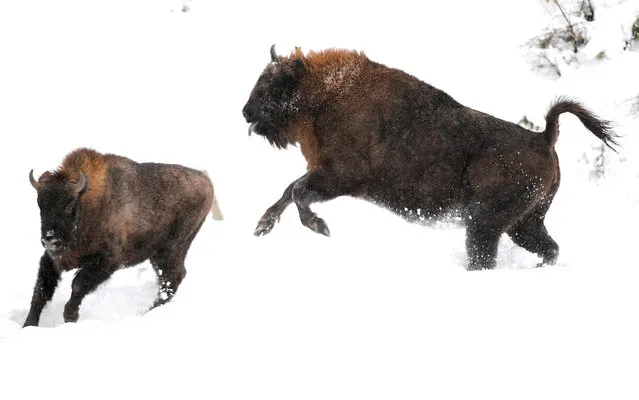
European bisons (also known as Wisent) at the Bison farm in Muczne, southeastern Poland, 30 December 2018. The Bison farm is a continuation of bison breeding in Bieszczady, which was started in 1963. Here visitors can admire the bison of Bialowieza-Caucasian line, also called the mountain race. The European Bison is the national animal of Poland. (Photo by Darek Delmanowicz/EPA/EFE)

European bisons (also known as Wisent) at the Bison farm in Muczne, southeastern Poland, 30 December 2018. The Bison farm is a continuation of bison breeding in Bieszczady, which was started in 1963. Here visitors can admire the bison of Bialowieza-Caucasian line, also called the mountain race. The European Bison is the national animal of Poland. (Photo by Darek Delmanowicz/EPA/EFE)
Details
06 Jan 2019 00:03:00
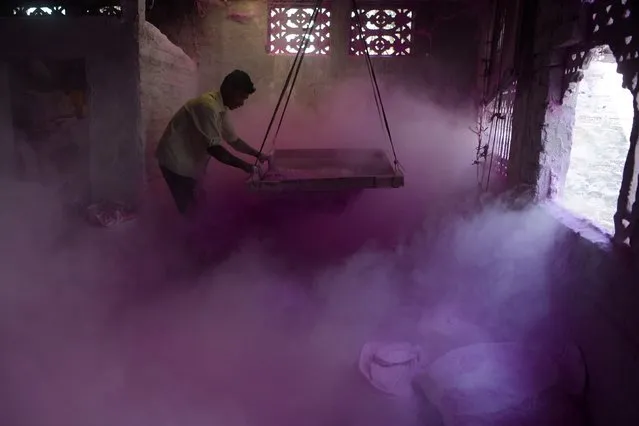
An Indian labourer sifts coloured powder, known as “gulal”, to be used during the forthcoming spring festival of Holi, inside a factory at Fulbari village on the outskirts of Siliguri on March 6, 2017. Holi, the popular Hindu spring festival of colours is observed in India at the end of the winter season on the last full moon of the lunar month, and will be celebrated on March 13 this year. (Photo by Diptendu Dutta/AFP Photo)

An Indian labourer sifts coloured powder, known as “gulal”, to be used during the forthcoming spring festival of Holi, inside a factory at Fulbari village on the outskirts of Siliguri on March 6, 2017. Holi, the popular Hindu spring festival of colours is observed in India at the end of the winter season on the last full moon of the lunar month, and will be celebrated on March 13 this year. (Photo by Diptendu Dutta/AFP Photo)
Details
08 Mar 2017 00:04:00