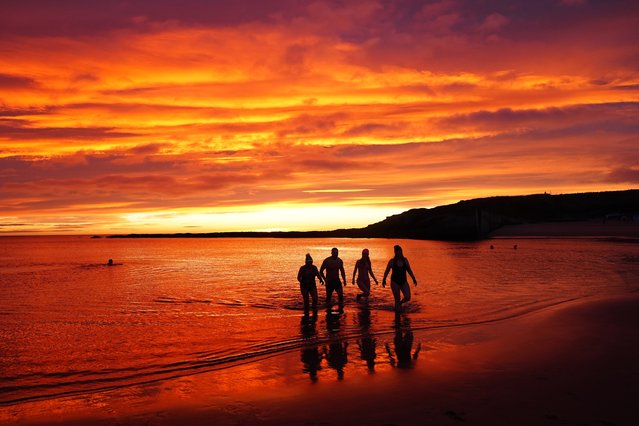
Early morning swimmers at Cullercoats Bay on the north east coast of England on Sunday, December 29, 2024. (Photo by Owen Humphreys/PA Images via Getty Images)
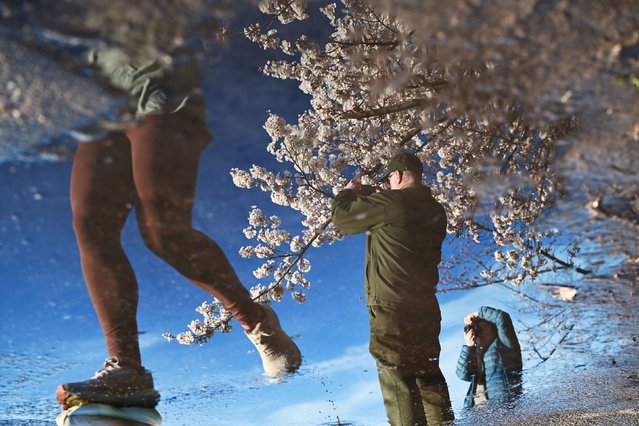
People take photos of blooming cherry blossoms in Washington, DC, on Tuesday, March 25, 2025. (Photo by Matt McClain/The Washington Post via Getty Images)
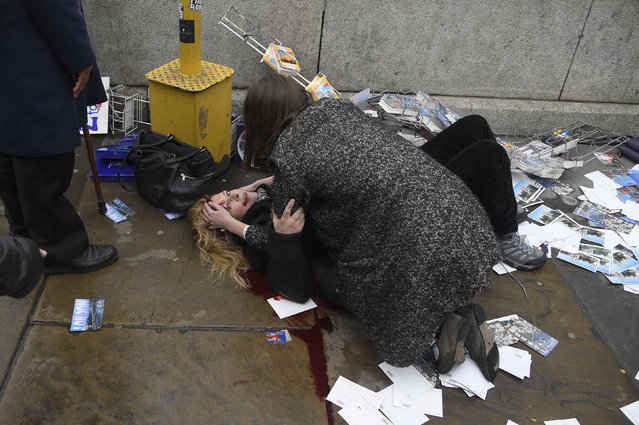
A woman lies injured after an incident on Westminster Bridge in London on Wednesday, March 22, 2017. A police officer has been stabbed near to the British Parliament and the alleged assailant shot by armed police. Scotland Yard report they have been called to an incident on Westminster Bridge where several people have been injured by a car. (Photo by Toby Melville/Reuters)
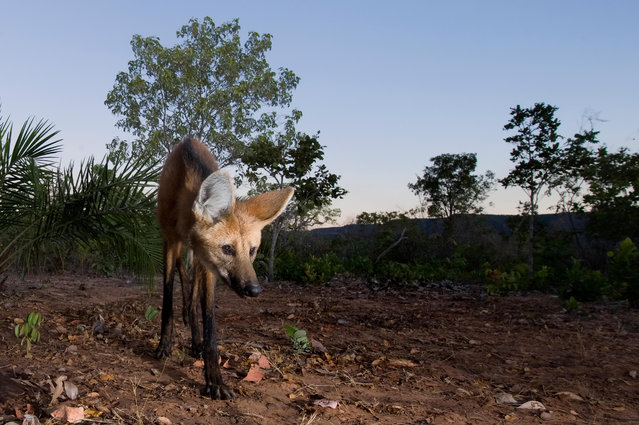
Global wildlife populations will decline by 67% by 2020 unless urgent action is taken to reduce human impact on species and ecosystems, warns the biennial Living Planet Index report from WWF (World Wide Fund for Nature) and ZSL (Zoological Society of London). From elephants to eels, here are some of the wildlife populations most affected by human activity. Here: The maned wolf is among the large mammals in the Brazilian Cerrado that are threatened by the increasing conversion of grasslands into farmland for grazing and growing crops. (Photo by Ben Cranke/Nature Picture Library/Alamy Stock Photo)
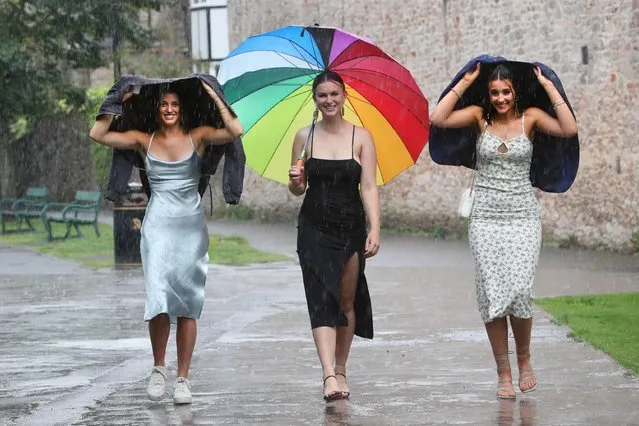
The Heavens opened as students from Wells Blue school year 13 pupils arrived at The Bishop's Palace in Wells, Somerset on June 30, 2022 for their end of year school prom. (Photo by Jason Bryant/Apex News)
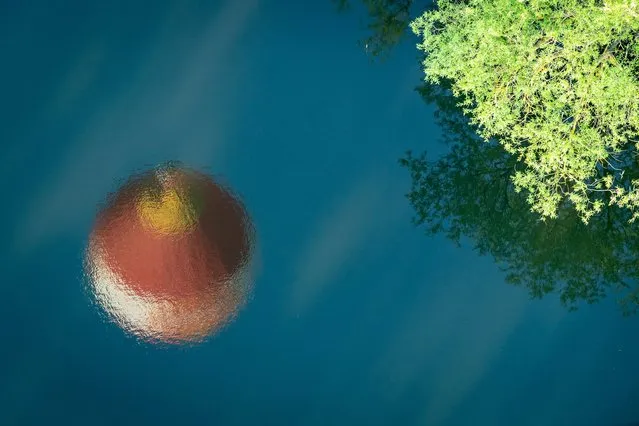
A hot air balloon competition called “Grudziadzkie Zawody Balonowe” is held in Lisie Katy, central-northern Poland, 14 May 2021. The competition is held for the eighteenth time. (Photo by Tytus Zmijewski/EPA/EFE)