Loading...
Done
Runners high-five children cheering from the sidewalk as they begin the half marathon during the Ottawa Race Weekend, which returned from a two-year hiatus due to the COVID-19 pandemic in Ottawa, Canada on Sunday, May 29, 2022. (Photo by Canadian Press/Rex Features/Shutterstock)

Runners high-five children cheering from the sidewalk as they begin the half marathon during the Ottawa Race Weekend, which returned from a two-year hiatus due to the COVID-19 pandemic in Ottawa, Canada on Sunday, May 29, 2022. (Photo by Canadian Press/Rex Features/Shutterstock)
Details
30 May 2022 04:31:00
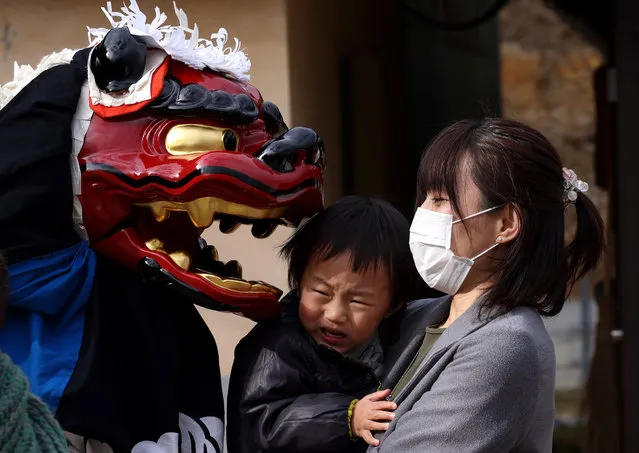
A performer wearing a lion mask performs the Ise Daikagura lion dance at the remote village of Yamanawa on February 08, 2021 in Ryuo, Japan. Ise Daikagura is a group of traditional Lion Dance performers who pray in front of farmers houses and businesses for good grain harvests and disease-free lives. Performers play sacred music using drums and flutes with two lion mask dancers. A lion mask is considered a symbol of God, who enters the house and performs in front of the Shinto God, a statue placed inside the house, mostly in the kitchen. These prayers are called “Kamodo Barai”. After the prayers, they are gifted with money, rice, sake and Japanese sweets from the householders. A group can travel for more than one hundred days to thousands of households and businesses throughout rural-villages in western Japan, and pray to those who are unable to visit the country’s most sacred shrine, the Grand Ise Shrine in Mie Prefecture. The group started its performance in the Edo era between 1603 to 1868 according to Japanese history. The Japanese government designated it as an important folk cultural national property in 1981. (Photo by Buddhika Weerasinghe/Getty Images)

A performer wearing a lion mask performs the Ise Daikagura lion dance at the remote village of Yamanawa on February 08, 2021 in Ryuo, Japan. Ise Daikagura is a group of traditional Lion Dance performers who pray in front of farmers houses and businesses for good grain harvests and disease-free lives. (Photo by Buddhika Weerasinghe/Getty Images)
Details
18 Feb 2021 09:27:00
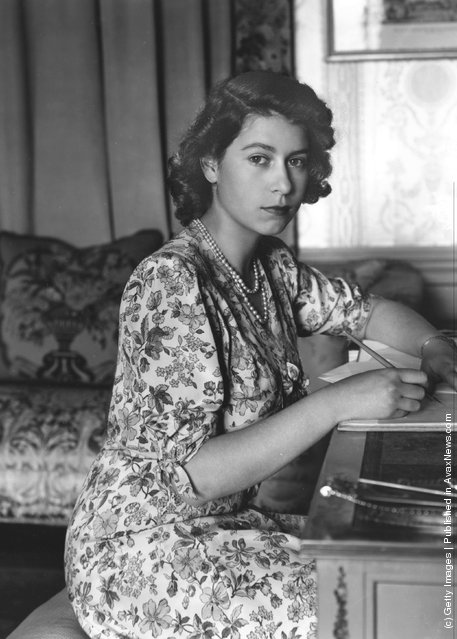
1944: Queen Elizabeth II (as Princess Elizabeth) writing at her desk in Windsor Castle, Berkshire

Queen Elizabeth II (as Princess Elizabeth) writing at her desk in Windsor Castle, Berkshire. (Photo by Lisa Sheridan/Studio Lisa/Getty Images). 30th May 1944
Details
24 Oct 2011 13:52:00


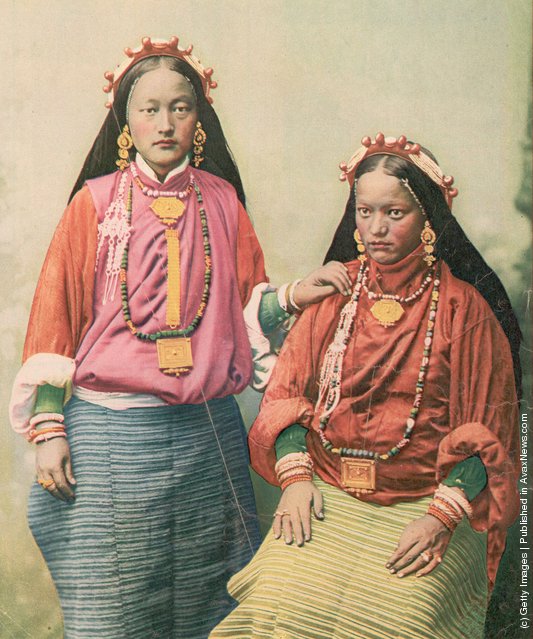
Two Tibetan women wearing traditional striped aprons, elaborate headdresses and abundant jewellery. Original Publication: From a photograph by Shephard. (Photo by Hulton Archive/Getty Images). Circa 1910
Details
27 Mar 2011 13:52:00
A man wearing a mouth-nose protection to protect against the coronavirus walks past a department store window with the words “BACK TO LIFE” in Schwerin, Germany, Thursday, April 15, 2021. (Photo by Jens Buettner/dpa via AP Photo)

A man wearing a mouth-nose protection to protect against the coronavirus walks past a department store window with the words “BACK TO LIFE” in Schwerin, Germany, Thursday, April 15, 2021. (Photo by Jens Buettner/dpa via AP Photo)
Details
11 Aug 2021 10:12:00
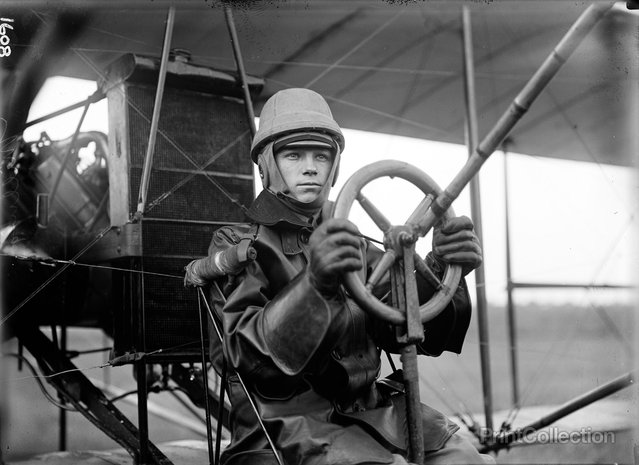
Aviation, Army, College Park. Tests of Curtiss Palne for Army, Single Control. Created by Harris & Ewing. Published in 1912.

Harris & Ewing Inc. photographed people, events, and architecture, particularly in Washington, D.C., during the period 1905-1945. Photo: Tests of Curtiss Palne for Army, Single Control. Created by Harris & Ewing. Published in 1912.
Details
18 Mar 2013 12:10:00
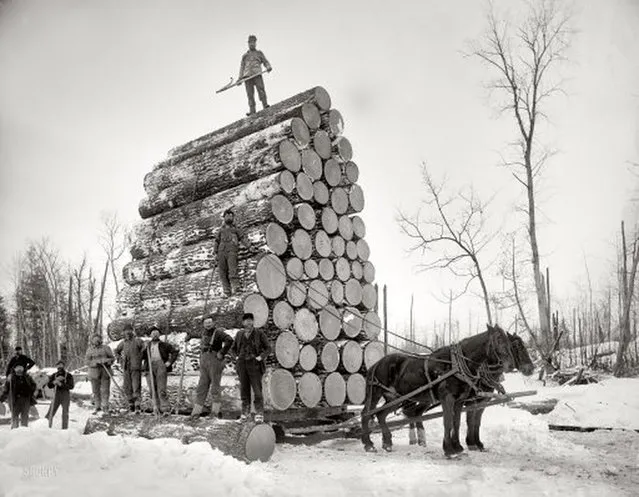
Workhorse In The past

This picture was taken in the 1890's and shows a group of loggers hauling a heavy load. It is hard to even picture how they got the logs stacked that high. It is also hard to imagine how they keep it from tipping over.
Details
26 Nov 2013 11:16:00
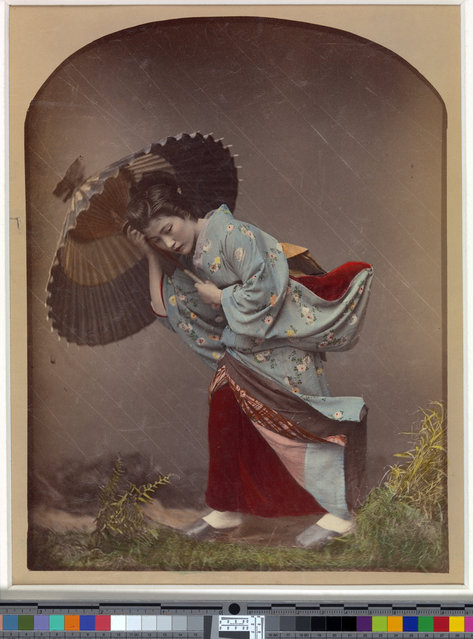
“Woman with Umbrella in Rain” by Raimund von Stillfried. Artist: Kusakabe Kimbei (Japanese, 1841–1934), 1870s. (Photo courtesy of The Metropolitan Museum of Art)

“Woman with Umbrella in Rain” by Raimund von Stillfried. Artist: Kusakabe Kimbei (Japanese, 1841–1934), 1870s. Commercial photography studios in Meiji-era Japan were renowned for the subtlety and refinement of their coloring techniques. This hand-tinted image of a young woman caught in a heavy rainstorm achieved its naturalistic effect by knitting together multiple strands of artifice: the greenery in the foreground was a studio prop; the flaps of the kimono were suspended by thin wires to create the impression of a strong wind; and long, diagonal marks were made on the negative to suggest streaks of rain. (Photo courtesy of The Metropolitan Museum of Art)
Details
12 May 2013 10:13:00