An initiate sprays out his fan as he enjoys the view from atop his father's shoulders during the ceremony in Mae Hong Son, Thailand, April 2016. (Photo by Claudio Sieber/Barcroft Images)
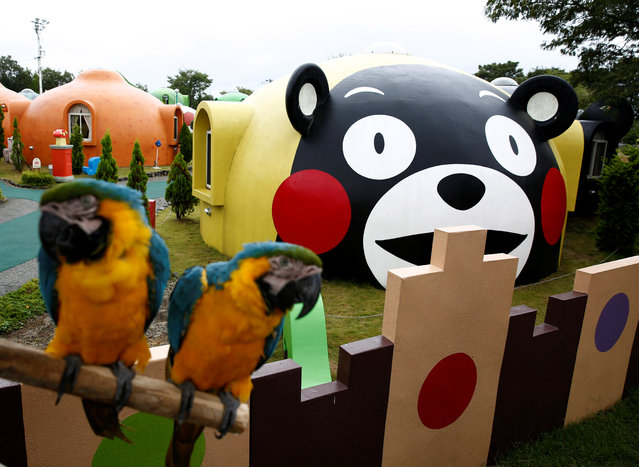
A quake-resistant dome house decorated with Japan's popular “Kumamon” bear character is pictured at the Aso Farm Land resort in Aso, Japan on November 6, 2017. Cabins modelled after Japanese sweets and made from polystyrene foam withstood last year's deadly earthquakes in Kumamoto prefecture. (Photo by Kim Kyung-Hoon/Reuters)
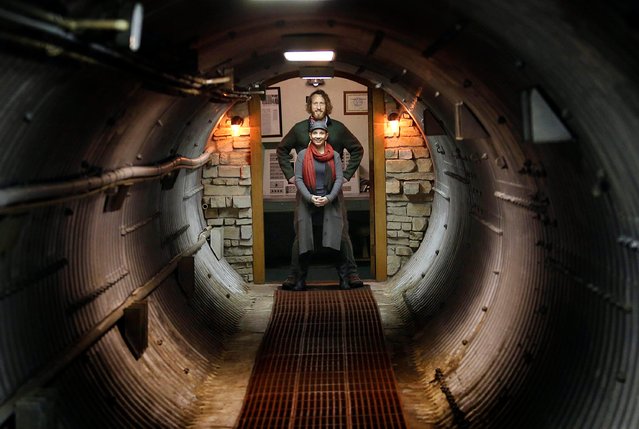
In this November 2, 2017 photo, Mathew Fulkerson and his wife Leigh Ann pose at their Subterra Airbnb located in a former underground missile silo base near Eskridge, Kan. It was designed to house a nuclear warhead six decades ago – but now, this Cold War silo is the perfect spot for a mini break at just $133 a night. (Photo by Thad Allton/The Topeka Capital-Journal via AP Photo)
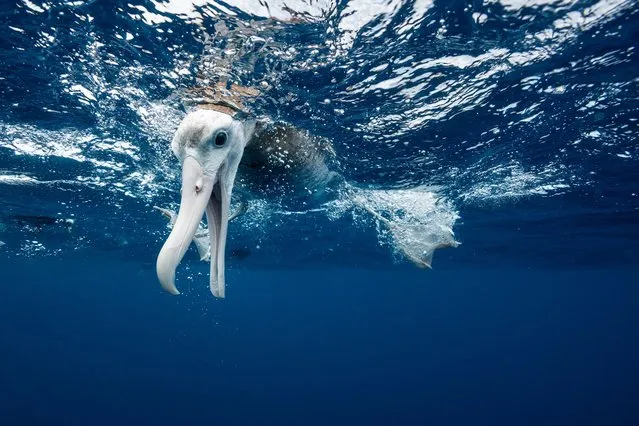
The endangered antipodean albatross, which is often caught in fishing nets, won most first-choice votes out of the more than 55,000 votes cast during the 2020 New Zealand’s bird of the year competition. (Photo by Wildestanimal/Getty Images)
On the November 24, 2025, children are making human faces by collecting fallen leaves in the forest in front of the Yuseong-gu Office in Daejeon. (Photo by Shin Hyeon-jong)
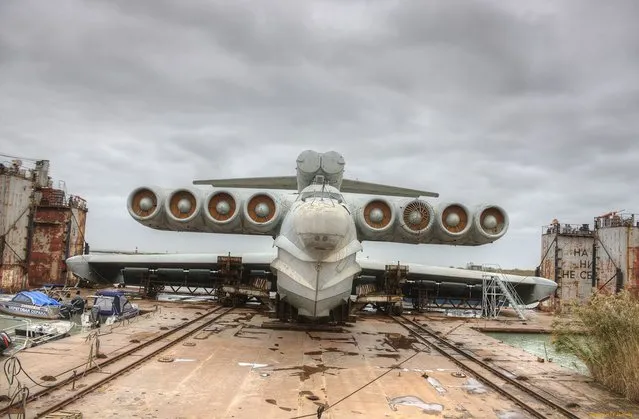
“The Lun-class ekranoplan (NATO reporting name Duck) was a ground effect vehicle (GEV) designed by Rostislav Evgenievich Alexeev and used by the Soviet and Russian navies from 1987 until sometime in the late 1990s. It “flew” using the lift generated by the ground effect of its large wings when close to the surface of the water – about four metres or less. Although they might look similar and/or have related technical characteristics, ekranoplans like the Lun are not aircraft, seaplanes, hovercraft, or hydrofoils – ground effect is a separate technology altogether. The International Maritime Organization classifies these vehicles as maritime ships. The name Lun comes from the Russian for harrier”. – Wikipedia (Photo by Igor113)