Loading...
Done
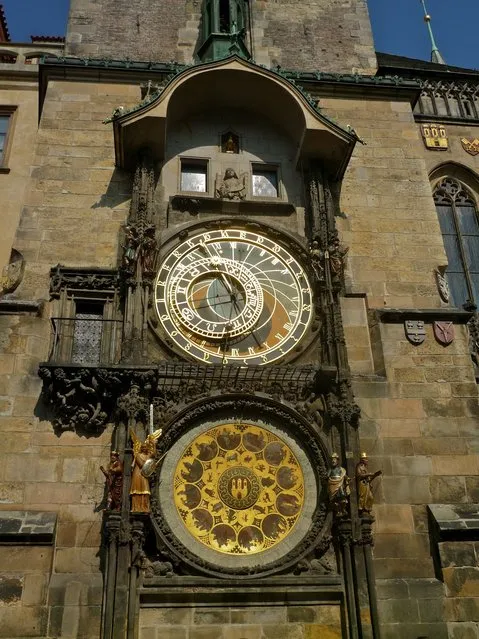
Prague Astronomical Clock

The Prague astronomical clock, or Prague orloj, is a medieval astronomical clock located in Prague, the capital of the Czech Republic. The clock was first installed in 1410, making it the third-oldest astronomical clock in the world and the oldest one still working.
Details
08 Sep 2013 12:04:00
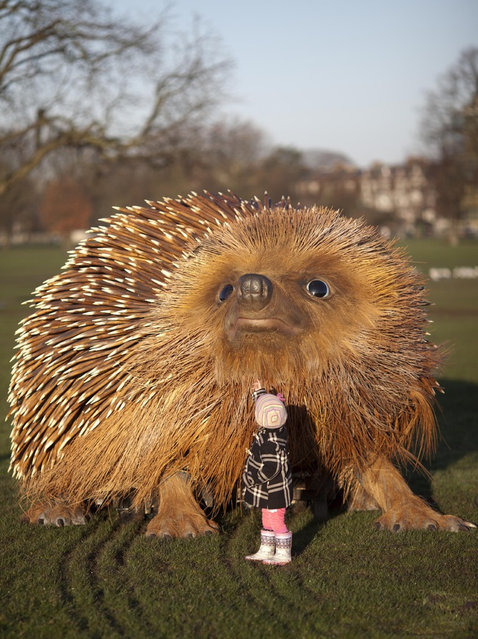
Giant Hedgehog In London

A giant hedgehog statue is spotted in London's Clapham Common after a survey reveals many Brits have never seen one in the wild. Naturalist Sir David Attenborough hopes to educate the masses about such creatures on his new show.
Details
02 Mar 2014 13:54:00
Eskil Ronningsbakken By Extreme Balancing Acts

29-year-old extreme balancing artist, Eskil Ronningsbakken has to be one of the world’s most amazing performers.
Details
27 May 2014 11:45:00
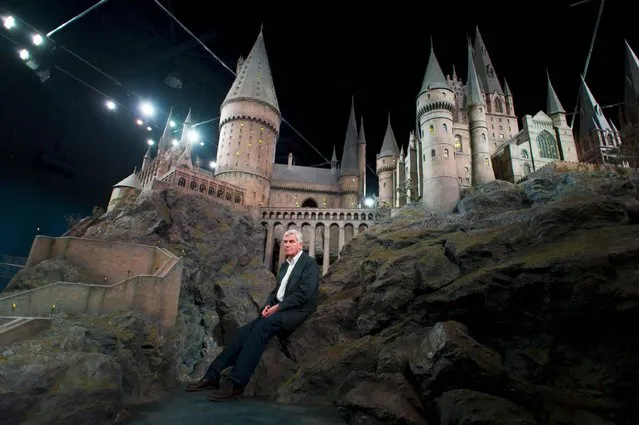
Model of Hogwarts Castle

Production Designer Stuart Craig was on hand today at Warner Bros. Studio Tour London - The Making of Harry Potter to reveal one of the best kept secrets of the tour: the incredibly detailed model of Hogwarts castle used in the films.
Details
23 Nov 2012 14:45:00
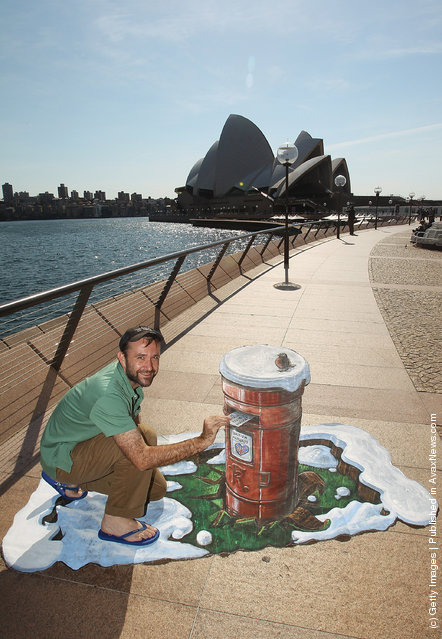
3D Street Art

3D interactive artist Joe Hill poses with one of his works as part of the VisitBritain tourism campaign at Circular Quay on September 6, 2011 in Sydney, Australia. (Photo by Mark Metcalfe/Getty Images)
Details
06 Sep 2011 12:00:00
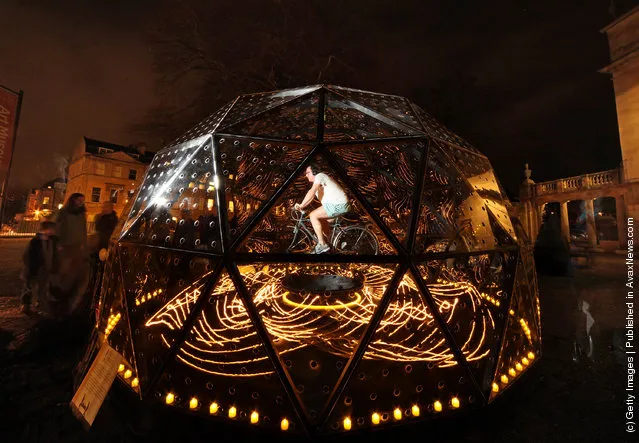
Lighting Artist Bruce Munro Announces His New Installation

A rider demonstrates Lighting artist Bruce Munro latest installation “Star-Turn” at a one-night event in front of the Holburne Museum on December 21, 2011 in Bath, England. (Photo by Matt Cardy/Getty Images)
Details
11 Aug 2013 09:25:00
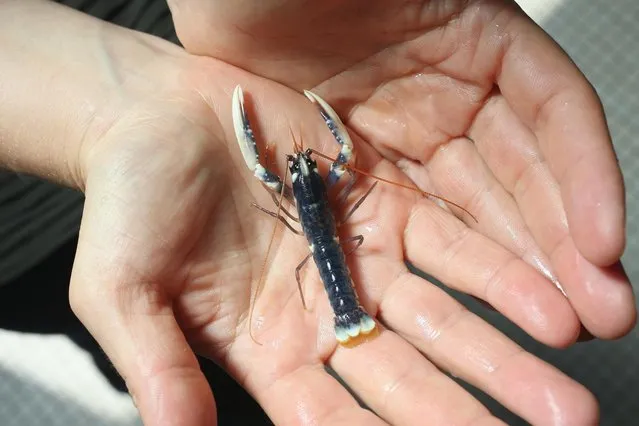
Isabel Schmalenbach, an environmental scientist with the Helgoland Biological Institute (Biologische Anstalt Helgoland), part of the Alfred Wegener Institute for Polar and Marine Research, holds a one-year old baby European lobster (Homarus gammarus) raised at the institute on August 3, 2013 on Helgoland Island, Germany. (Photo by Sean Gallup/Getty Images)

Isabel Schmalenbach, an environmental scientist with the Helgoland Biological Institute (Biologische Anstalt Helgoland), part of the Alfred Wegener Institute for Polar and Marine Research, holds a one-year old baby European lobster (Homarus gammarus) raised at the institute on August 3, 2013 on Helgoland Island, Germany. Later in the day Schmalenbach and her colleagues released a total of 415 one-year old lobsters into the North Sea as part of an effort to repopulate the lobster population around Helgoland (also called Heligoland). In the 19th century local fishermen caught up to 80,000 lobsters a year in the surrounding waters, combined with the heavy allied bombing of the island during and after World War II, as well as other environmental factors, decimated the lobster population. (Photo by Sean Gallup)

Details
05 Aug 2013 08:39:00
Tridacna Gigas, or Giant Clams

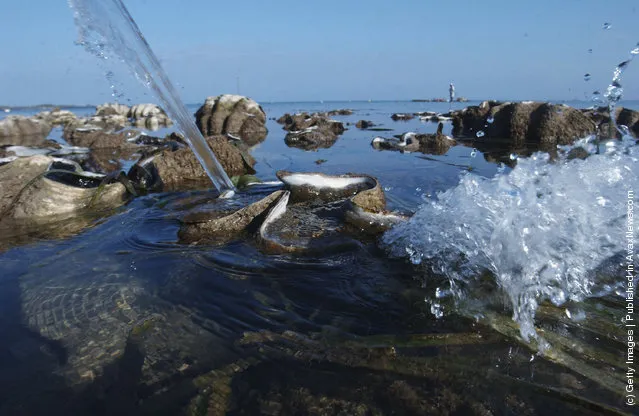
“The giant clam, Tridacna gigas (known as pā’ua in Cook Islands Māori), is the largest living bivalve mollusc. T. gigas is one of the most endangered clam species. It was mentioned as early as 1825 in scientific reports. One of a number of large clam species native to the shallow coral reefs of the South Pacific and Indian oceans, they can weigh more than 200 kilograms (440 lb) measure as much as 120 cm (47 in) across, and have an average lifespan in the wild of 100 years or more”. – Wikipedia

Photo: Tridacna Gigas, or Giant Clams spew water as a traditional fisherman passes by a small sanctuary on January 23, 2004 near Bolinao in the Northern Philippines. The clams, prime builders for coral reefs and providing shelter for spawning fish and other marine life, are exposed by low tides in the sanctuary. Overfishing and pollution throughout the country are not only threatening food security, but are also starting to choke one of the few working clam sanctuaries in the world. (Photo by David Greedy/Getty Images)
Details
01 Oct 2011 13:10:00