Loading...
Done
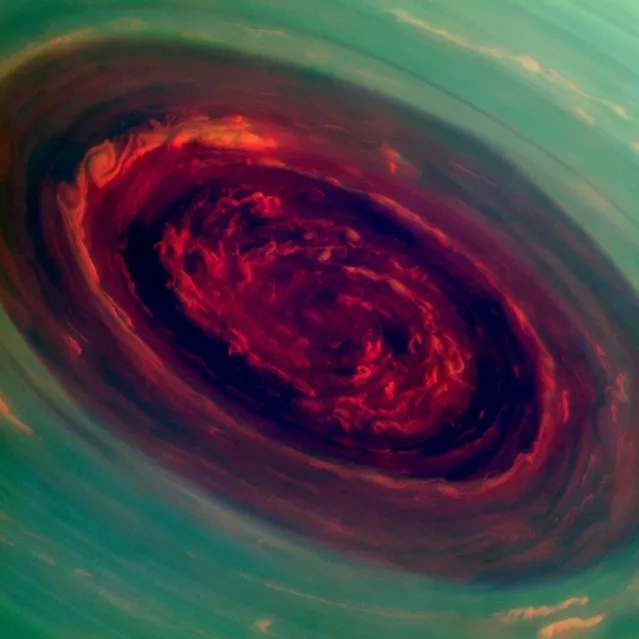
The spinning vortex of Saturn's north polar storm resembles a deep red rose of giant proportions surrounded by green foliage in this false-color image from NASA's Cassini spacecraft. (Photo by NASA/JPL-Caltech/SSI)

NASA's Cassini spacecraft has provided scientists the first close-up, visible-light views of a behemoth hurricane swirling around Saturn's north pole. In high-resolution pictures and video, scientists see the hurricane's eye is about 1,250 miles (2,000 kilometers) wide, 20 times larger than the average hurricane eye on Earth. Thin, bright clouds at the outer edge of the hurricane are traveling 330 mph(150 meters per second). The hurricane swirls inside a large, mysterious, six-sided weather pattern known as the hexagon. Photo: The spinning vortex of Saturn's north polar storm resembles a deep red rose of giant proportions surrounded by green foliage in this false-color image from NASA's Cassini spacecraft. (Photo by NASA/JPL-Caltech/SSI)
Details
31 May 2015 09:11:00
A woman in Kimono poses for photos in front of mimosa and cherry blossom trees in Tokyo on March 8, 2024. (Photo by Yuichi Yamazaki/AFP Photo)

A woman in Kimono poses for photos in front of mimosa and cherry blossom trees in Tokyo on March 8, 2024. (Photo by Yuichi Yamazaki/AFP Photo)
Details
18 Mar 2024 06:52:00
Artist Heather Dewey-Hagborg's 'Stranger Visions', comprising of 3D printed faces extracted from DNA taken from discarded cigarette butts and chewing gum, is displayed at the Big Bang Data exhibition at Somerset House on December 2, 2015 in London, England. (Photo by Peter Macdiarmid/Getty Images for Somerset House)

Artist Heather Dewey-Hagborg's 'Stranger Visions', comprising of 3D printed faces extracted from DNA taken from discarded cigarette butts and chewing gum, is displayed at the Big Bang Data exhibition at Somerset House on December 2, 2015 in London, England. The show highlights the data explosion that's radically transforming our lives. It opens on December 3, 2015 and runs until February 28, 2016 at Somerset House. (Photo by Peter Macdiarmid/Getty Images for Somerset House)
Details
04 Dec 2015 08:03:00
Atlas Moth @ Carleton. (Photo by Terri Oda)

“The Atlas moth (Attacus atlas) is a large saturniid moth found in the tropical and subtropical forests of Southeast Asia, and common across the Malay archipelago. Atlas moths are considered the largest moths in the world in terms of total wing surface area [upwards of c. 400 cm2 (62 sq in)]. Their wingspans are also amongst the largest, reaching over 25 cm (10 in). Females are appreciably larger and heavier”. – Wikipedia. Photo: Atlas Moth. (Photo by Terri Oda)


Details
10 Feb 2013 16:49:00
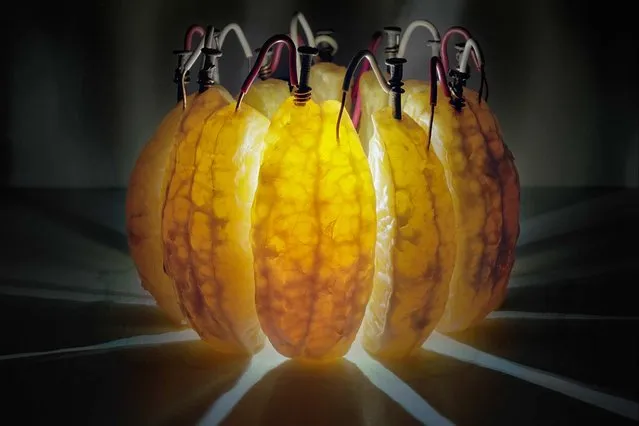
Wedges of an orange generate enough current and electrical juice – 3.5 volts – to power an LED. The fruit’s citric acid helps electrons flow from galvanized nails to copper wire in this 14-hour exposure. This image was published in September’s Visions of Earth, a trio of photos that appear in each issue of National Geographic. (Photo by Caleb Charland/National Geographic)

Wedges of an orange generate enough current and electrical juice – 3.5 volts – to power an LED. The fruit’s citric acid helps electrons flow from galvanized nails to copper wire in this 14-hour exposure. This image was published in September’s Visions of Earth, a trio of photos that appear in each issue of National Geographic. (Photo by Caleb Charland/National Geographic)
Details
06 Jan 2014 12:09:00
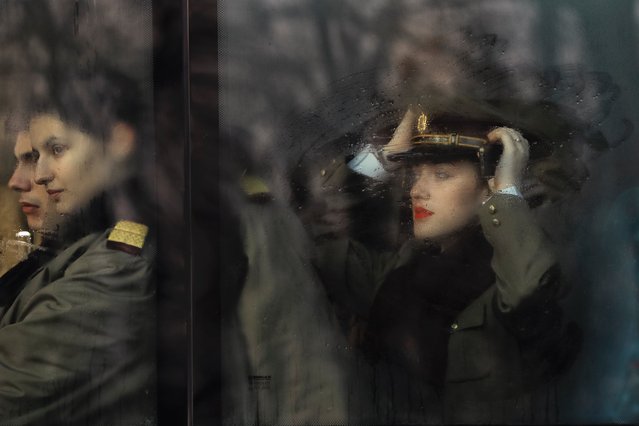
Romanian military doctors and medical students sit on a bus behind steamy windows before the National Day parade in Bucharest, Romania, Thursday, December 1, 2016. (Photo by Vadim Ghirda/AP Photo)

Romanian military doctors and medical students sit on a bus behind steamy windows before the National Day parade in Bucharest, Romania, Thursday, December 1, 2016. Military planes and helicopters flew over the Romanian capital Thursday as thousands turned out to celebrate the national day, marking the date when the country reunified with Transylvania in 1918. (Photo by Vadim Ghirda/AP Photo)
Details
02 Dec 2016 12:55:00
A Dutch Military Policeman, left inside, guards part of the reconstructed cockpit, right, and forward section of the fuselage after the Dutch Safety Board presented it's final report into what caused Malaysia Airlines Flight 17 to break up high over Eastern Ukraine last year, killing all 298 people on board, during a press conference in Gilze-Rijen, central Netherlands, Tuesday, October 13, 2015. (Photo by Peter Dejong/AP Photo)

A Dutch Military Policeman, left inside, guards part of the reconstructed cockpit, right, and forward section of the fuselage after the Dutch Safety Board presented it's final report into what caused Malaysia Airlines Flight 17 to break up high over Eastern Ukraine last year, killing all 298 people on board, during a press conference in Gilze-Rijen, central Netherlands, Tuesday, October 13, 2015. (Photo by Peter Dejong/AP Photo)
Details
16 Oct 2015 08:04:00
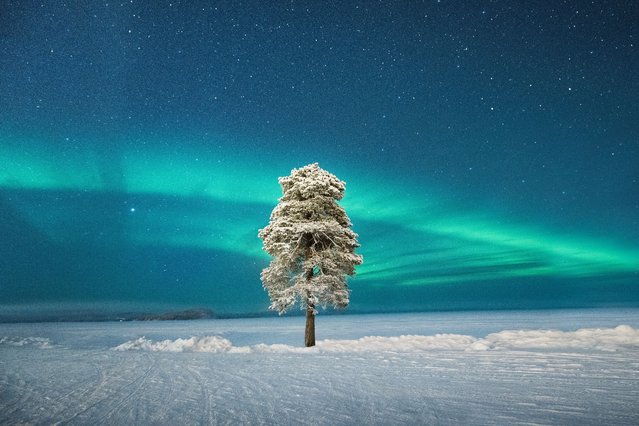
Aurorae category runner-up: Lone Tree under a Scandinavian Aurora by Tom Archer (UK). The photographer decided to explore the area around the hotel on a very crisp -35C evening in Finnish Lapland. When he found this tree, he decided to wait for the misty conditions to change and could not believe his luck when the sky cleared and the aurora came out in the perfect spot. Archer spent about an hour photographing it before his camera started to lock up because of the harsh conditions, but by then he was happy to call it a night. (Photo by Tom Archer/2020 Astronomy Photographer of the Year)

Aurorae category runner-up: Lone Tree under a Scandinavian Aurora by Tom Archer (UK). The photographer decided to explore the area around the hotel on a very crisp -35C evening in Finnish Lapland. When he found this tree, he decided to wait for the misty conditions to change and could not believe his luck when the sky cleared and the aurora came out in the perfect spot. Archer spent about an hour photographing it before his camera started to lock up because of the harsh conditions, but by then he was happy to call it a night. (Photo by Tom Archer/2020 Astronomy Photographer of the Year)
Details
17 Sep 2020 00:03:00