Loading...
Done
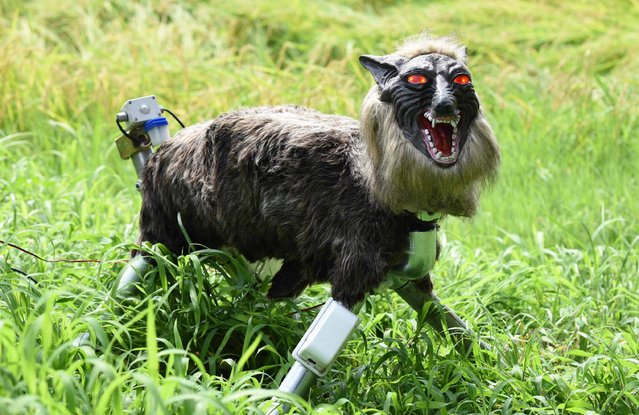
A wolf-like robot “Super Monster Wolf” stands beside a rice field to drive away wild animals that cause damages to crops in Kisarazu, Chiba prefecture, on August 25, 2017. The agricultural coopetative association JA Kisarazu-shi introduced the 65cm-long and 50cm-high robot recently on a trial basis which can detect wild animals such as boars and deers with an infrared ray sensor when they approach and intimidates them, flashing the red LED eyes and blaring 48 types of sounds including a wolf growl and human voice. (Photo by Toru Yamanaka/AFP Photo)

A wolf-like robot “Super Monster Wolf” stands beside a rice field to drive away wild animals that cause damages to crops in Kisarazu, Chiba prefecture, on August 25, 2017. The agricultural coopetative association JA Kisarazu-shi introduced the 65cm-long and 50cm-high robot recently on a trial basis which can detect wild animals such as boars and deers with an infrared ray sensor when they approach and intimidates them, flashing the red LED eyes and blaring 48 types of sounds including a wolf growl and human voice. (Photo by Toru Yamanaka/AFP Photo)
Details
27 Aug 2017 07:17:00
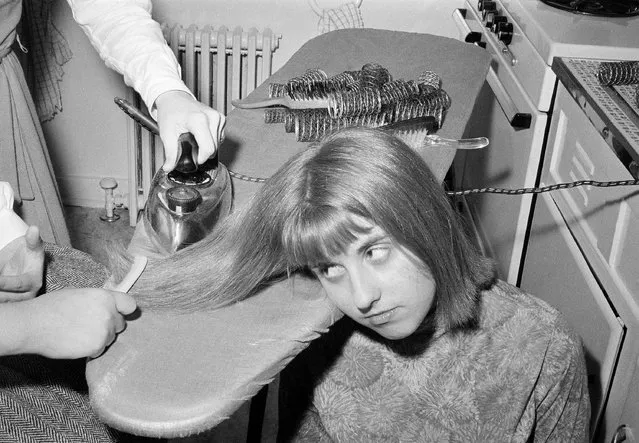
Teenage girls are all steamed up these days about straight hair. The steam iron is replacing the huge rollers on which countless teens slept every night to achieve the height and curls fashionable until. The same girls endure having their hair stretched to absolute straightness on the ironing board, and then ironed to keep it that way. Unlike the roller setting, this takes teamwork. Gay Stilley, 14, goes through an ironing session with a couple of her friends at the Stilley Home in Glen Oaks, Queens, New York City on December 23, 1964. With a wary eye, Gay tries to watch the straightening process as one friend stretches her hair with a comb and another does the ironing, in the Stilley kitchen. (Photo by Marty Zimmerman/AP Photo)

Teenage girls are all steamed up these days about straight hair. The steam iron is replacing the huge rollers on which countless teens slept every night to achieve the height and curls fashionable until. The same girls endure having their hair stretched to absolute straightness on the ironing board, and then ironed to keep it that way. Unlike the roller setting, this takes teamwork. Gay Stilley, 14, goes through an ironing session with a couple of her friends at the Stilley Home in Glen Oaks, Queens, New York City on December 23, 1964. With a wary eye, Gay tries to watch the straightening process as one friend stretches her hair with a comb and another does the ironing, in the Stilley kitchen. (Photo by Marty Zimmerman/AP Photo)
Details
05 Jan 2018 07:00:00
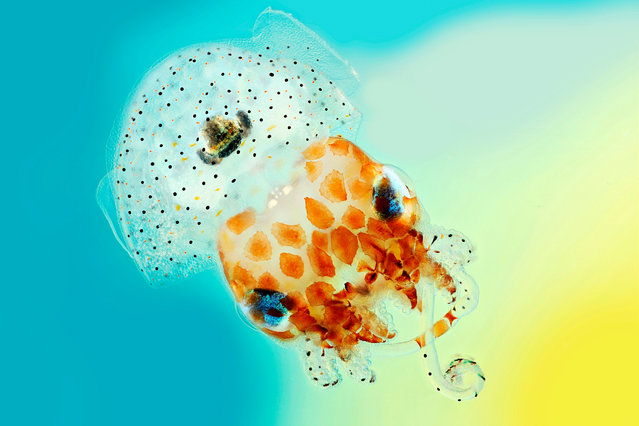
With its huge eyes, comical name and diminutive size, Mark R. Smith’s image of a baby Hawaiian bobtail squid can’t help but raise a smile. A curiously endearing creature, the cephalopod is just 1.5cm across, its mantle cavity bearing more than a passing resemblance to a rather natty shower cap. But it is also a beautiful example of symbiosis – nature’s version of “I’ll scratch your back if you scratch mine” – for on the underside of the squid is a light organ which houses bioluminescent bacteria. The squid offers the bacteria protection and food, while the bacteria emit a glow – a handy trait that the squid uses to offset its silhouette, helping it to evade predators in the depths below. Mark R. Smith’s entry combines several images of a Hawaiian bobtail squid with different focus lengths to create a final picture with greater depth of field than normal. (Photo by Mark R. Smith/Wellcome Images/Macroscopic Solutions)

With its huge eyes, comical name and diminutive size, Mark R. Smith’s image of a baby Hawaiian bobtail squid can’t help but raise a smile. A curiously endearing creature, the cephalopod is just 1.5cm across, its mantle cavity bearing more than a passing resemblance to a rather natty shower cap. But it is also a beautiful example of symbiosis – nature’s version of “I’ll scratch your back if you scratch mine” – for on the underside of the squid is a light organ which houses bioluminescent bacteria. The squid offers the bacteria protection and food, while the bacteria emit a glow – a handy trait that the squid uses to offset its silhouette, helping it to evade predators in the depths below. Mark R. Smith’s entry combines several images of a Hawaiian bobtail squid with different focus lengths to create a final picture with greater depth of field than normal. (Photo by Mark R. Smith/Wellcome Images/Macroscopic Solutions)
Details
08 Mar 2017 00:05:00
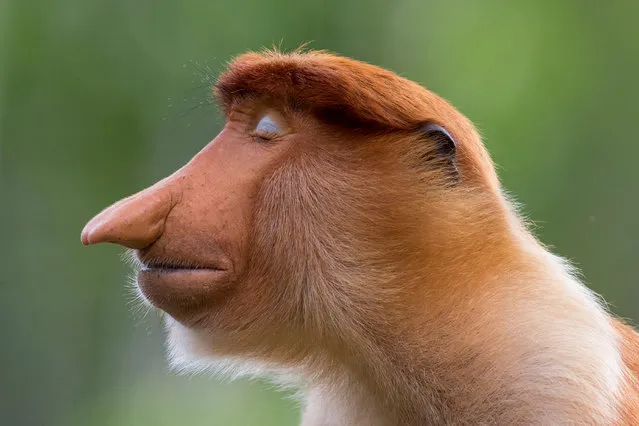
Winner – Animal Portraits: The pose by Mogens Trolle, Denmark. A young male proboscis monkey cocks his head slightly and closes his eyes. Unexpected pale blue eyelids now complement his immaculately groomed auburn hair. He poses for a few seconds as if in meditation. He is a wild visitor to the feeding station at Labuk Bay Proboscis Monkey Sanctuary in Sabah, Borneo – “the most laid-back character”, says Trolle, “quite unlike anything I’ve ever seen on another monkey” – connects us, he hopes, with a fellow primate. (Photo by Mogens Trolle/Wildlife Photographer of the Year 2020)

Winner – Animal Portraits: The pose by Mogens Trolle, Denmark. A young male proboscis monkey cocks his head slightly and closes his eyes. Unexpected pale blue eyelids now complement his immaculately groomed auburn hair. He poses for a few seconds as if in meditation. He is a wild visitor to the feeding station at Labuk Bay Proboscis Monkey Sanctuary in Sabah, Borneo – “the most laid-back character”, says Trolle, “quite unlike anything I’ve ever seen on another monkey” – connects us, he hopes, with a fellow primate. (Photo by Mogens Trolle/Wildlife Photographer of the Year 2020)
Details
16 Oct 2020 00:03:00
History of Suspended Time By Gonzalo Lebrija

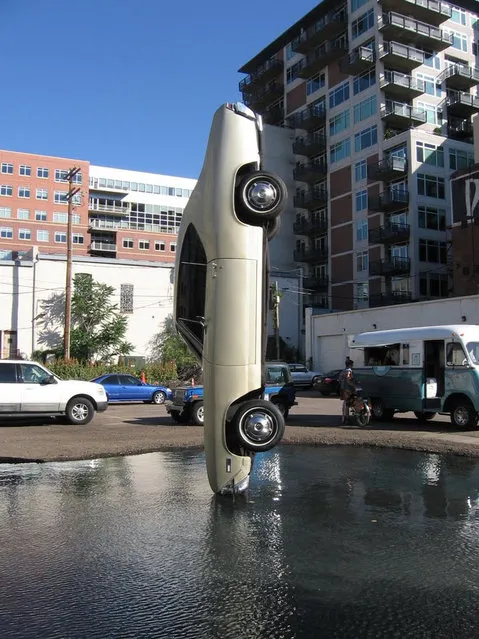
Guadalajara-based artist Gonzalo Lebrija created a public art installation in the parking lot (1430 Delgany Street, Denver, CO 80202) across from the Museum of Contemporary Art Denver (MCA Denver) in the summer of 2010. The installation, entitled History of Suspended Time: Monument for the Impossible, was developed as a dual collaboration with MCA Denver's museum-wide exhibition, Energy Effects: Art & Artifacts from the Landscape of Glorious Excess, as well as Denver's inaugural 2010 Biennial of the Americas, an international event that celebrated the culture, ideas and people of the Western Hemisphere.
Details
31 Aug 2014 13:37:00
Drawing By Karl Bang

Karl Bang's paintings are unique because he combines totally different styles of painting within the same format. It is very difficult to design a balanced composition with realistic elements that are juxtaposed with flat colors and patterns. The faces of his subjects are painted realistically in the Western tradition with subtle gradations of color; while, his figures and costumes vignette into abstracted shapes, lines, flat colors and patterns that reflect Karl's background in China. It is as though there are different visual languages being spoken within his paintings.
Details
30 Jul 2013 09:16:00
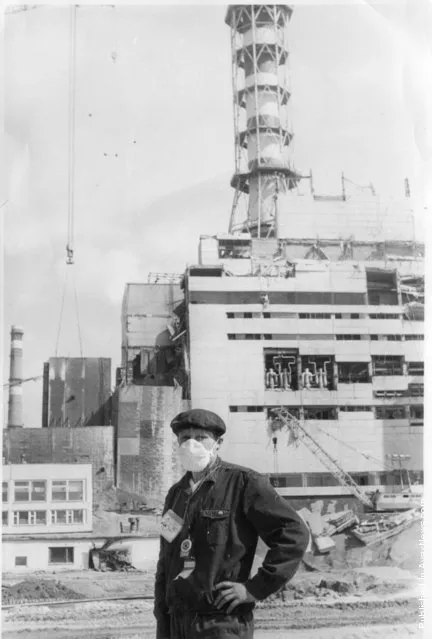
Chernobyl Disaster – Disaster Fighters

“The Chernobyl disaster was a catastrophic nuclear accident that occurred on 26 April 1986 at the Chernobyl Nuclear Power Plant in Ukrainian SSR, which was under the direct jurisdiction of the central authorities in Moscow. An explosion and fire released large quantities of radioactive contamination into the atmosphere, which spread over much of Western USSR and Europe. It is widely considered to have been the worst nuclear power plant accident in history, and is one of only two classified as a level 7 event on the International Nuclear Event Scale (the other being the Fukushima Daiichi nuclear disaster)”. – Wikipedia (Photos by Alexandr Strannik, August 1986; Source: LiveJournal)
Details
26 Apr 2012 13:20:00
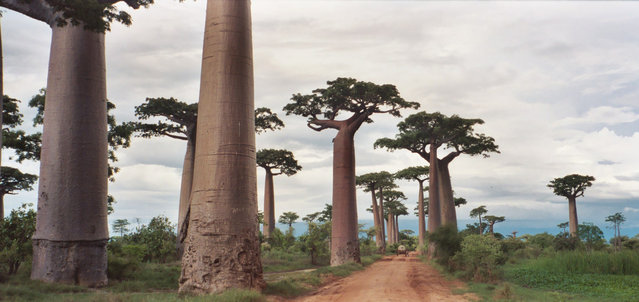
Avenue of the Baobabs

The Avenue or Alley of the Baobabs is a prominent group of baobab trees lining the dirt road between Morondava and Belon'i Tsiribihina in the Menabe region in western Madagascar. Its striking landscape draws travelers from around the world, making it one of the most visited locations in the region. It has been a center of local conservation efforts, and was granted temporary protected status in July 2007 by the Ministry of Environment, Water and Forests, the first step toward making it Madagascar's first natural monument.
Details
16 Nov 2012 10:05:00