Loading...
Done
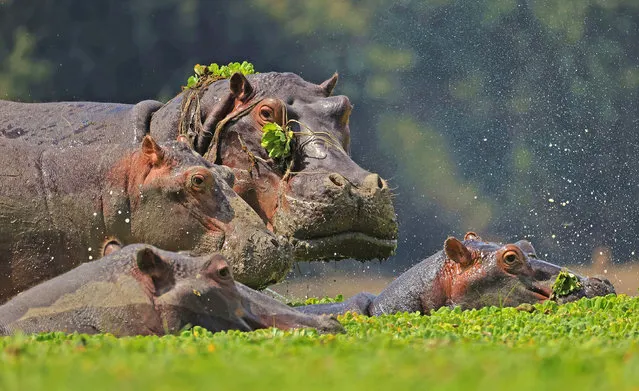
While many of us would pay good money for a spa mud bath, these fortunate hippos in South Luangwa National Park, Zambia, have nature to thank as they take a plunge in a lagoon in the second decade of February 2024. (Photo by Dimitar Nedelchev/Solent News)

While many of us would pay good money for a spa mud bath, these fortunate hippos in South Luangwa National Park, Zambia, have nature to thank as they take a plunge in a lagoon in the second decade of February 2024. (Photo by Dimitar Nedelchev/Solent News)
Details
10 Mar 2024 07:40:00
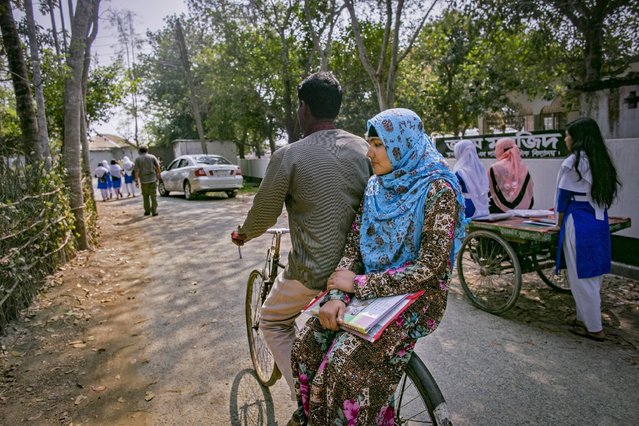
Rani rides home with her father on the back of his bicycle on March 6, 2017 in Khulna division, Bangladesh. Rani, who is now 16, was under pressure to marry a boy when she was 14-years-old despite the reluctance of Rani and her father, Abdul. (Photo by Allison Joyce/Getty Images)

Rani rides home with her father on the back of his bicycle on March 6, 2017 in Khulna division, Bangladesh. Rani, who is now 16, was under pressure to marry a boy when she was 14-years-old despite the reluctance of Rani and her father, Abdul. (Photo by Allison Joyce/Getty Images)
Details
11 Mar 2017 00:00:00
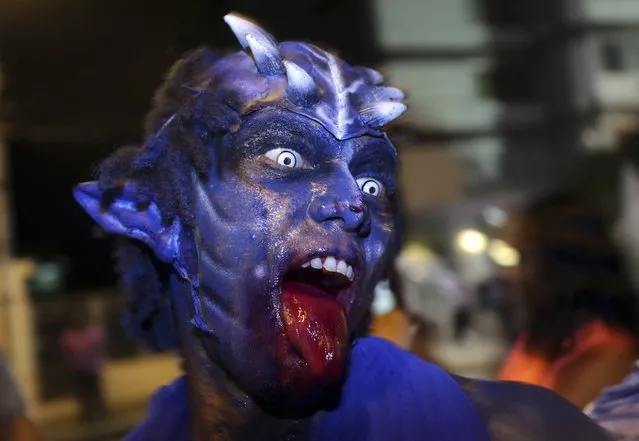
A masquerader from the Paramin Blue Devils parades before judges during the traditional mas competition held by the National Carnival Commission at Victoria Square, in the capital Port-of-Spain, February 12, 2015. (Photo by Andrea De Silva/Reuters)

A masquerader from the Paramin Blue Devils parades before judges during the traditional mas competition held by the National Carnival Commission at Victoria Square, in the capital Port-of-Spain, February 12, 2015. (Photo by Andrea De Silva/Reuters)
Details
14 Feb 2015 12:54:00
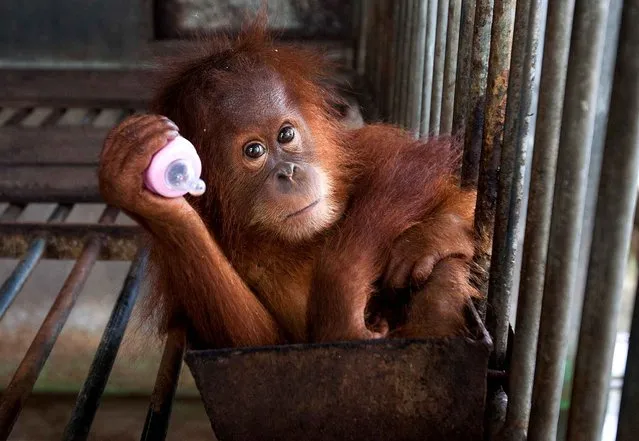
This picture shows a two-year old orangutan seized from a residents house at the provincial Nature Conservation and Agency (BKSDSA) office in Banda Aceh on September 16, 2014. The critically-endangered primates population are dwindling rapidly due to poaching and rapid destruction of their forest habitat that is being converted into palm oil plantations. (Photo by Chaideer Mahyuddin/AFP Photo)

This picture shows a two-year old orangutan seized from a residents house at the provincial Nature Conservation and Agency (BKSDSA) office in Banda Aceh on September 16, 2014. The critically-endangered primates population are dwindling rapidly due to poaching and rapid destruction of their forest habitat that is being converted into palm oil plantations. (Photo by Chaideer Mahyuddin/AFP Photo)
Details
20 Sep 2014 11:09:00
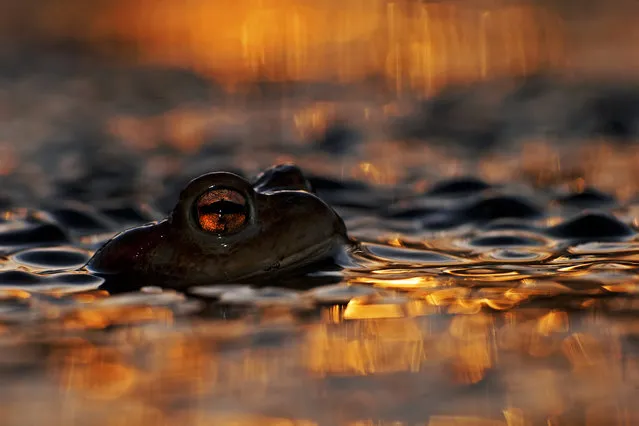
“Eye of a toad”. Animal Portraits, Łukasz Bożycki, Poland.  (Photo by Łukasz Bożycki)

“Eye of a toad”. Animal Portraits, Łukasz Bożycki, Poland. Early spring sees a pond near Łukasz’s home city of Warsaw, Poland, full of mating frogs and a few toads. On this March day, Łukasz shared the pond with them for an evening, sitting in the icy water in his chest-high waders, keeping as still as possible, despite the numbing cold, so that the amphibians could get used to him. “I wanted to find a fresh way of portraying the amphibians”, he says, “at water level”. Using a telephoto lens, he focused on one lone toad and waited for the sun to dip almost below the horizon before pressing the shutter, using flash to bring out the details in the shadow. His prize was “the glorious pool of sunset colour” and fiery glow of the toad’s eye. Nikon D80 + 70-300mm f4.5-5.6 lens + extension tube; 1/125 sec at f9 (-2.3 e/v); ISO 100; built-in flash. (Photo by Łukasz Bożycki)

Details
28 Aug 2013 11:45:00
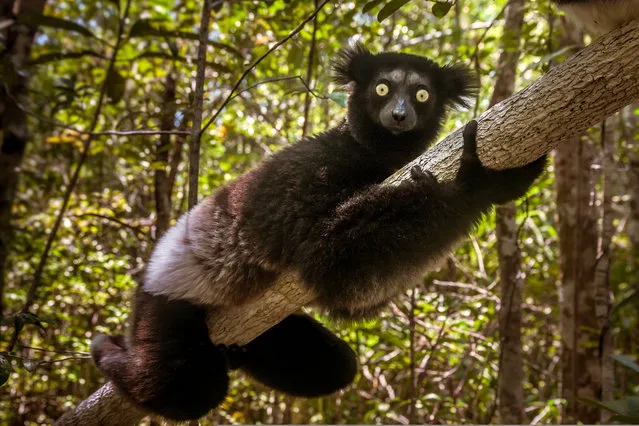
The secretive indri (Indri indri) of Madagascar, the largest living lemur. It is also critically endangered and highly evolutionarily distinct with no close relatives, which makes its branch one of most precarious on the mammal evolutionary tree. In the likely event that the indri goes extinct, we will lose 19m years of unique evolutionary history from the mammal tree of life. (Photo by Pierre-Yves Babelon/Aarhus University)

The secretive indri (Indri indri) of Madagascar, the largest living lemur. It is also critically endangered and highly evolutionarily distinct with no close relatives, which makes its branch one of most precarious on the mammal evolutionary tree. In the likely event that the indri goes extinct, we will lose 19m years of unique evolutionary history from the mammal tree of life. (Photo by Pierre-Yves Babelon/Aarhus University)
Details
18 Nov 2018 00:02:00
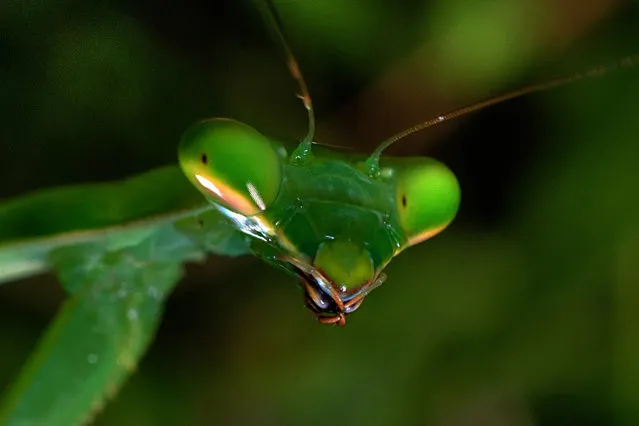
Close Encounter of the Insect Kind: Check out the awesome face on this praying mantis. I can't get over the mouth, it's like something from a science fiction movie. Of all photographic styles macro is definitely my favorite. I am constantly amazed, in every photo that I take, by the intricate level of detail that exists on even the smallest of creatures. It's a stark reminder that a very complex and infinitely beautiful world exists just beyond our human-sized level of perception. Photo taken in Donnybrook, Queensland, Australia. (Photo by Andrew Young/National Geographic Photo Contest

Close Encounter of the Insect Kind: “Check out the awesome face on this praying mantis. I can't get over the mouth, it's like something from a science fiction movie. Of all photographic styles macro is definitely my favorite. I am constantly amazed, in every photo that I take, by the intricate level of detail that exists on even the smallest of creatures. It's a stark reminder that a very complex and infinitely beautiful world exists just beyond our human-sized level of perception. Photo taken in Donnybrook, Queensland, Australia” – Andrew Young. (Photo by Andrew Young/National Geographic Photo Contest via The Atlantic)
Details
24 Sep 2012 09:18:00
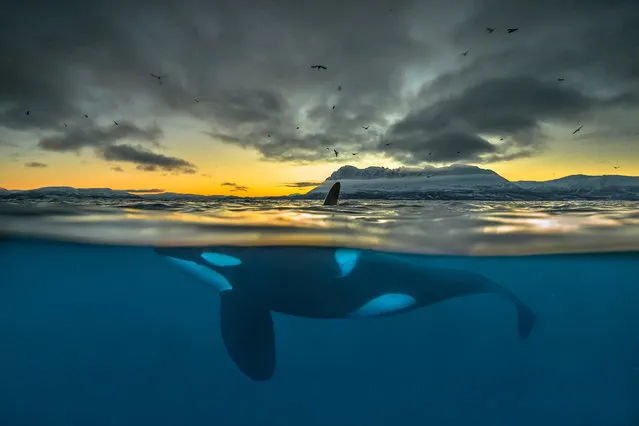
Split-view of a killer whale at sunrise off the coast of Northern Norway. At least half of the world’s killer whale populations are doomed to extinction due to pollution of the oceans, a new study says. (Photo by Audun Rikardsen/Science)

Split-view of a killer whale at sunrise off the coast of Northern Norway. At least half of the world’s killer whale populations are doomed to extinction due to pollution of the oceans, a new study says. (Photo by Audun Rikardsen/Science)
Details
16 Dec 2018 00:03:00