Loading...
Done
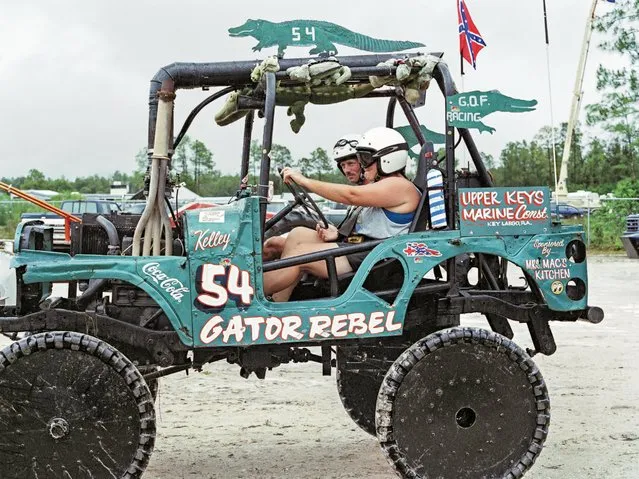
Kelley McMann, Gator Rebel, 2002. (Photo by Malcolm Lightner)

The Mile O' Mud is a 7/8-mile oval track with a 1/8-mile diagonal lane slashed through the center. The racing lanes are approximately 60 feet wide. On average, the muddy water is four to six feet deep, with three strategically placed holes. The largest hole, located in front of the grandstand, is the treacherous “Sippy Hole”, named for the legendary driver “Mississippi” Milton Morris, Swamp Buggy King 1955, who repeatedly got stuck in it. (Photo by Malcolm Lightner)
Details
19 May 2016 11:20:00
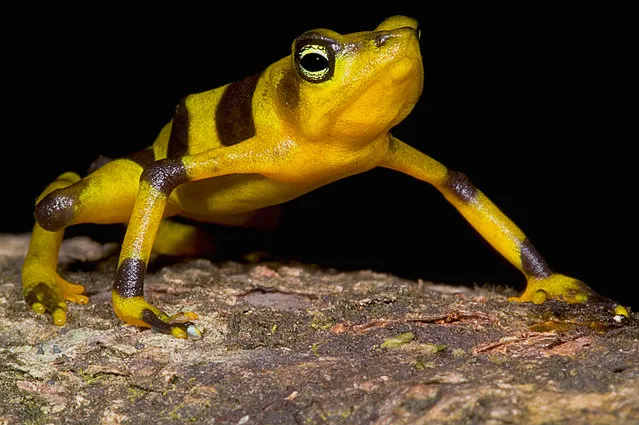
The golden harlequin toad has vanished from the wild, and only a small number live on in captivity. A fungus caused them, and many other amphibians, to die out in their home in Central America. (Photo by Danté Fenolio/The Guardian/Johns Hopkins University Press)

Wildlife photographer Danté Fenolio has headed into areas untouched by sunlight – deep seas, caves and underground – and found creatures that are exploding with colour. Here: The golden harlequin toad has vanished from the wild, and only a small number live on in captivity. A fungus caused them, and many other amphibians, to die out in their home in Central America. (Photo by Danté Fenolio/The Guardian/Johns Hopkins University Press)
Details
20 Jun 2016 12:19:00
Kia Vue of St. Paul sports long nails at the Minnesota Hmong New Year celebration Saturday, November 29, 2014, at the Saint Paul RiverCentre in St. Paul, MN. (Photo by David Joles/Star Tribune)

Kia Vue of St. Paul sports long nails at the Minnesota Hmong New Year celebration Saturday, November 29, 2014, at the Saint Paul RiverCentre in St. Paul, MN. The annual Minnesota Hmong New Year celebration will be held at the Saint Paul RiverCentre November 28–30. Hmong New Year has a deep cultural significance to the Hmong community. It is a celebration of accomplishments during the past year and a time to welcome a new beginning. (Photo by David Joles/Star Tribune)
Details
30 Nov 2014 13:37:00
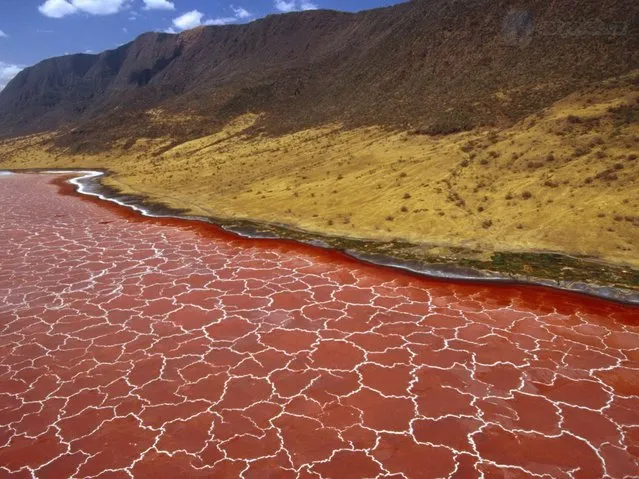
[Lake Natron in Tanzania

Lake Natron is a salt lake located in northern Tanzania, close to the Kenyan border, in the eastern branch of the East African Rift. The lake is fed by the Southern Ewaso Ng'iro River and also by mineral-rich hot springs. It is quite shallow, less than three meters (10 feet) deep, and varies in width depending on its water level, which changes due to high levels of evaporation, leaving concentrations of salt and other minerals, notably sodium carbonate (natron).
Details
05 Jun 2013 10:29:00
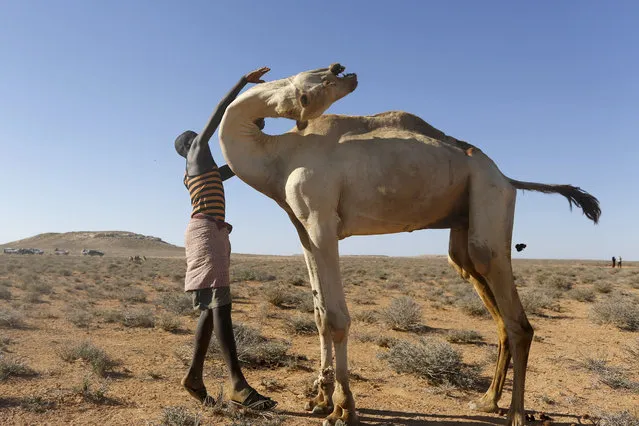
Ali Asair, who has left his family behind and traveled hundreds of kilometers in search for a pasture for his animals, attends to his camel in a pastoralists' settlement in the Bandarbeyla district in Somalia's semi-autonomous region of Puntland, Somalia, 24 March 2017. According to media reports, the United Nations says only 31 percent of 864 million US dollars appeal for a drought-hit Somalia is funded. The UN said the world is facing the largest humanitarian crisis since 1945, adding that more than 20 million people are facing the threat of famine in Somalia, Yemen, South Sudan and Nigeria and 1.4 million children could die from starvation this year. (Photo by Dai Kurokawa/EPA)

Ali Asair, who has left his family behind and traveled hundreds of kilometers in search for a pasture for his animals, attends to his camel in a pastoralists' settlement in the Bandarbeyla district in Somalia's semi-autonomous region of Puntland, Somalia, 24 March 2017. According to media reports, the United Nations says only 31 percent of 864 million US dollars appeal for a drought-hit Somalia is funded. The UN said the world is facing the largest humanitarian crisis since 1945, adding that more than 20 million people are facing the threat of famine in Somalia, Yemen, South Sudan and Nigeria and 1.4 million children could die from starvation this year. (Photo by Dai Kurokawa/EPA)
Details
28 Mar 2017 09:01:00
1924:  Vladimir Ilyich Lenin lying in state in the Kremlin

Photo: Vladimir Ilyich Lenin (1870 – 1924) lying in state in the Kremlin. (Photo by Hulton Archive/Getty Images). 1924

Important! For the same article in Russian language click here.

Something quite intriguing is happening within Russian-speaking internet during the last few – should you type a fully academic inquiry (at least, according to Russian academic requirements) in national search engines for "Lenin's mausoleum" – the first thing you get (even in top 10 searches) is website pages talking about black magic and occult. Website authors view this construction differently, but unconditionally agree on one thing: the mausoleum of the "leader of the world proletariat” – the essence of a magical artifact, a sort of “energy vampire”. It was built with a certain purpose: to drain the energy out of miserable Soviet citizens on one hand; and to poison the anthroposphere of one-sixth part of the earth with its vibes (the exact territory that was occupied by the former Soviet Union), depriving the Russian people of will to resist on the other hand. Complete nonsense? No doubt. Nevertheless, an intriguing one. Well, probably because some oddities do exist in mausoleum's history. These oddities are the thing we are going to discuss this time. First, let me refresh you memory on the subject.
Details
16 Oct 2011 11:27:00
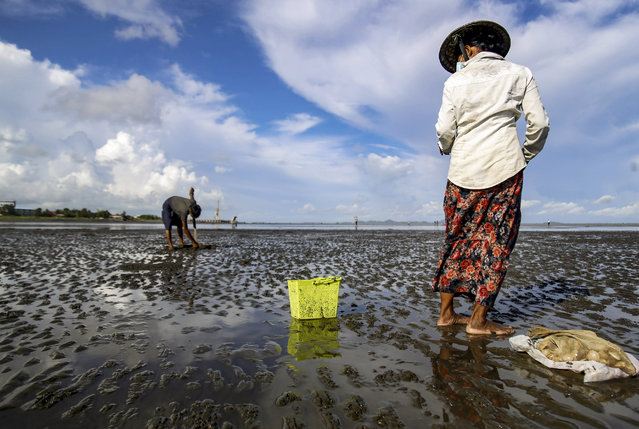
People search for shells on a beach in Sittwe, Rakhine State, Myanmar, 17 September 2020. International Coastal Cleanup Day is observed annually on the third Saturday of September and will occur on 19 September this year. The day was established to encourage global efforts to clean up garbage on beaches and coastal areas and raise awareness on protecting the world's oceans and waterways. According to a report released by the US-based nonprofit environmental advocacy group Ocean Conservancy on 08 September 2020, plastic food packaging topped the list of most common items found in beach trash. Close to five million food wrappers were collected in a single day during the International Coastal Cleanup Day in 2019. An approximate 11 million metric tons of plastic enters the ocean every year according to a 2016 analysis, affecting more than 800 marine species and causing contamination to human food chains and drinking water. (Photo by Nyunt Win/EPA/EFE/Rex Features/Shutterstock)

People search for shells on a beach in Sittwe, Rakhine State, Myanmar, 17 September 2020. International Coastal Cleanup Day is observed annually on the third Saturday of September and will occur on 19 September this year. (Photo by Nyunt Win/EPA/EFE/Rex Features/Shutterstock)
Details
24 Oct 2020 00:05:00
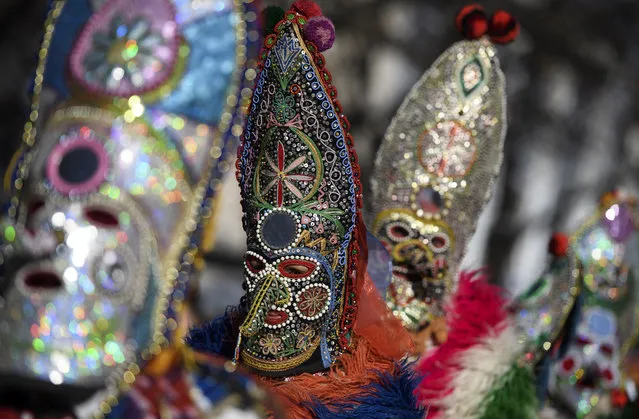
Mask dancers take part in a parade during the the International Festival of Masquerade Games “Surva” in the town of Pernik, some 30 km from Sofia, Bulgaria, 27 January 2019. In ancient times the old Thracians held the Kukeri Ritual Games in honor of god Dionysus – known as a god of wine and ecstasy. Even today these games are also known as the Dionysus' games. Among the Kukeri dancers' are many characters, including Dionysus and his satyrs as well as others from deep history such as the tsar, harachari, plyuvkachi, startzi, and pesyatzi. (Photo by Vassil Donev/EPA/EFE)

Mask dancers take part in a parade during the the International Festival of Masquerade Games “Surva” in the town of Pernik, some 30 km from Sofia, Bulgaria, 27 January 2019. In ancient times the old Thracians held the Kukeri Ritual Games in honor of god Dionysus – known as a god of wine and ecstasy. Even today these games are also known as the Dionysus' games. Among the Kukeri dancers' are many characters, including Dionysus and his satyrs as well as others from deep history such as the tsar, harachari, plyuvkachi, startzi, and pesyatzi. (Photo by Vassil Donev/EPA/EFE)
Details
31 Jan 2019 00:01:00