Loading...
Done
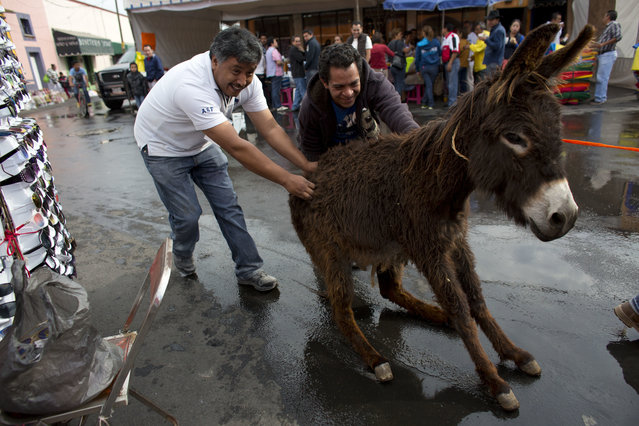
A participant of the “Zombie Takeover of Coney Island” acts like a zombie as he walks along Surf Avenue in Coney Island in the Brooklyn borough of New York, July 2, 2014. (Photo by Carlo Allegri/Reuters)

A participant of the “Zombie Takeover of Coney Island” acts like a zombie as he walks along Surf Avenue in Coney Island in the Brooklyn borough of New York, July 2, 2014. (Photo by Carlo Allegri/Reuters)
Details
07 Jul 2014 13:12:00
Festivalgoers watch two actors of the Wasteland Warriors movement fight in a cage at the world's largest heavy metal festival, the Wacken Open Air 2019, in Wacken, Germany on August 3, 2019. (Photo by Wolfgang Rattay/Reuters)

Festivalgoers watch two actors of the Wasteland Warriors movement fight in a cage at the world's largest heavy metal festival, the Wacken Open Air 2019, in Wacken, Germany on August 3, 2019. Wacken is a village in northern Germany with a population of 1,800 that has hosted the annual festival, which attracts heavy metal fans from around the world, since 1990. (Photo by Wolfgang Rattay/Reuters)
Details
07 Aug 2019 00:03:00


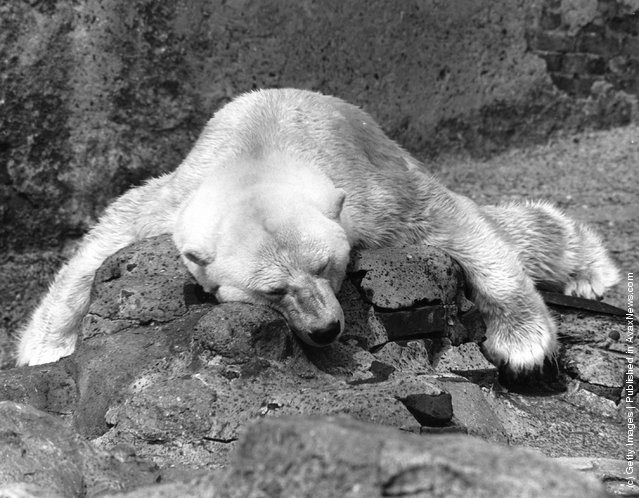
A polar bear fast asleep at London Zoo. (Photo by Fox Photos/Getty Images). 1961
Details
23 Jul 2011 12:00:00
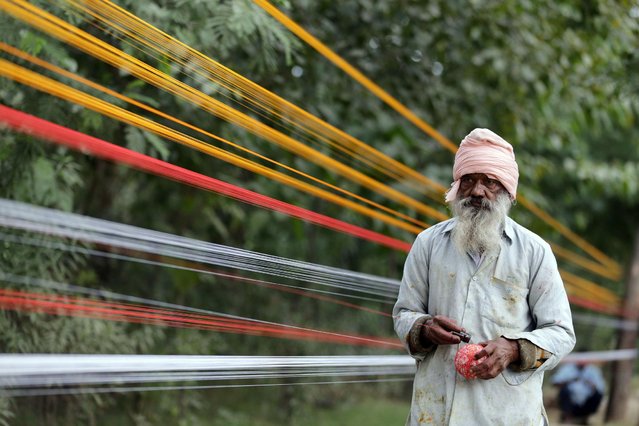
An Indian worker makes a roll of the kite thread being prepared on a roadside on the outskirts of Amritsar, India, 24 November 2020. The kite string or the “Dor”, in the local language, is made of crushed glass, glue, colors, and egg to make it strong enough to hold the kite. With the onset of the winter season, kite flying enthusiasts especially in northern Punjab, ranging from children to aged people, start flying kites as a leisure activity from their homes' rooftops and from open spaces, enjoying warmth of the winter sun at the same time. Kite flying season peaks in Amritsar on Lohri festival which marks the culmination of winter and is celebrated in the month of January every year. (Photo by Raminder Pal Singh/EPA/EFE)

An Indian worker makes a roll of the kite thread being prepared on a roadside on the outskirts of Amritsar, India, 24 November 2020. The kite string or the “Dor”, in the local language, is made of crushed glass, glue, colors, and egg to make it strong enough to hold the kite. (Photo by Raminder Pal Singh/EPA/EFE)
Details
07 Dec 2020 00:01:00
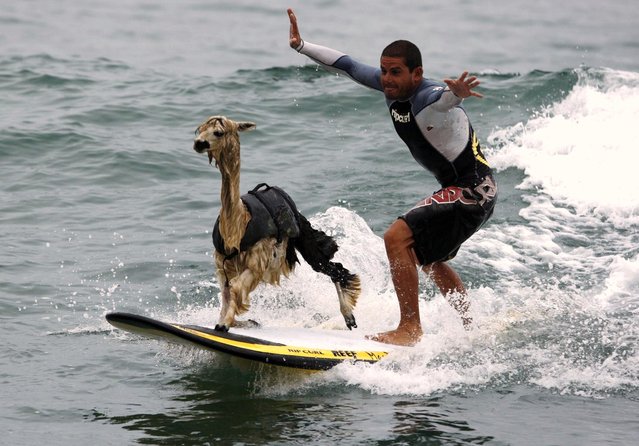
Peruvian surfer Domingo Pianezzi rides a wave with his alpaca Pisco at San Bartolo beach in Lima March 16, 2010. Pianezzi has spent a decade training dogs to ride the nose of his board when he catches waves, and now he is the first to do so with an alpaca. (Photo by Pilar Olivares/Reuters)

Peruvian surfer Domingo Pianezzi rides a wave with his alpaca Pisco at San Bartolo beach in Lima March 16, 2010. Pianezzi has spent a decade training dogs to ride the nose of his board when he catches waves, and now he is the first to do so with an alpaca. (Photo by Pilar Olivares/Reuters)
Details
02 Sep 2013 12:49:00
Artists from the Beijing Dance Academy perform to celebrate the Chinese Lunar New Year in Budapest, capital of Hungary, February 6, 2019. (Photo by Attila Volgyi/Xinhua News Agency/Barcroft Media)

Artists from the Beijing Dance Academy perform to celebrate the Chinese Lunar New Year in Budapest, capital of Hungary, February 6, 2019. (Photo by Attila Volgyi/Xinhua News Agency/Barcroft Media)
Details
08 Feb 2019 06:23:00
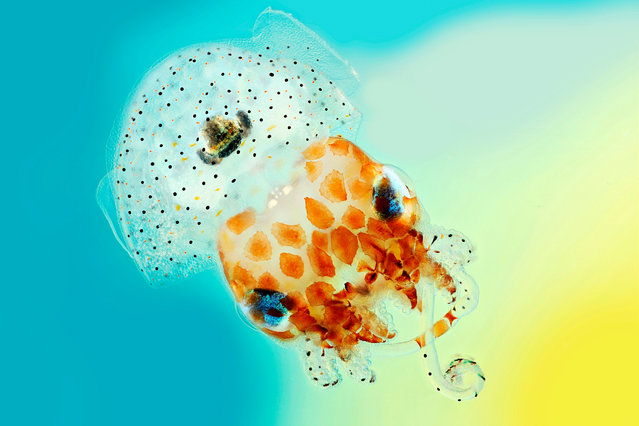
With its huge eyes, comical name and diminutive size, Mark R. Smith’s image of a baby Hawaiian bobtail squid can’t help but raise a smile. A curiously endearing creature, the cephalopod is just 1.5cm across, its mantle cavity bearing more than a passing resemblance to a rather natty shower cap. But it is also a beautiful example of symbiosis – nature’s version of “I’ll scratch your back if you scratch mine” – for on the underside of the squid is a light organ which houses bioluminescent bacteria. The squid offers the bacteria protection and food, while the bacteria emit a glow – a handy trait that the squid uses to offset its silhouette, helping it to evade predators in the depths below. Mark R. Smith’s entry combines several images of a Hawaiian bobtail squid with different focus lengths to create a final picture with greater depth of field than normal. (Photo by Mark R. Smith/Wellcome Images/Macroscopic Solutions)

With its huge eyes, comical name and diminutive size, Mark R. Smith’s image of a baby Hawaiian bobtail squid can’t help but raise a smile. A curiously endearing creature, the cephalopod is just 1.5cm across, its mantle cavity bearing more than a passing resemblance to a rather natty shower cap. But it is also a beautiful example of symbiosis – nature’s version of “I’ll scratch your back if you scratch mine” – for on the underside of the squid is a light organ which houses bioluminescent bacteria. The squid offers the bacteria protection and food, while the bacteria emit a glow – a handy trait that the squid uses to offset its silhouette, helping it to evade predators in the depths below. Mark R. Smith’s entry combines several images of a Hawaiian bobtail squid with different focus lengths to create a final picture with greater depth of field than normal. (Photo by Mark R. Smith/Wellcome Images/Macroscopic Solutions)
Details
08 Mar 2017 00:05:00
In this May 1, 2016 photo, a reluctant donkey is alternately pushed and pulled and enticed with carrots toward town hall in order to be dressed for the costume competition at the annual donkey festival in Otumba, Mexico state, Mexico. Otumba was an important donkey market during Spanish colonial times, standing at the crossroads of major roads leading to Mexico City, where the beasts pulled heavy loads and carried travelers. Today, however, farmers use tractors and pickup trucks, and the donkey population is in decline. (Photo by Rebecca Blackwell/AP Photo)
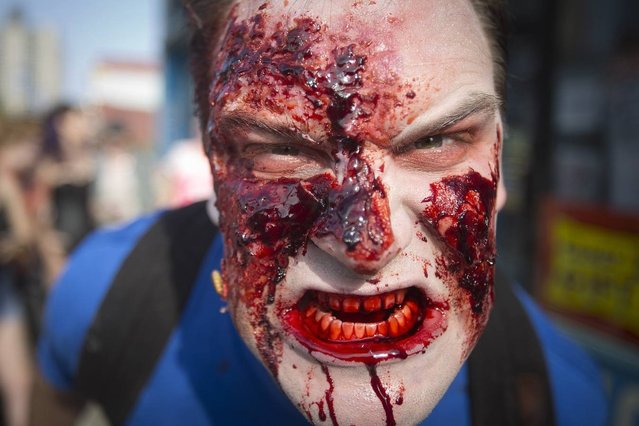

In this May 1, 2016 photo, a reluctant donkey is alternately pushed and pulled and enticed with carrots toward town hall in order to be dressed for the costume competition at the annual donkey festival in Otumba, Mexico state, Mexico. Otumba was an important donkey market during Spanish colonial times, standing at the crossroads of major roads leading to Mexico City, where the beasts pulled heavy loads and carried travelers. Today, however, farmers use tractors and pickup trucks, and the donkey population is in decline. (Photo by Rebecca Blackwell/AP Photo)

Details
04 May 2016 11:55:00