Loading...
Done
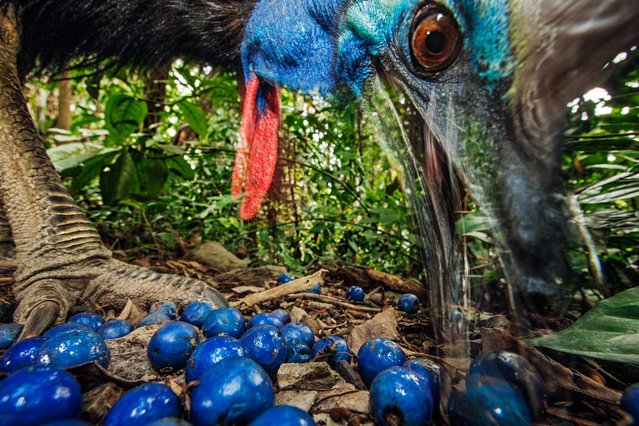
“Cassowaries are large, flightless birds related to emus and (more distantly) to ostriches, rheas, and kiwis”, writes Olivia Judson in the September issue of National Geographic magazine. (Photo by Christian Ziegler/National Geographic)

“Cassowaries are large, flightless birds related to emus and (more distantly) to ostriches, rheas, and kiwis”, writes Olivia Judson in the September issue of National Geographic magazine. How large? People-size: Adult males stand well over five foot five and top 110 pounds. Females are even taller, and can weigh more than 160 pounds. Dangerous when roused, they’re shy and peaceable when left alone. But even birds this big and tough are prey to habitat loss. The dense New Guinea and Australia rain forests where they live have dwindled. Today cassowaries might number 1,500 to 2,000. And because they help shape those same forests – by moving seeds from one place to another – “if they vanish”, Judson writes, “the structure of the forest would gradually change” too. (Photo by Christian Ziegler/National Geographic)
Details
06 Jan 2014 12:21:00
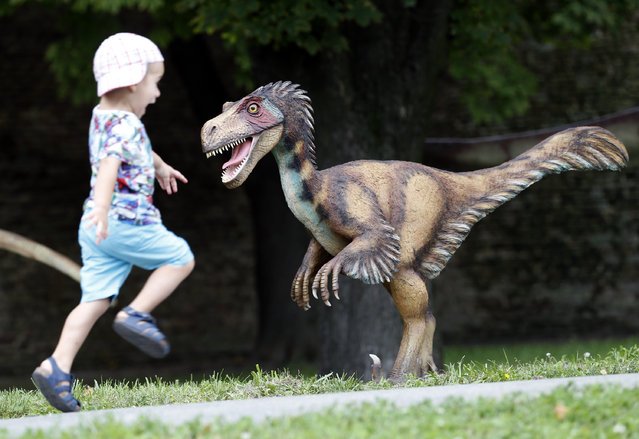
A boy runs past one of the exhibits during the Dinosaurs exhibition in Belgrade, Serbia, Thursday, August 21, 2014. “Dino Park” has opened at Belgrade's Kalemegdan Fortress. (Photo by Darko Vojinovic/AP Photo)

A boy runs past one of the exhibits during the Dinosaurs exhibition in Belgrade, Serbia, Thursday, August 21, 2014. “Dino Park” has opened at Belgrade's Kalemegdan Fortress. (Photo by Darko Vojinovic/AP Photo)
Details
23 Aug 2014 11:56:00
Actress Alison Brie hosts in the Netflix comedy-drama“Glow” Season 1 TV Series, 2017. (Photo by Erica Parise/Netflix/Kobal/Rex Features/Shutterstock)

Actress Alison Brie hosts in the Netflix comedy-drama“Glow” Season 1 TV Series, 2017. (Photo by Erica Parise/Netflix/Kobal/Rex Features/Shutterstock)
Details
21 Jan 2018 07:30:00
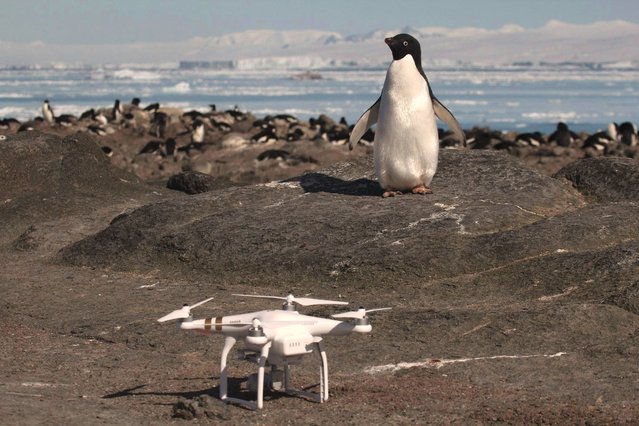
This undated handout photograph released by Stony Brook University/ Louisiana State University on March 2, 2018, shows an Adélie penguin (R) looking at a drone at breeding colony on Heroina Island, Danger Islands, Antarctica. A thriving “hotspot” of some 1.5 million Adelie penguins has been discovered on the remote Danger Islands in the east Antarctic, surprised scientists announced on March 2, 2018. (Photo by Rachael Herman/AFP Photo/Louisiana State University AND Stony Brook University)

This undated handout photograph released by Stony Brook University/ Louisiana State University on March 2, 2018, shows an Adélie penguin looking at a drone at breeding colony on Heroina Island, Danger Islands, Antarctica. A thriving “hotspot” of some 1.5 million Adelie penguins has been discovered on the remote Danger Islands in the east Antarctic, surprised scientists announced on March 2, 2018. (Photo by Rachael Herman/AFP Photo/Louisiana State University AND Stony Brook University)
Details
04 Mar 2018 00:03:00
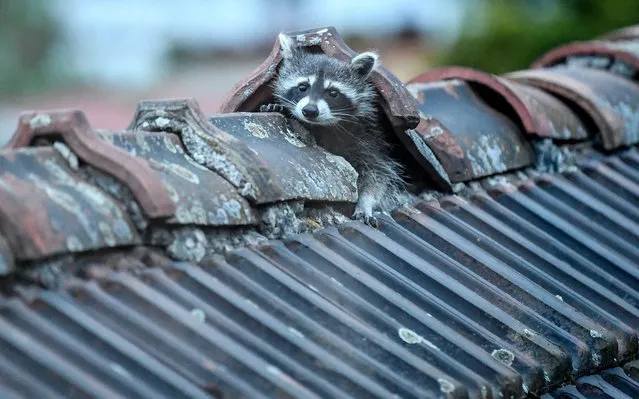
A raccoon crawls out of its hiding place on the roof in Berlin, Germany on May 12, 2020. Every evening he leaves his sleeping place to go in search of food. (Photo by Britta Pedersen/dpa-Zentralbild/dpa)

A raccoon crawls out of its hiding place on the roof in Berlin, Germany on May 12, 2020. Every evening he leaves his sleeping place to go in search of food. (Photo by Britta Pedersen/dpa-Zentralbild/dpa)
Details
17 May 2020 00:05:00
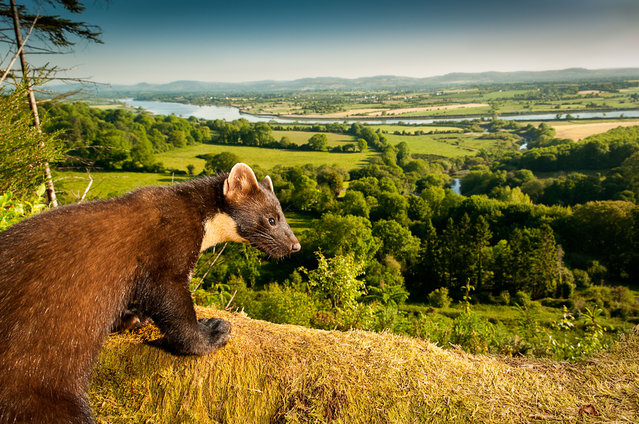
A pine marten – one of a few wild mammals doing well in Britain (although they number just 3,700). A fifth of the country’s wild mammals are at high risk of extinction, research shows. (Photo by Maurice Flynn/The Mammal Society)

A pine marten – one of a few wild mammals doing well in Britain (although they number just 3,700). A fifth of the country’s wild mammals are at high risk of extinction, research shows. (Photo by Maurice Flynn/The Mammal Society)
Details
08 Jul 2018 00:01:00
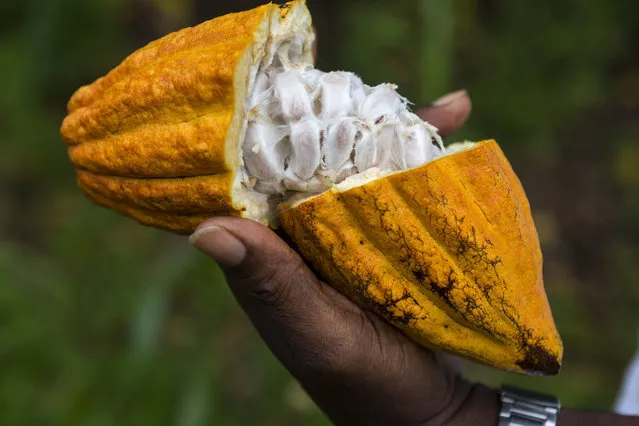
Farmer holding a freshly cut cocoa bean pod, revealing the pulp and seed inside on a rainforest farm. (Photo by Doug McKinlay/Getty Images)

Chocolate is the greatest gift the Earth has given us. The dessert table would be a sad sight without it. It’s so beloved, so appreciated, that the Swedish scientist who named the cocoa plant that gives us chocolate called it Theobroma cacao, which means “food of the gods”. Here: Farmer holding a freshly cut cocoa bean pod, revealing the pulp and seed inside on a rainforest farm. (Photo by Doug McKinlay/Getty Images)
Details
10 Aug 2016 10:20:00
Dancers are warming up backstage during the Tango Dancing Tournament at the XIII International Tango Festival in Medellin, Colombia, on June 18, 2019. The Tango Festival takes place between the 16th and 24th of June. (Photo by Joaquin Sarmiento/AFP Photo)

Dancers are warming up backstage during the Tango Dancing Tournament at the XIII International Tango Festival in Medellin, Colombia, on June 18, 2019. The Tango Festival takes place between the 16th and 24th of June. (Photo by Joaquin Sarmiento/AFP Photo)
Details
21 Jun 2019 00:03:00