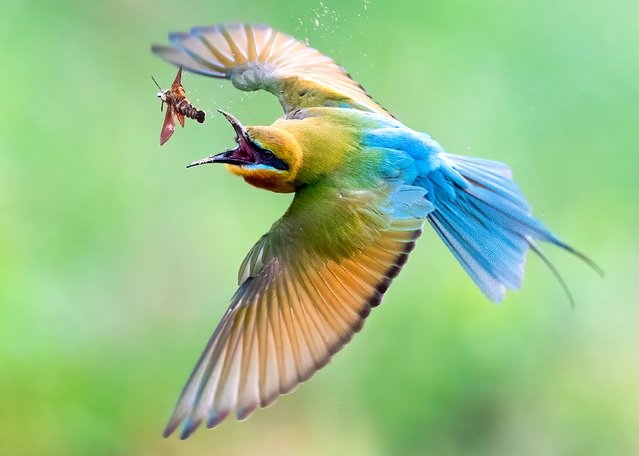
A blue-tailed bee-eater chases down its prey along the banks of the Kaveri River on the outskirts of the city of Mysore, India in the last decade of June 2025. (Photo by Nitin Jain/Solent News)
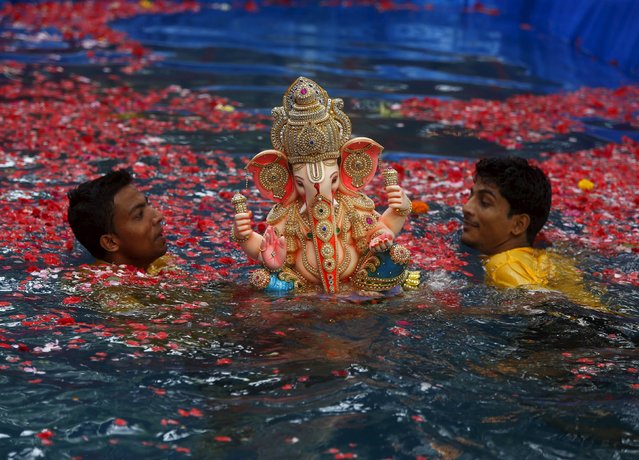
Volunteers carry an idol of the Hindu elephant god Ganesh, the deity of prosperity, in a pond for its immersion during the ten-day-long Ganesh Chaturthi festival in Mumbai, India, September 18, 2015. During the festival, the idols will be taken through the streets in a procession accompanied by dancing and singing, and will be immersed in a river or the sea in accordance with the Hindu faith. (Photo by Shailesh Andrade/Reuters)
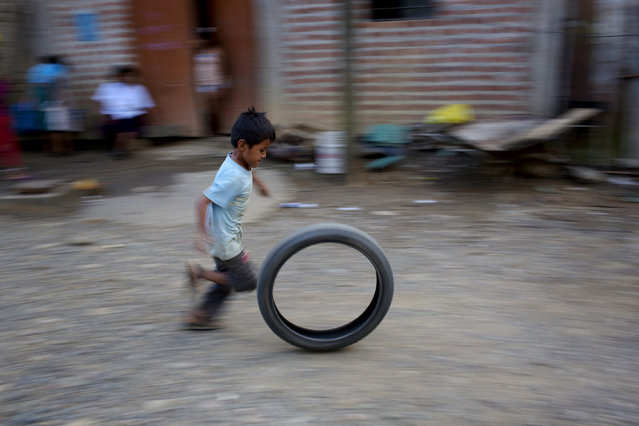
In a simpler time all a child or an adult needed to enjoy the outdoors was a ball and a stick. Or maybe an old tire tied to a high branch to fashion a swing. And the only instruction given to children was to “be home before dark”. Now there are iPads and computers and television screens and shrinking safe public spaces. But despite the distractions and limitations of space, these images show the charm of kicking a ball or skipping rope endures. Sometimes with modifications as a nod to changing times. Here: in this Saturday, June 20, 2015 photo, a boy runs while playing with a motorcycle wheel in Samugari, Ayacucho, Peru. (Photo by Rodrigo Abd/AP Photo)
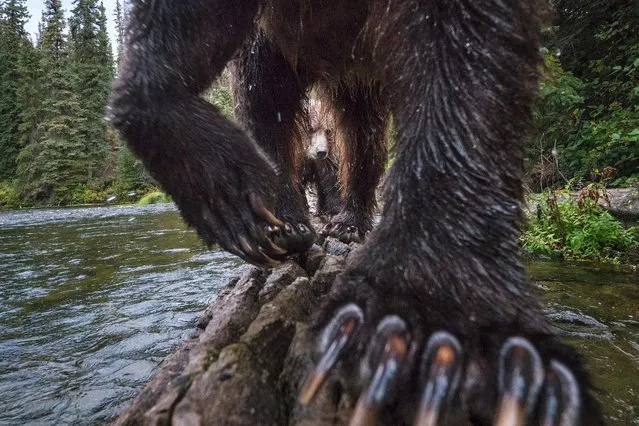
The fourth annual BigPicture Natural World Photography Competition aims to celebrate the diversity of life on Earth, and encourages people to protect and conserve it. Here: “The Salmon Catchers”. Terrestrial Wildlife. To capture this view of a mother grizzly bear and her cub, photographer Peter Mather set up a camera trap on a log that he knew the bears tended to traverse while fishing for salmon, in the Yukon River watershed in Canada. (Photo by Peter Mather/BigPicture Natural World Photography Competition 2017)
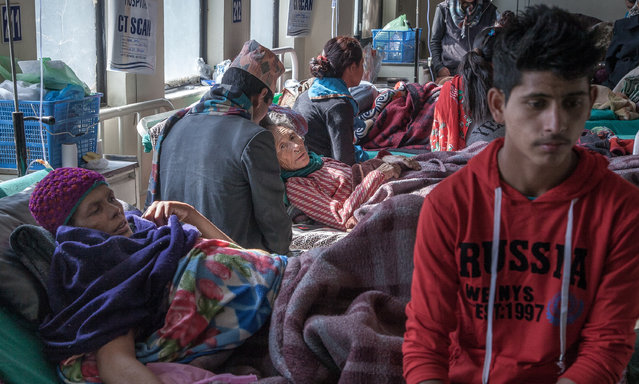
One of the most significant challenges related to cancer in Nepal is the lack of awareness around the prognosis of the disease, as many patients, their families and even healthcare professionals consider cancer to be an incurable disease at any stage. This results in significant delays in bringing patients to hospitals, and high rates of advanced stage cancers and mortality. (Photo by Omar Havana)
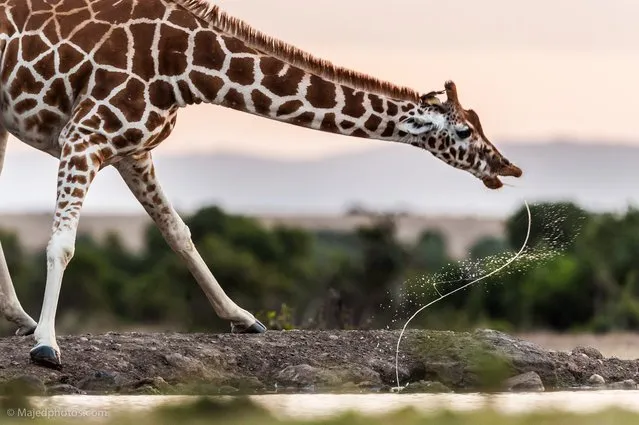
National Geographic invites photographers from around the world to enter the 2013 National Geographic Photography Contest. The grand-prize winner will receive $10,000 (USD) and a trip to National Geographic headquarters in Washington, D.C., to participate in the annual National Geographic Photography Seminar in January 2014. Photo: “We just want to move to search to the Leopard at that morning but we found a group of giraffes come toward a small lake and start drinking it was a nice moment when the Giraffe finish from drinking and leave a letters “S” with motion in the air”. (Photo and caption by Majed Ali/National Geographic Photography Contest)
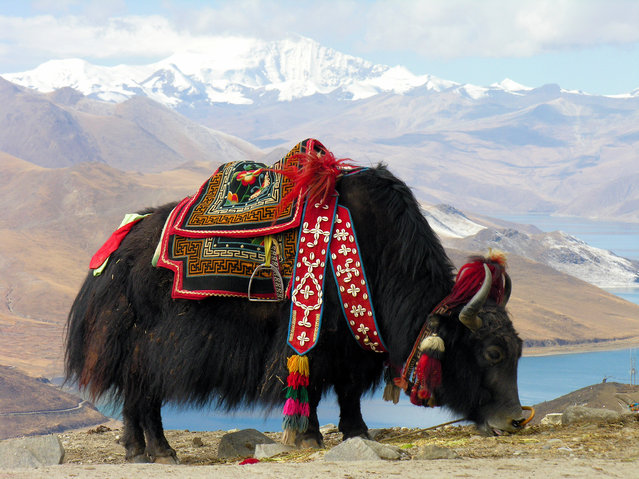
Yak near Yamdrok lake, Tibet. It is a long-haired bovinae found throughout the Himalayan region of south Central Asia, the Tibetan Plateau and as far north as Mongolia and Russia. The Tibetan economy is dominated by subsistence agriculture. Due to limited arable land, the primary occupation of the Tibetan Plateau is raising livestock, such as sheep, cattle, goats, camels, yaks, dzo, and horses. The Tibetan yak is an integral part of Tibetan life. (Photo by Dennis Jarvis)