Loading...
Done
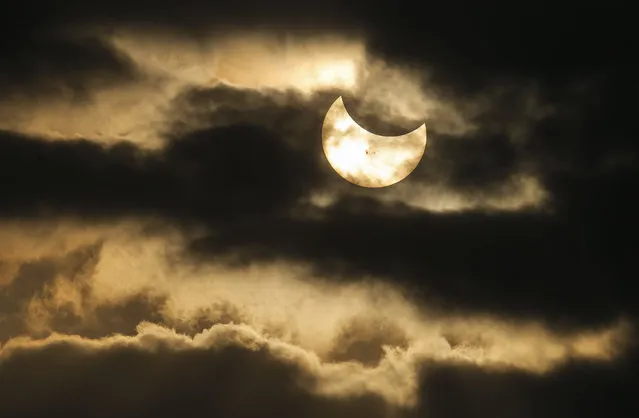
A partial solar eclipse is seen in a break in the clouds during rush hour in downtown Wichita Kan., Thursday, Oct. 23, 2014. (AP Photo/The Wichita Eagle, Travis Heying)

A partial solar eclipse is seen in a break in the clouds during rush hour in downtown Wichita Kan., Thursday, October 23, 2014. A partial eclipse occurs when the moon covers a portion of the sun as seen from the Earth. (AP Photo/The Wichita Eagle, Travis Heying)
Details
24 Oct 2014 12:38:00
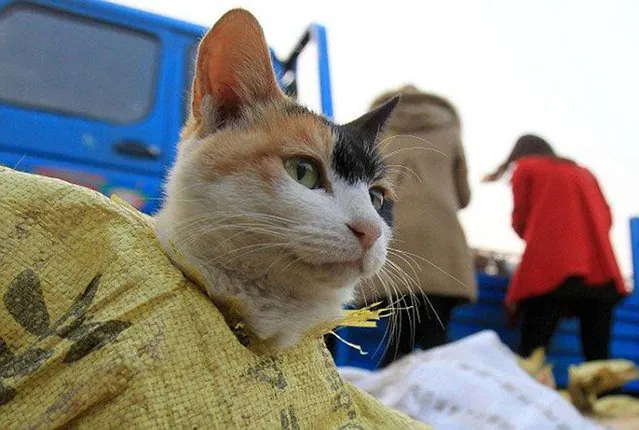
Chinese Cats Saved From The Cooking Pot

A truck filled with 500 cats thought to be destined for restaurants was intercepted on Wednesday in Xuzhou, eastern China’s Jiangsu Province. Officer Sun Hai said he and a colleague pulled the vehicle over during a routine traffic check. The officer commented, “The driver said it was a full load of rabbit, but after we instructed him to uncover the load we were shocked to find a full load of living cats.
Details
13 Mar 2014 14:01:00
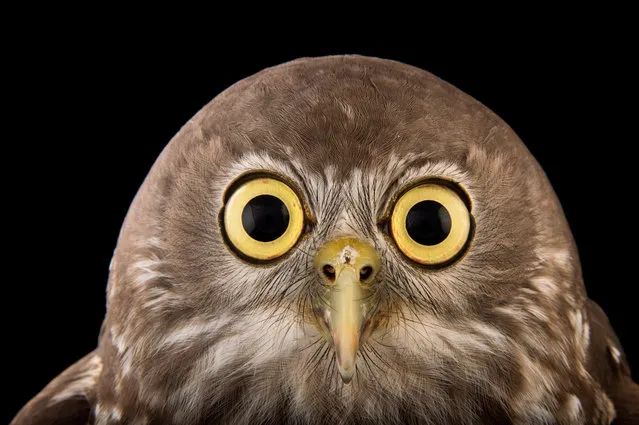
The National Geographic Photo Ark is a travelling exhibition of photographer Joel Sartore’s quest to create a photo archive of biodiversity around the world. So far, Sartore has captured studio portraits of more than 6,000 species – a number that he hopes to double. On 1 July, the ark will open at Melbourne zoo – the first time it has been exhibited in the southern hemisphere. More than 50 portraits will be on display, including many of Australian endangered animals being protected by programs at the zoo itself. These captions have been edited from text supplied by Melbourne zoo. Here: Barking owl. So-named because its call sounds like a barking dog, these birds are native to Australia, Indonesia and Papua New Guinea. In Victoria they are listed as an endangered species, and in 2003 there were estimated to be fewer than 50 breeding pairs. The main threat to the species in Victoria is loss of habitat, especially large trees with hollows in which they can nest and on which many of their prey depend. Apart from a bark, they may utter a chilling scream when they feel threatened. (Photo by Joel Sartore/National Geographic Photo Ark/The Guardian)

The National Geographic Photo Ark is a travelling exhibition of photographer Joel Sartore’s quest to create a photo archive of biodiversity around the world. So far, Sartore has captured studio portraits of more than 6,000 species – a number that he hopes to double. On 1 July, the ark will open at Melbourne zoo – the first time it has been exhibited in the southern hemisphere. More than 50 portraits will be on display, including many of Australian endangered animals being protected by programs at the zoo itself. These captions have been edited from text supplied by Melbourne zoo. Here: Barking owl. (Photo by Joel Sartore/National Geographic Photo Ark/The Guardian)
Details
01 Jul 2017 07:45:00
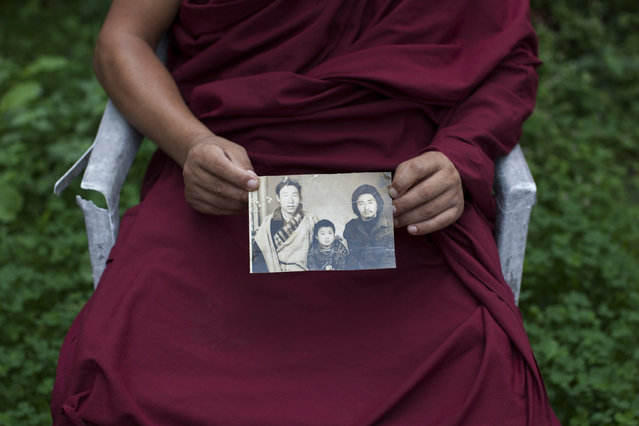
In this Saturday, September 27, 2014 photo, Tibetan monk Dorjee, 38, displays a photograph of his father, left, and himself, center, taken in Tibet, in Dharamsala, India. Dorjee said he held back his tears when he spoke with his parents on the phone after a separation period of 27 years. He exchanged a few words with his father but said his mother fainted on hearing his voice. (Photo by Tsering Topgyal/AP Photo)

“When I was 8 years old, my parents paid a smuggler to take me across the Himalayas, a weekslong walk over the mountains from Tibet to India. It was a trek that tens of thousands of other Tibetans have taken since the Dalai Lama fled a failed 1959 uprising against Chinese rule. My parents must have had their reasons to send me here; they must have had the best of intentions. But 18 years later, I still don't know why they did it. They are not political people. They are small farmers who raise barley and a few yak in a rural area not far from Lhasa, the Tibetan capital. I have not seen them since I left...”. – Tsering Topgyal via The Associated Press. (Photo by Tsering Topgyal/AP Photo)
Details
05 Nov 2014 12:27:00
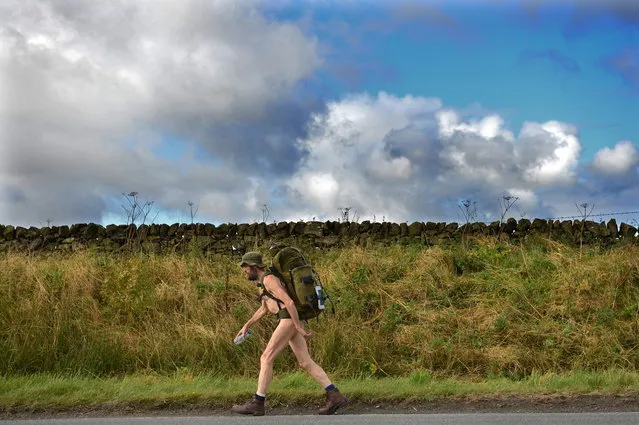
Stephen Gough the naked rambler makes his way south through Peebles in the Scottish Borders, following his release from Saughton Prison yesterday after serving his latest sentence on October 6, 2012 in Peebles, Scotland. The rambler has 18 convictions and has been in prison on and off since 2006 with offences ranging from not wearing clothes in front of the sheriff, breach of the peace and contempt of court. (Photo by Jeff J. Mitchell)

“Stephen Gough (born c. 1959), also known as Steve Gough and the Naked Rambler, is an activist, and a British former Royal Marine. In 2003-2004, he walked the length of Great Britain naked. He did it again in 2005-2006, but was arrested in England and in Scotland. He subsequently spent six years in prison, having been repeatedly rearrested for public nudity within a short period, each time he was released. He has spent most of his sentences in Saughton and Perth prisons, in Scotland”. – Wikipedia

Photo: Stephen Gough the naked rambler makes his way south through Peebles in the Scottish Borders, following his release from Saughton Prison yesterday after serving his latest sentence on October 6, 2012 in Peebles, Scotland. (Photo by Jeff J. Mitchell)

Details
07 Oct 2012 08:18:00
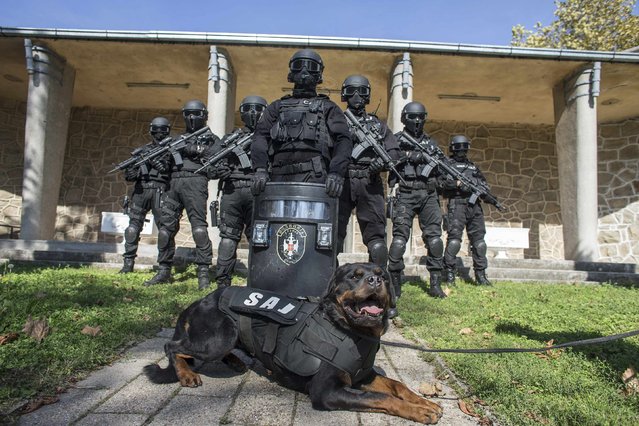
Serbian police officers of the Special Anti-Terrorist Unit pose for a picture in their base outside Belgrade October 8, 2014. (Photo by Marko Djurica/Reuters)

Serbian police officers of the Special Anti-Terrorist Unit pose for a picture in their base outside Belgrade October 8, 2014. When the killing of an unarmed black teenager by a white policeman in Ferguson, Missouri, in August sparked sometimes violent protests, the response of police in camouflage gear and armoured vehicles wielding stun grenades and assault rifles seemed more like a combat operation than a public order measure. Some U.S. police departments have recently acquired U.S. military-surplus hardware from wars abroad, but there are many law enforcers around the world whose rules of engagement also allow the use of lethal force with relatively few restrictions. But for every regulation that gives police wide scope to use firearms, there is another code that sharply limits their use. In Serbia, police may use measures ranging from batons to special vehicles, water cannon and tear gas on groups of people who have gathered illegally and are behaving in a way that is violent or could cause violence, but they may use firearms only when life is endangered. (Photo by Marko Djurica/Reuters)
Details
27 Nov 2014 14:53:00
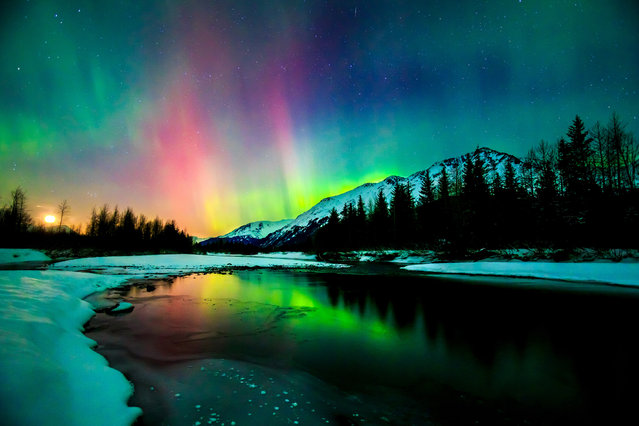
A Hawaiian photographer braved freezing temperatures for this cold SNAP – of what appears to be a firebird bursting from an aurora. (Photo by CJ Kale/Caters News)

“A Hawaiian photographer braved freezing temperatures for this cold SNAP – of what appears to be a firebird bursting from an aurora. Keen snapper CJ Kale, more used to sun, sea and sand while at work than snow, captured the incredible moment while on a trip to Alaska. It was his first time seeing the spectacular sight and lucked out – capturing some of the rarest colors of aurora on his first night”. – Caters News
Details
12 Aug 2014 12:15:00
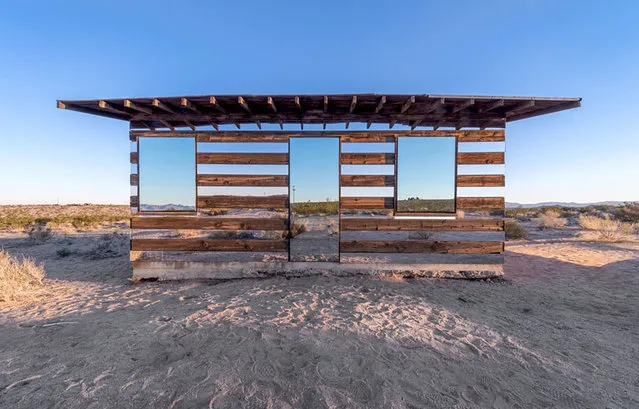
House Of Mirror In The Californian Desert, USA

In the desert near Joshua Tree, California, there stands a 70-year-old homestead cabin that isn’t all there. The ethereal cabin is part of an outdoor art installation by artist Phillip K. Smith III called Lucid Homestead. To give the cabin its striking appearance, the artist replaced strips of the wall with mirrors and the windows with mirrored panels that light up at night. The building reflects the desert sun and environment around it, making it seem like an airy and transparent space
Details
17 Dec 2013 11:13:00