Loading...
Done
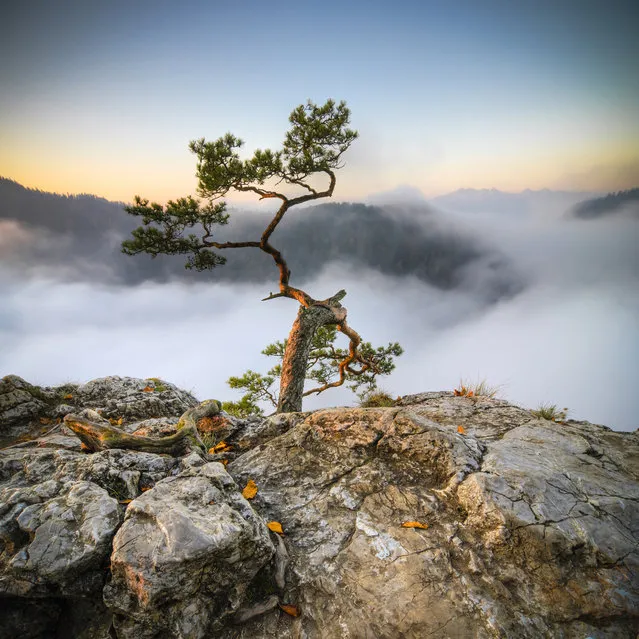
“Sokolica”. Sokolica, Poland. (Photo and caption by Marcin Kęsek/National Geographic Traveler Photo Contest)

“Sokolica”. Sokolica, Poland. (Photo and caption by Marcin Kęsek/National Geographic Traveler Photo Contest)

ATTENTION! All pictures are presented in high resolution. To see Hi-Res images – just TWICE click on any picture. In other words, click small picture – opens the BIG picture. Click BIG picture – opens VERY BIG picture.
Details
25 Jun 2013 09:13:00
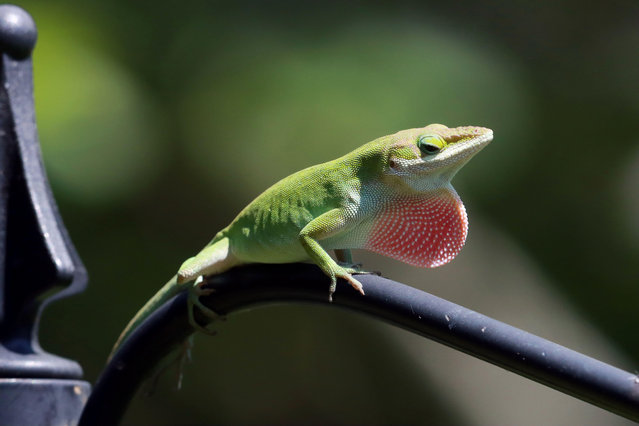
A male green anole lizard flares his throat fan in a backyard in Cary, North Carolina on April 27, 2021. This pink section is actually a thin flap of skin that hangs down below the green anole's throat. Anoles are renowned for their displays in which they do pushups, bob their heads up and down, and unfurl their colorful dewlaps. The male anole uses it for two primary purposes: to protect his territory and attract a mate. (Photo by Bob Karp/ZUMA Press Wire/Alamy Live News)

A male green anole lizard flares his throat fan in a backyard in Cary, North Carolina on April 27, 2021. This pink section is actually a thin flap of skin that hangs down below the green anole's throat. Anoles are renowned for their displays in which they do pushups, bob their heads up and down, and unfurl their colorful dewlaps. The male anole uses it for two primary purposes: to protect his territory and attract a mate. (Photo by Bob Karp/ZUMA Press Wire/Alamy Live News)
Details
15 May 2022 05:18:00
Looters scramble in Philipsburg, St. Maarten, Sunday September 10, 1995 for goods in the Ram's department store, which contained mostly food and liquor. No attempts are currently being made by Dutch troops on the island to stop the looting, since few relief supplies have arrived in St. Maarten, which was ravaged on Tuesday by Hurricane Luis. (Photo by John McConnico/AP Photo)

Looters scramble in Philipsburg, St. Maarten, Sunday September 10, 1995 for goods in the Ram's department store, which contained mostly food and liquor. No attempts are currently being made by Dutch troops on the island to stop the looting, since few relief supplies have arrived in St. Maarten, which was ravaged on Tuesday by Hurricane Luis. (Photo by John McConnico/AP Photo)
Details
12 Sep 2015 13:59:00
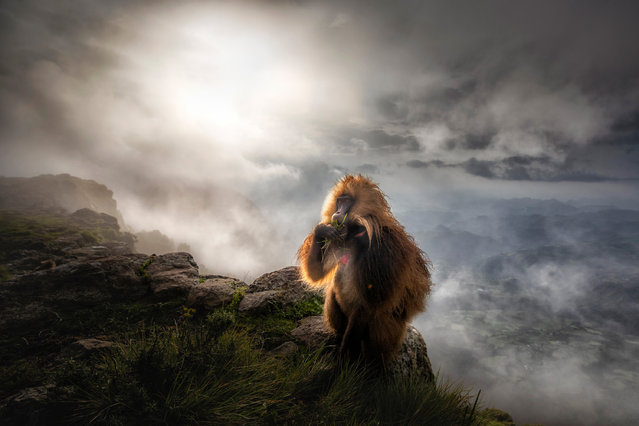
Highly commended, mammals: Gelada after the storm – Marco Gaiotti (Italy). “Gelada baboons are the only monkey species in the world that feed on grasses. They are native to the tableland of Ethiopia. Every morning large family groups wander from their sleeping places in the steep rock face, up to 1,000 metres high, to the feeding grounds at the tablelands. This image clearly depicts their feeding strategy: they pull out bunches of grass, sort the stalks and then lift them to their mouth. This shot was taken towards the end of the rainy season after a heavy storm”. (Photo by Marco Gaiotti/2019 GDT European Wildlife Photographer of the Year)

Highly commended, mammals: Gelada after the storm – Marco Gaiotti (Italy). “Gelada baboons are the only monkey species in the world that feed on grasses. They are native to the tableland of Ethiopia. Every morning large family groups wander from their sleeping places in the steep rock face, up to 1,000 metres high, to the feeding grounds at the tablelands. This image clearly depicts their feeding strategy: they pull out bunches of grass, sort the stalks and then lift them to their mouth. This shot was taken towards the end of the rainy season after a heavy storm”. (Photo by Marco Gaiotti/2019 GDT European Wildlife Photographer of the Year)
Details
31 Oct 2019 00:03:00
A Rohingya refugee woman is helped from a boat as she arrives exhausted on the Bangladesh side of the Naf River at Shah Porir Dwip after fleeing her village in Myanmar, on October 1, 2017 in Cox's Bazar, Bangladesh. (Photo by Kevin Frayer/Getty Images)

A Rohingya refugee woman is helped from a boat as she arrives exhausted on the Bangladesh side of the Naf River at Shah Porir Dwip after fleeing her village in Myanmar, on October 1, 2017 in Cox's Bazar, Bangladesh. (Photo by Kevin Frayer/Getty Images)
Details
17 Oct 2017 05:51:00
A protester gestures during a “Yellow vest” protest against higher fuel prices during clashes on the Champs-Elysees in Paris, France, November 24, 2018. (Photo by Benoit Tessier/Reuters)

A protester gestures during a “Yellow vest” protest against higher fuel prices during clashes on the Champs-Elysees in Paris, France, November 24, 2018. (Photo by Benoit Tessier/Reuters)
Details
26 Nov 2018 00:07:00
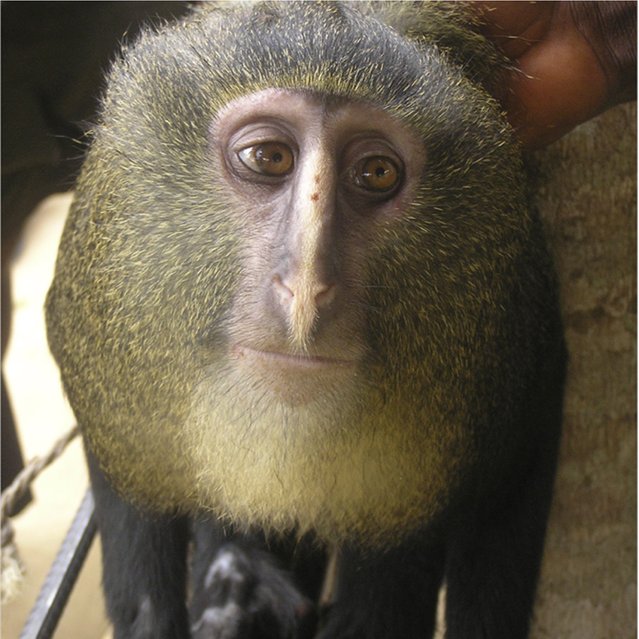
A new species of monkey found in the Democratic Republic of the Congo and identified as Lesula (Cercopithecus lomamiensis) is seen in this undated photograph from an article published September 12, 2012 in the science journal PLOS One. (Photo by Hart J. A., Detwiler K. M., Gilbert C. C./Reuters)

A new species of monkey found in the Democratic Republic of the Congo and identified as Lesula (Cercopithecus lomamiensis) is seen in this undated photograph from an article published September 12, 2012 in the science journal PLOS One. The monkey was first seen in 2007 by researchers John and Terese Hart of the Peabody Museum of Natural History at Yale Research Project. The finding of C. lomamiensis represents only the second new species of African monkey to be discovered in the past 28 years, according to the research article. (Photo by Hart J. A., Detwiler K. M., Gilbert C. C./Reuters)
Details
27 Sep 2012 08:17:00
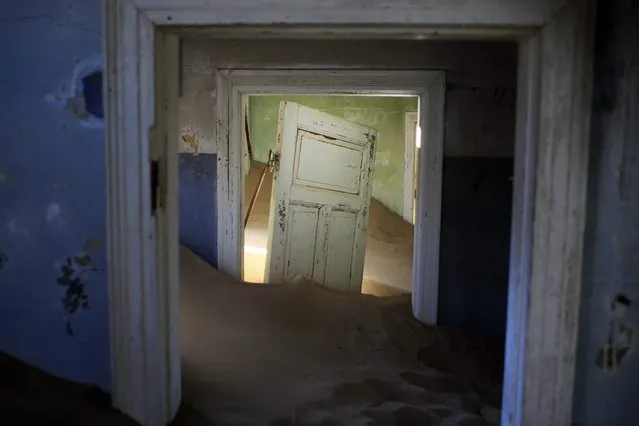
In this July 23, 2013 photo, sand fills an abandoned house in Kolmanskop, Namibia. Kolmanskop, was a diamond mining town south of Namibia, build in 1908 and deserted in 1956. SInce then, the desert slowly reclaims its territory, with sand invading the buildings where 350 German colonists and more than 800 local workers lived during its hay-days of the 1920s. (Photo by Jerome Delay/AP Photo)

In this July 23, 2013 photo, sand fills an abandoned house in Kolmanskop, Namibia. Kolmanskop, was a diamond mining town south of Namibia, build in 1908 and deserted in 1956. SInce then, the desert slowly reclaims its territory, with sand invading the buildings where 350 German colonists and more than 800 local workers lived during its hay-days of the 1920s. (Photo by Jerome Delay/AP Photo)
Details
14 Nov 2014 14:34:00