Loading...
Done
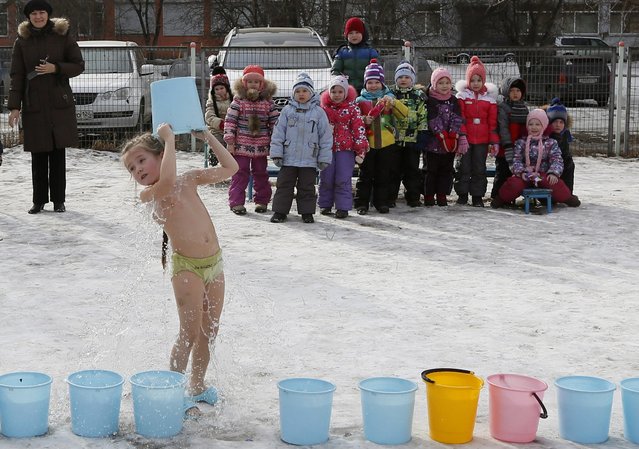
Children watch their classmate pour cold water on herself under the watch of a fitness coach at a local kindergarten in Russia's Siberian city of Krasnoyarsk, March 11, 2015. The program, which also involves sports training and sauna usage, has been practiced by the kindergarten for more than 15 years as they believe it has health benefits and keeps the children fit. (Photo by Ilya Naymushin/Reuters)

Children watch their classmate pour cold water on herself under the watch of a fitness coach at a local kindergarten in Russia's Siberian city of Krasnoyarsk, March 11, 2015. The program, which also involves sports training and sauna usage, has been practiced by the kindergarten for more than 15 years as they believe it has health benefits and keeps the children fit. Children start pouring cold water on themselves outdoors after about three years of training and undergoing medical tests, and the kindergarten is the only one in the region that practices these exercises, according to employees. (Photo by Ilya Naymushin/Reuters)
Details
19 Mar 2015 13:18:00
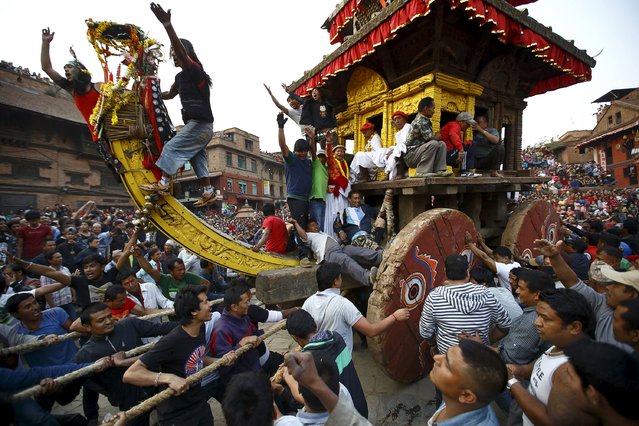
The chariot of God Bhairab is pulled through the city centre of Bhaktapur near Kathmandu during the Bisket festival April 10, 2015. The festival, which runs for more than a week and coincides with the Nepalese New Year, involves devotees offering prayers and the pulling of two chariots, one carrying the idol of God Bhairab and the other with the idol of Goddess Bhadrakali, around the ancient city of Bhaktapur. (Photo by Navesh Chitrakar/Reuters)

The chariot of God Bhairab is pulled through the city centre of Bhaktapur near Kathmandu during the Bisket festival April 10, 2015. The festival, which runs for more than a week and coincides with the Nepalese New Year, involves devotees offering prayers and the pulling of two chariots, one carrying the idol of God Bhairab and the other with the idol of Goddess Bhadrakali, around the ancient city of Bhaktapur. Devotees participate in the festival with the belief that they will be blessed with good health, fortune and harvest for the coming year. (Photo by Navesh Chitrakar/Reuters)
Details
12 Apr 2015 07:52:00
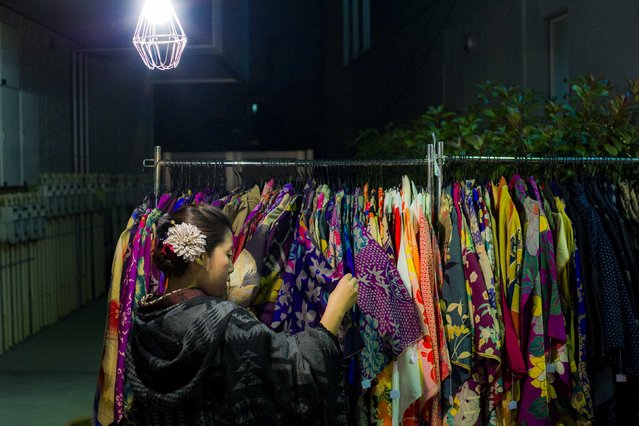
A woman browses through kimonos for sale at Boroichi flea market in Tokyo December 15, 2014. In the 16th century, Boroichi was a place for farmers to buy and sell rags, known as boro, for mending clothes and weaving sandals. Now in its 436th year, the original spirit lingers, with about 700 stands hawking fabric, used clothes and piles of rags. Others sell kitchen tools, pottery, seaweed and spices. (Photo by Thomas Peter/Reuters)

A woman browses through kimonos for sale at Boroichi flea market in Tokyo December 15, 2014. In the 16th century, Boroichi was a place for farmers to buy and sell rags, known as boro, for mending clothes and weaving sandals. Now in its 436th year, the original spirit lingers, with about 700 stands hawking fabric, used clothes and piles of rags. Others sell kitchen tools, pottery, seaweed and spices. About 200,000 people flock to the market, which is only open for four mid-winter days a year – two in December and two in January. (Photo by Thomas Peter/Reuters)
Details
19 Dec 2014 12:50:00
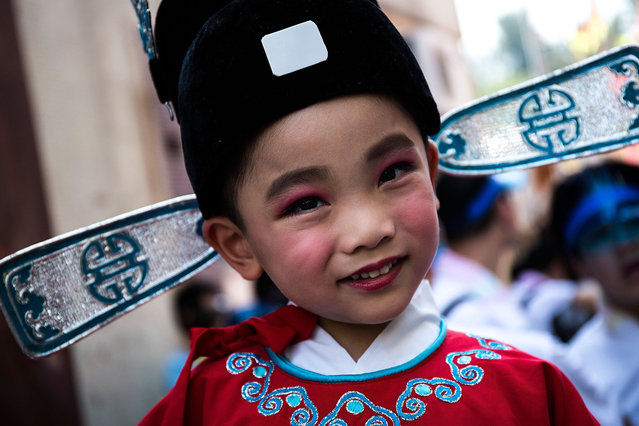
A child parades on a float during the Bun Festival on May 25, 2015 in Hong Kong, Hong Kong. One of Hong Kong's most colourful cultural celebration event, Cheung Chau Bun Festival, will be staged on 25 May 2015 (Monday) till 26 May 2015 midnight (Tuesday). This festival has over 100 years of history. (Photo by Lam Yik Fei/Getty Images)

A child parades on a float during the Bun Festival on May 25, 2015 in Hong Kong, Hong Kong. One of Hong Kong's most colourful cultural celebration event, Cheung Chau Bun Festival, will be staged on 25 May 2015 (Monday) till 26 May 2015 midnight (Tuesday). This festival has over 100 years of history. Every year, thousands of people descend upon the tiny island for The Piu Sik (Floating Colours) Parade, Lucky Bun (Ping On Bun) and The Bun Scrambling Competition, the ancient custom during the festival. (Photo by Lam Yik Fei/Getty Images)
Details
26 May 2015 10:54:00
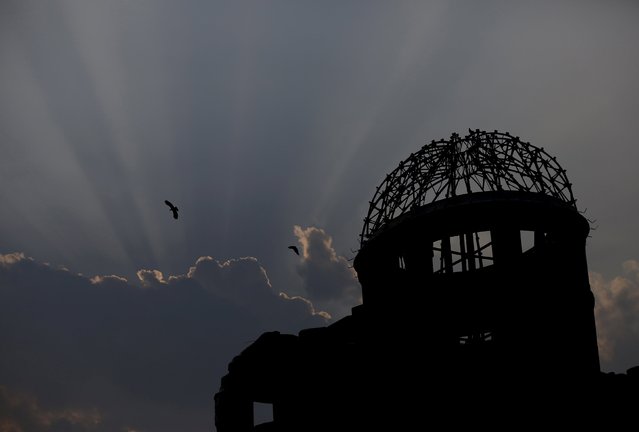
Birds fly over the Atomic Bomb Dome in Hiroshima, western Japan July 29, 2015. On August 6, 1945, the U.S. dropped the atomic bomb on Hiroshima, killing about 140,000 by the end of the year in a city of 350,000 residents, in the world's first nuclear attack. (Photo by Issei Kato/Reuters)

Birds fly over the Atomic Bomb Dome in Hiroshima, western Japan July 29, 2015. On August 6, 1945, the U.S. dropped the atomic bomb on Hiroshima, killing about 140,000 by the end of the year in a city of 350,000 residents, in the world's first nuclear attack. Three days later, a second atomic bomb was dropped on Nagasaki. Influenced by the shadows scorched into outdoor surfaces by the heat of the blasts 70 years ago, Reuters photographer Issei Kato pays homage to survivors, residents and historic buildings in both cities in a personal project that captures the shadows of today. (Photo by Issei Kato/Reuters)
Details
04 Aug 2015 12:01:00
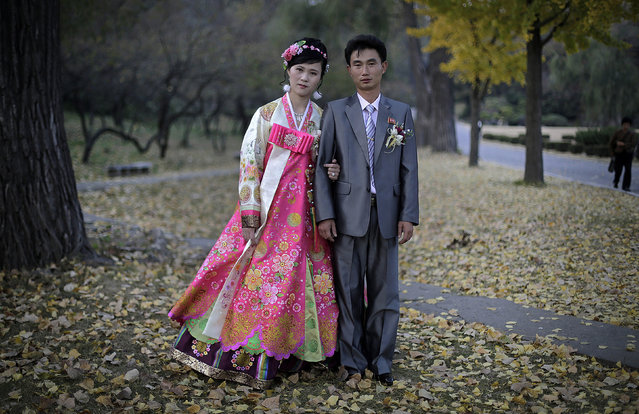
In this October 25, 2014, file photo, North Korean bride Ri Ok Ran, 28, and groom Kang Sung Jin, 32, pose for a portrait at the Moran Hill where they went to take wedding pictures, in Pyongyang, North Korea. The couple were married after dating for about two years. Their motto: “To have many children so that they can serve in the army and defend and uphold our leader and country, for many years into the future”. (Photo by Wong Maye-E/AP Photo)

Associated Press photographer Wong Maye-E tries to get her North Korean subjects to open up as much as is possible in an authoritarian country with no tolerance for dissent and great distrust of foreigners. She has taken dozens of portraits of North Koreans over the past three years, often after breaking the ice by taking photos with an instant camera and sharing them. Her question for everyone she photographs: What is your motto? Their answers reflect both their varied lives and the government that looms incessantly over all of them. (Photo by Wong Maye-E/AP Photo)
Details
16 Jun 2017 06:28:00
Burlesque dancer and Lucha VaVoom co-founder Rita D'Albert gets dressed before the Lucha VaVoom “Night of the Vampire” performance in Los Angeles, California October 29, 2014. (Photo by Patrick T. Fallon/Reuters)

Burlesque dancer and Lucha VaVoom co-founder Rita D'Albert gets dressed before the Lucha VaVoom “Night of the Vampire” performance in Los Angeles, California October 29, 2014. (Photo by Patrick T. Fallon/Reuters)
Details
01 Nov 2014 14:36:00
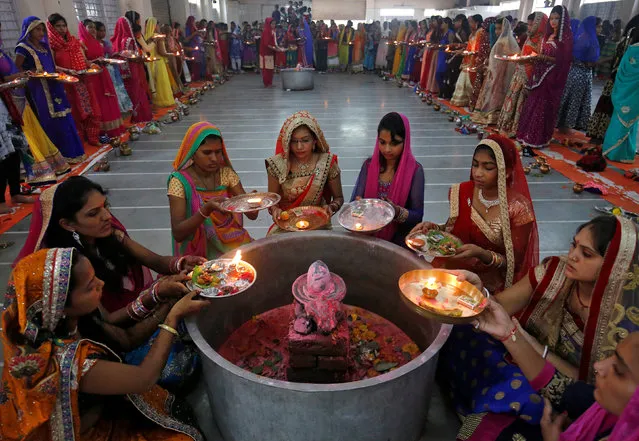
Hindu women perform a ritual known as Aarti around a Shivling (a symbol of Lord Shiva) on the last day of Jaya Parvati Vrat festival in Ahmedabad, India, July 10, 2017. (Photo by Amit Dave/Reuters)

Hindu women perform a ritual known as Aarti around a Shivling (a symbol of Lord Shiva) on the last day of Jaya Parvati Vrat festival in Ahmedabad, India, July 10, 2017. (Photo by Amit Dave/Reuters)
Details
11 Jul 2017 06:09:00