Loading...
Done
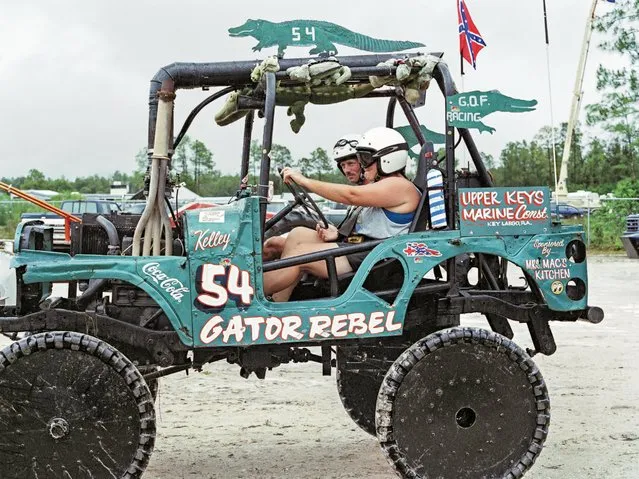
Kelley McMann, Gator Rebel, 2002. (Photo by Malcolm Lightner)

The Mile O' Mud is a 7/8-mile oval track with a 1/8-mile diagonal lane slashed through the center. The racing lanes are approximately 60 feet wide. On average, the muddy water is four to six feet deep, with three strategically placed holes. The largest hole, located in front of the grandstand, is the treacherous “Sippy Hole”, named for the legendary driver “Mississippi” Milton Morris, Swamp Buggy King 1955, who repeatedly got stuck in it. (Photo by Malcolm Lightner)
Details
19 May 2016 11:20:00
Unidentified relatives and friends of passengers who were flying in an EgyptAir plane that vanished from radar en route from Paris to Cairo react as they wait outside the Egyptair in-flight service building where relatives are being held at Cairo International Airport, Egypt May 19, 2016. (Photo by Amr Abdallah Dalsh/Reuters)

Unidentified relatives and friends of passengers who were flying in an EgyptAir plane that vanished from radar en route from Paris to Cairo react as they wait outside the Egyptair in-flight service building where relatives are being held at Cairo International Airport, Egypt May 19, 2016. (Photo by Amr Abdallah Dalsh/Reuters)
Details
20 May 2016 12:47:00
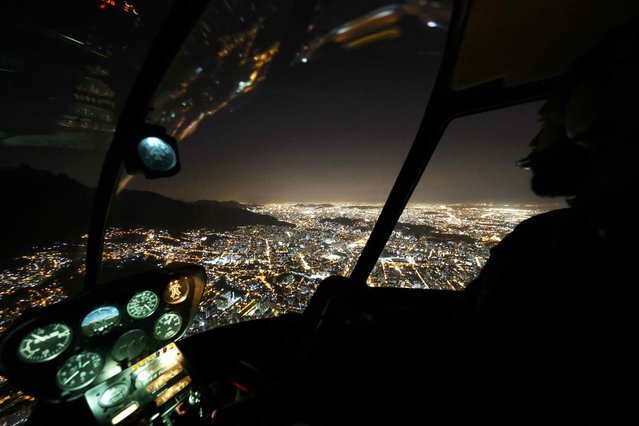
A pilot steers his helicopter at night over Rio de Janeiro, Brazil, less than two weeks before the start of the Rio 2016 Olympic Games, July 23, 2016. Picture taken July 23, 2016. (Photo by Pawel Kopczynski/Reuters)

A pilot steers his helicopter at night over Rio de Janeiro, Brazil, less than two weeks before the start of the Rio 2016 Olympic Games, July 23, 2016. Picture taken July 23, 2016. (Photo by Pawel Kopczynski/Reuters)
Details
26 Jul 2016 10:46:00
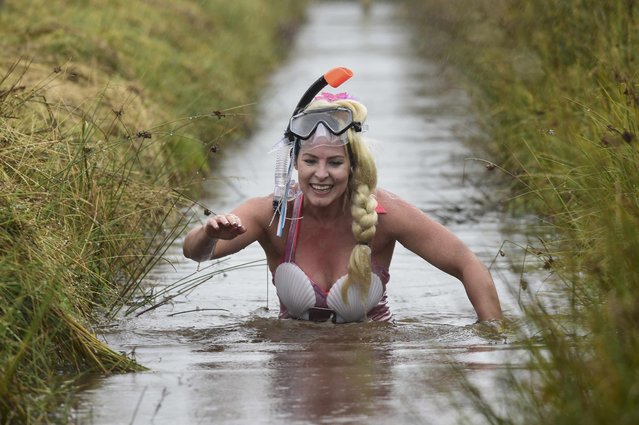
A competitor takes part in the 31st World Bog Snorkelling Championships, held annually at Llanwrtyd Wells in Wales, Britain August 28, 2016. (Photo by Rebecca Naden/Reuters)

A competitor takes part in the 31st World Bog Snorkelling Championships, held annually at Llanwrtyd Wells in Wales, Britain August 28, 2016. Entrants must negotiate two lengths of a 60-yard trench through the peat bog in the quickest possible time without using any conventional swimming strokes. (Photo by Rebecca Naden/Reuters)
Details
29 Aug 2016 07:40:00
A woman struggles to drink homemade alcohol poured from the mouth of an idol of “Swet Bhairab” during the annual Indra Jatra festival to worship Indra, Kumari and other deities and to mark the end of monsoon season in Kathmandu, Nepal on September 15, 2019. (Photo by Monika Deupala/Reuters)

A woman struggles to drink homemade alcohol poured from the mouth of an idol of “Swet Bhairab” during the annual Indra Jatra festival to worship Indra, Kumari and other deities and to mark the end of monsoon season in Kathmandu, Nepal on September 15, 2019. (Photo by Monika Deupala/Reuters)
Details
21 Oct 2019 00:01:00
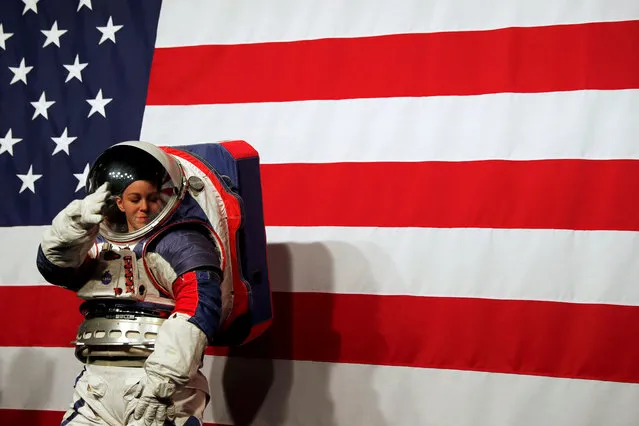
Advanced Space Suit Engineer at NASA Kristine Davis wears the xEMU prototype space suit for the next astronaut to the moon by 2024, during its presentation at NASA headquarters in Washington, U.S., October 15, 2019. (Photo by Carlos Jasso/Reuters)

Advanced Space Suit Engineer at NASA Kristine Davis wears the xEMU prototype space suit for the next astronaut to the moon by 2024, during its presentation at NASA headquarters in Washington, U.S., October 15, 2019. (Photo by Carlos Jasso/Reuters)
Details
22 Oct 2019 00:03:00
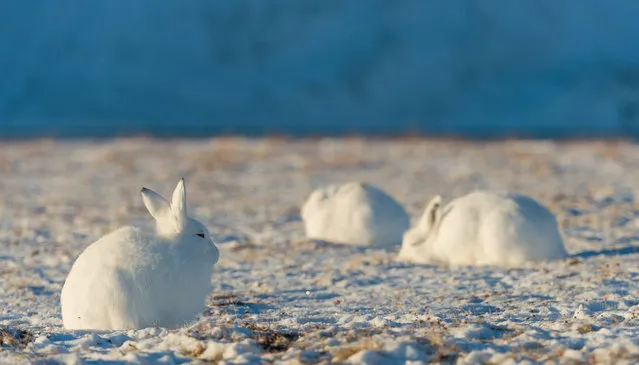
Arctic Hare

The arctic hare, or polar rabbit, is a species of hare which is adapted largely to polar and mountainous habitats. The arctic hare survives with a thick coat of fur and usually digs holes in the ground or under snow to keep warm and sleep. Arctic hares look like rabbits but have shorter ears, are taller when standing, and, unlike rabbits, can thrive in cold climates. They can travel together with many other hares, sometimes huddling with dozens or more, but are usually found alone, taking, in some cases, more than one partner. The arctic hare can run up to 60 kilometres per hour (40 mph). Its predators include the arctic wolf, arctic fox, and ermine.
Details
17 Mar 2014 13:56:00
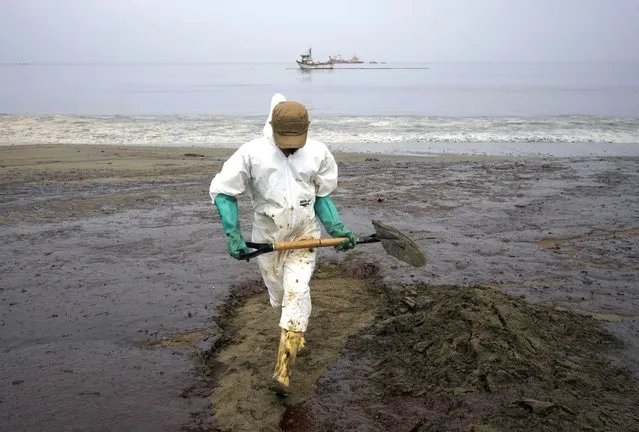
A worker, dressed in a protective suit, cleans Conchitas Beach contaminated by an oil spill, in Ancon, Peru, Thursday, January 20, 2022. The oil spill on the Peruvian coast was caused by the waves from an eruption of an undersea volcano in the South Pacific nation of Tonga. (Photo by Martin Mejia/AP Photo)

A worker, dressed in a protective suit, cleans Conchitas Beach contaminated by an oil spill, in Ancon, Peru, Thursday, January 20, 2022. The oil spill on the Peruvian coast was caused by the waves from an eruption of an undersea volcano in the South Pacific nation of Tonga. (Photo by Martin Mejia/AP Photo)
Details
27 Jan 2022 06:55:00