Loading...
Done
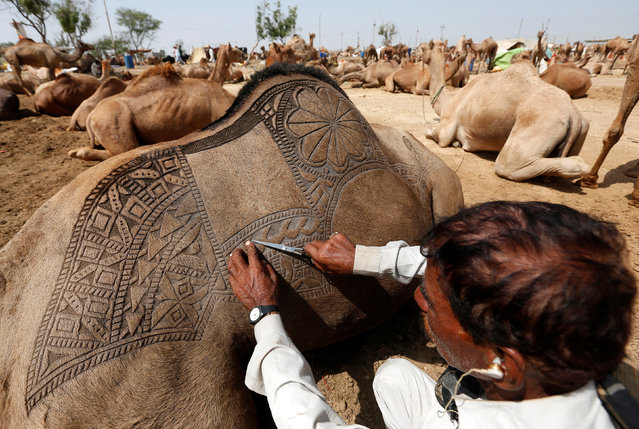
A man uses a scissors to make intricate decorative patterns on a camel's back before displaying it for sale at a makeshift cattle market ahead of the Eid al-Adha festival in Karachi, Pakistan, September 9, 2016. (Photo by Akhtar Soomro/Reuters)

A man uses a scissors to make intricate decorative patterns on a camel's back before displaying it for sale at a makeshift cattle market ahead of the Eid al-Adha festival in Karachi, Pakistan, September 9, 2016. (Photo by Akhtar Soomro/Reuters)
Details
10 Sep 2016 09:03:00
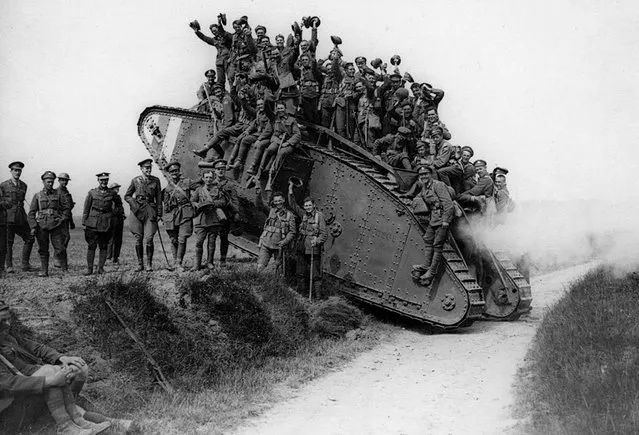
These black-and-white photos are taken from the new book “Armoured Warfare in the First World War 1916 – 1918” by Anthony Tucker-Jones and published by Pen & Sword Military. “Interestingly the British, French and Germans took completely different approaches with varying results”. The British military produced “Little Willie” in Autumn 1915 weighing 18 tonnes, which had a crew of two plus four gunners. “Inspired by a tracked artillery tractor “Little Willie” was referred to as a water tank – hence the name tank – to ensure secrecy”, said Anthony. “This led to the strange looking Mark I with its peculiar rhomboid shape, designed to cross trenches with guns in sponsons on either side. The Germans saw the tank as unchivalrous and were slow to grasp its utility. They favoured the Stormtrooper (specialist soldiers used to infiltrate enemy trenches) and artillery, not the tank”, said Anthony. “However, they didn’t hesitate to make use of captured British tanks. Although the tank helped secure victory and German soldiers dubbed it “Germany’s Downfall” the country was ultimately brought to its knees by the Allies blockade”. Here: British troops hitch a ride on a Mark IV after the massed tank fleet spearheading attack at Cambrai on November 20, 1917. (Photo by Anthony Tucker-Jones/Mediadrumworld.com)

These black-and-white photos are taken from the new book “Armoured Warfare in the First World War 1916 – 1918” by Anthony Tucker-Jones and published by Pen & Sword Military. Here: British troops hitch a ride on a Mark IV after the massed tank fleet spearheading attack at Cambrai on November 20, 1917. (Photo by Anthony Tucker-Jones/Mediadrumworld.com)
Details
23 Feb 2017 00:02:00
A young woman wearing no trousers hits the ski slopes at a ski resort in Xuzhou, in east China's Jiangsu province on January 13, 2015 in a promotional effort to equal “No Pants Subway Ride”, which was marked on January 11 this year. (Photo by AFP Photo)

A young woman wearing no trousers hits the ski slopes at a ski resort in Xuzhou, in east China's Jiangsu province on January 13, 2015 in a promotional effort to equal “No Pants Subway Ride”, which was marked on January 11 this year. The promotional “No Pants Subway Ride” stunt on January 11 was held as commuters in some 60 cities around the world braved public transportation in their undies, which has gone global since its first staging by US group Improv Everywhere in New York in 2002. (Photo by AFP Photo)
Details
17 Jan 2015 12:46:00
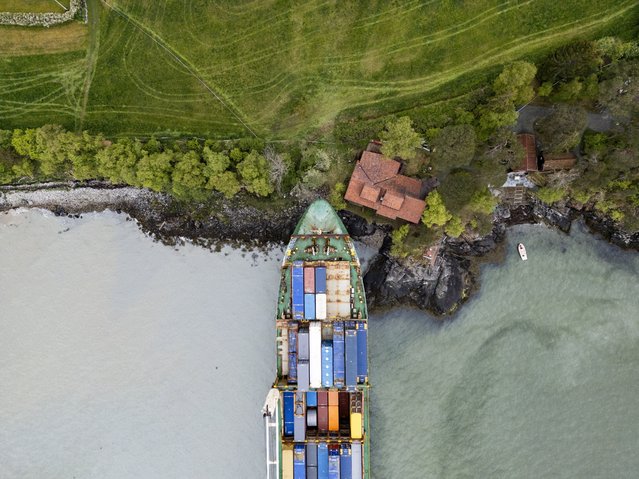
The container ship NCL Salten ran aground at Byneset, outside Trondheim, Norway. A man in Norway woke up to find a massive container ship in his front garden. The 135-metre (443-foot) vessel missed Johan Helberg's house by a few metres at around 5am local time on Thursday, May 22, 2025 in Byneset, near Trondheim. Mr. Helberg was only made aware of the incident after his panicked neighbour, who had seen the ship heading straight for shore, repeatedly rang his doorbell and eventually called him on the phone. (Photo by South West News Service)

The container ship NCL Salten ran aground at Byneset, outside Trondheim, Norway. A man in Norway woke up to find a massive container ship in his front garden. The 135-metre (443-foot) vessel missed Johan Helberg's house by a few metres at around 5am local time on Thursday, May 22, 2025 in Byneset, near Trondheim. Mr. Helberg was only made aware of the incident after his panicked neighbour, who had seen the ship heading straight for shore, repeatedly rang his doorbell and eventually called him on the phone. (Photo by South West News Service)
Details
07 Jul 2025 03:32:00
Indian models showcase creations by designer Shivan & Naresh during the Lakme Fashion Week (LFW) Winter/Festive 2016 in Mumbai on August 27, 2016. (Photo by Sujit Jaiswal/AFP Photo)

Indian models showcase creations by designer Shivan & Naresh during the Lakme Fashion Week (LFW) Winter/Festive 2016 in Mumbai on August 27, 2016. (Photo by Sujit Jaiswal/AFP Photo)
Details
28 Aug 2016 10:18:00
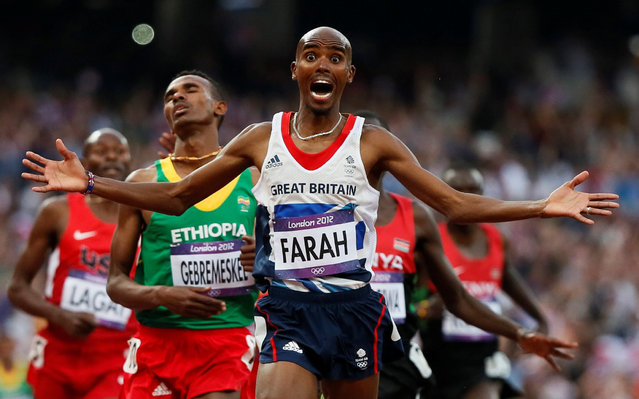
Britain's Mo Farah reacts as he wins the men's 5000m final at the London 2012 Olympic Games at the Olympic Stadium in Britain August 11, 2012. Lucy Nicholson: “When Mo Farah was rounding the final corner for the 5000m the huge stadium was electric, everybody was on their feet and he knew he was going to win as he came into that final stretch. All the photographers were excited because we knew he was going to react in a very dramatic way so it was a lovely sequence of photos as he crossed the finish line – he put his hands over his head, he wrapped himself in the British flag, it was a very long celebration sequence, which is all you can really wish for as a photographer”. (Photo by Lucy Nicholson/Reuters)

The Rio de Janeiro Olympics kick off on August 5 for some two weeks of competitive games drawing athletes as well as audiences from around the world. As they prepare to cover the event, Reuters photographers look back on their favourite pictures from past Olympics where they captured the action on the ground as well as the participants' tears and joy that followed. (Photo by Lucy Nicholson/Reuters)
Details
03 Aug 2016 11:19:00
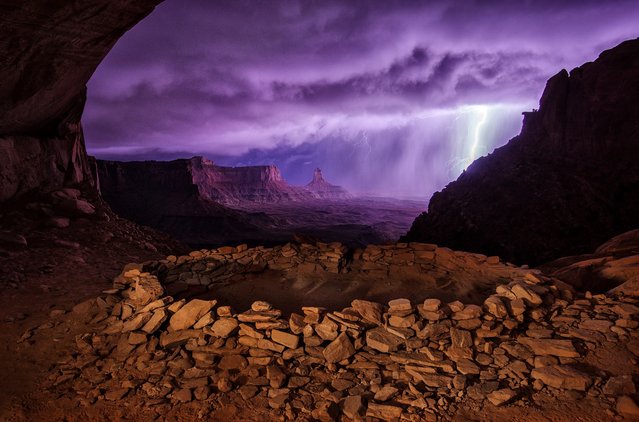
Second Place Winner: “Thunderstorm at False Kiva”. I hiked out to these ruins at night hoping to photograph them with the Milky Way, but instead a thunderstorm rolled through, creating this dramatic image. – Max Seigal. (Photo and caption by Max Seigal/National Geographic Traveler Photo Contest)

Second Place Winner: “Thunderstorm at False Kiva”. I hiked out to these ruins at night hoping to photograph them with the Milky Way, but instead a thunderstorm rolled through, creating this dramatic image. – Max Seigal. National Geographic Traveler Director of Photography Dan Westergren, one of this year's judges, shares his thoughts on the second place winner: “This photo combines two different scenes into one: the small kiva in a cliff dwelling and the grand vista of Canyonlands National Park across the valley. I really like the two different color palettes – warm inside and purple outside. This two-for-one scene was caused by the lightning storm outside the dwelling, which lit up the landscape like it was a huge electronic flash. Looking at this picture I can imagine what a wonderful sight it must have been for the ancient people who lived here. It doesn't seem too amazing now in our modern world, but might have been mind-blowing for the prehistoric residents”. Location: Utah. (Photo and caption by Max Seigal/National Geographic Traveler Photo Contest)
Details
02 Aug 2013 06:16:00
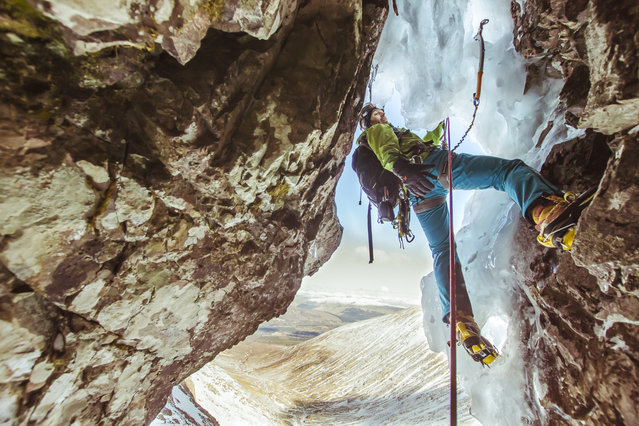
“Winter Climbing from inside Ben Nevis”. The view from inside the mountain, as a winter climber passes through the cave on Minus Three gully. Photo location: Ben Nevis, Fort William, Scotland. (Photo and caption by Daniel Wildey/National Geographic Photo Contest)

“Winter Climbing from inside Ben Nevis”. The view from inside the mountain, as a winter climber passes through the cave on Minus Three gully. Photo location: Ben Nevis, Fort William, Scotland. (Photo and caption by Daniel Wildey/National Geographic Photo Contest)
Details
24 Jun 2014 12:18:00