Loading...
Done
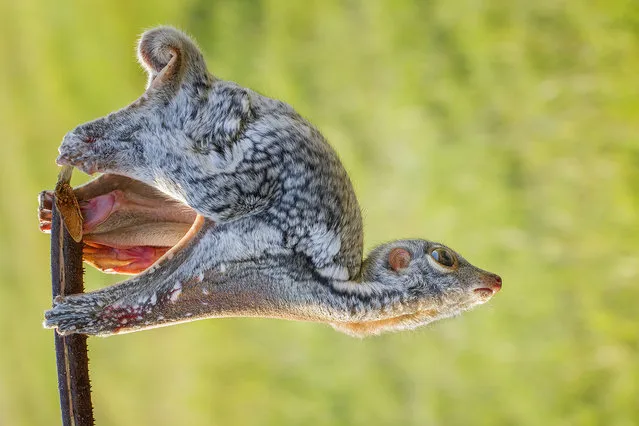
“Warming up”. This photo I capture in the early afternoon, the animal species of lemurs fly. Photo location: Sambas, West Kalimantan, Indonesia. (Photo and caption by Hendy Mp/National Geographic Photo Contest)

“Warming up”. This photo I capture in the early afternoon, the animal species of lemurs fly. Photo location: Sambas, West Kalimantan, Indonesia. (Photo and caption by Hendy Mp/National Geographic Photo Contest)
Details
03 Oct 2014 11:52:00
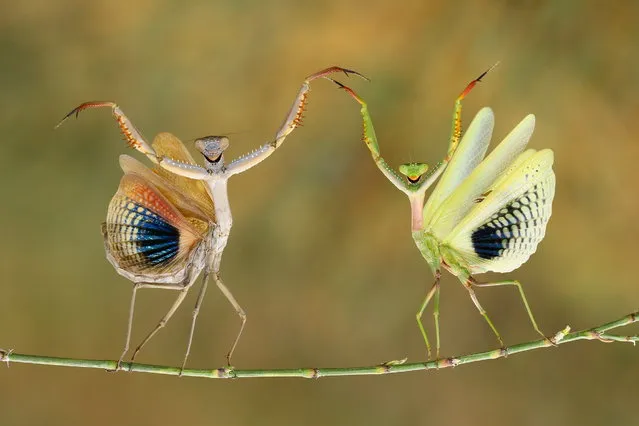
“Show Time”. It's a normal behavior of mantis. They're doing defence. When they're afraid of; raising their arms and spreading their wings. They looks like smiling dancer. Photo location: Nicosia, Cyprus. (Photo and caption by Hasan Baglar/National Geographic Photo Contest)

“Show Time”. It's a normal behavior of mantis. They're doing defence. When they're afraid of; raising their arms and spreading their wings. They looks like smiling dancer. Photo location: Nicosia, Cyprus. (Photo and caption by Hasan Baglar/National Geographic Photo Contest)
Details
28 Oct 2014 13:01:00
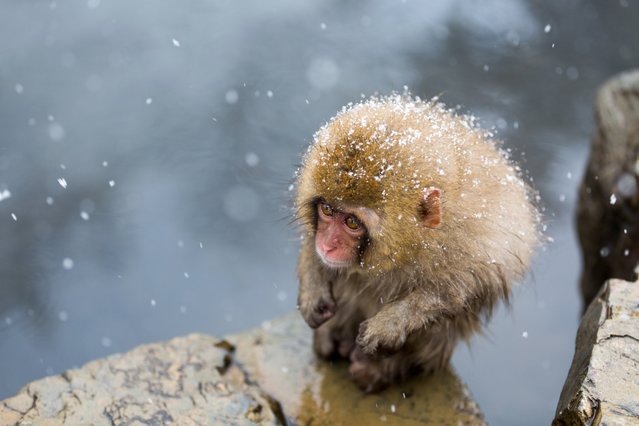
“A Little Monkey on the Cliff”. “A cold front hit the Nagano prefecture. I saw a little monkey enduring the cold in Jigokudani Monkey Park. This little monkey is really cute”. (Photo by Hidetoshi Ogata/Smithsonian Photo Contest)

“A Little Monkey on the Cliff”. “A cold front hit the Nagano prefecture. I saw a little monkey enduring the cold in Jigokudani Monkey Park. This little monkey is really cute”. (Photo by Hidetoshi Ogata/Smithsonian Photo Contest)
Details
10 Mar 2016 12:01:00
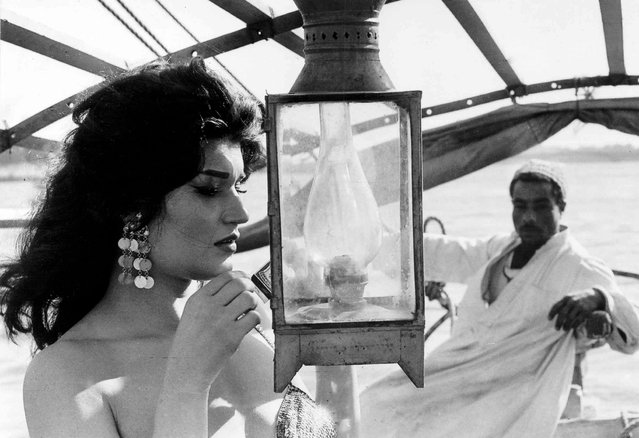
Belly dancer Nagwa Fouad sailing on the river Nile, 1972. Farouk Ibrahim was a society photographer, capturing Egyptian’s political and cultural elite, including presidents Nasser, Sadat and Mubarak. (Photo by Farouk Ibrahim)

Belly dancer Nagwa Fouad sailing on the river Nile, 1972. Egypt is one of 23 countries represented at the Dubai Photo Exhibition, showing off photography that dates to the 1920s. Dubai Photo Exhibition is in various venues of Dubai’s design district from 16-19 March. (Photo by Farouk Ibrahim)
Details
17 Mar 2016 15:09:00
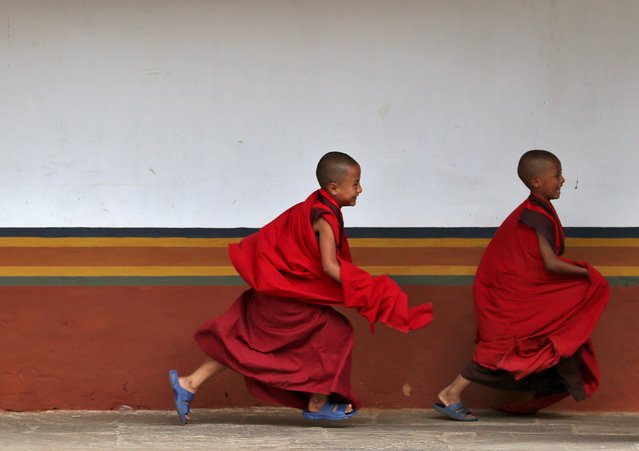
Young monks play inside the Punakha Dzong, Bhutan, April 17, 2016. (Photo by Cathal McNaughton/Reuters)

Young monks play inside the Punakha Dzong, Bhutan, April 17, 2016. (Photo by Cathal McNaughton/Reuters)
Details
19 Apr 2016 13:42:00
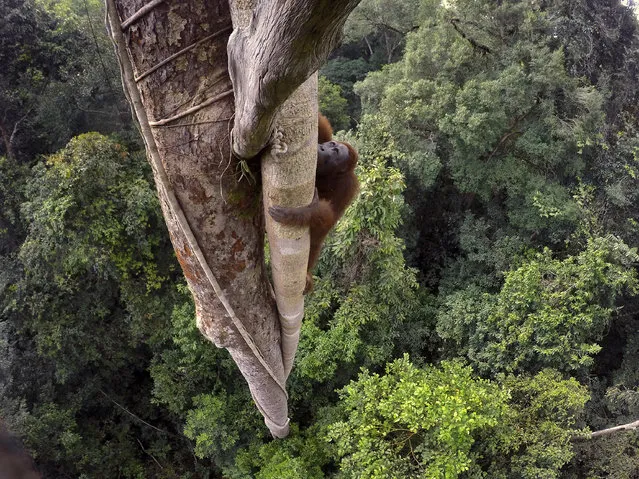
“Tough Times for Orangutans”. Nature, first prize stories. Tim Laman, USA. Location: West Kalimantan, Indonesia. A Bornean orangutan climbs over 30 meters up a tree in the rain forest of Gunung Palung National Park, West Kalimantan, Indonesia, August 12, 2015. The lives of wild orangutans are brought to light. Threats to these orangutans from fires, the illegal animal trade and loss of habitat due to deforestation have resulted in many orphan orangutans ending up at rehabilitation centers. (Photo by Tim Laman/World Press Photo Contest)

“Tough Times for Orangutans”. Nature, first prize stories. Tim Laman, USA. Location: West Kalimantan, Indonesia. A Bornean orangutan climbs over 30 meters up a tree in the rain forest of Gunung Palung National Park, West Kalimantan, Indonesia, August 12, 2015. The lives of wild orangutans are brought to light. Threats to these orangutans from fires, the illegal animal trade and loss of habitat due to deforestation have resulted in many orphan orangutans ending up at rehabilitation centers. (Photo by Tim Laman/World Press Photo Contest)
Details
19 Feb 2016 13:06:00
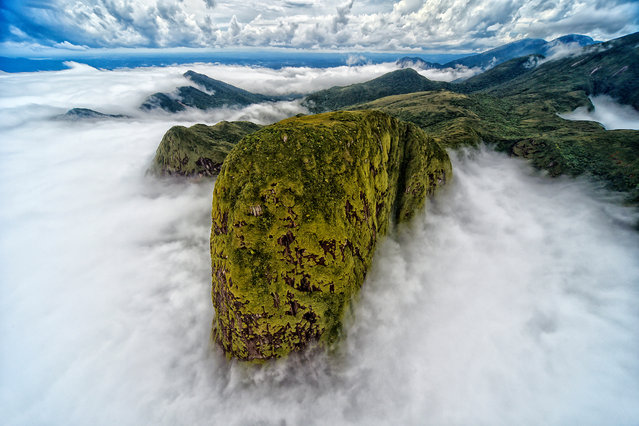
Landscape second place: Denis Ferreira Netto, Brazil. “In a helicopter flight through the sea mountain range, I came across this white cloud cover, which resulted in this magnificent image that resembles the head of a dinosaur”, the photographer said. (Photo by Denis Ferreira Netto/TNC Photo Contest 2021)

Landscape second place: Denis Ferreira Netto, Brazil. “In a helicopter flight through the sea mountain range, I came across this white cloud cover, which resulted in this magnificent image that resembles the head of a dinosaur”, the photographer said. (Photo by Denis Ferreira Netto/TNC Photo Contest 2021)
Details
06 Oct 2021 07:52:00
Galapagos – Rocking the Cradle: Four major ocean currents converge along the Galapagos archipelago, creating the conditions for an extraordinary diversity of animal life, April 25, 2016. The islands are home to at least 7,000 flora and fauna species, of which 97 percent of the reptiles, 80 percent of the land birds, 50 percent of the insects and 30 percent of the plants are endemic. The local ecosystem is highly sensitive to the changes in temperature, rainfall and ocean currents that characterize the climatic events known as El Niño and La Niña. These changes cause marked fluctuations in weather and food availability. Many scientists expect the frequency of El Niño and La Niña to increase as a result of climate change, making the Galapagos a possible early-warning location for its effects. (Photo by Thomas P. Peschak for National Geographic/World Press Photo)

Galapagos – Rocking the Cradle: Four major ocean currents converge along the Galapagos archipelago, creating the conditions for an extraordinary diversity of animal life, April 25, 2016. The islands are home to at least 7,000 flora and fauna species, of which 97 percent of the reptiles, 80 percent of the land birds, 50 percent of the insects and 30 percent of the plants are endemic. (Photo by Thomas P. Peschak for National Geographic/World Press Photo)
Details
16 Apr 2018 00:01:00