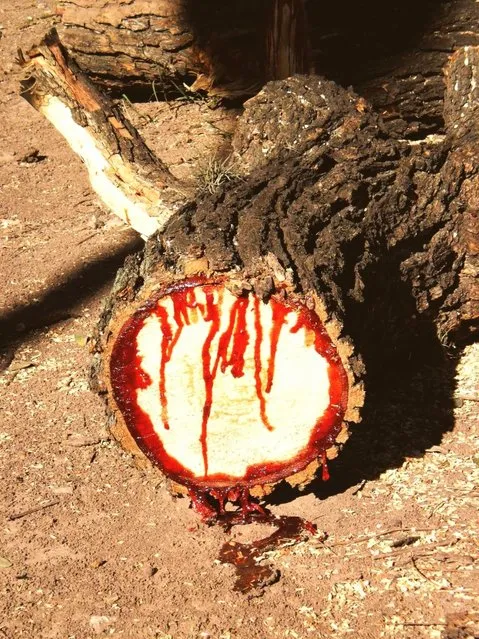
The bloodwood tree (Pterocarpus angolensis) is a deciduous tree with a high canopy, reaching about 15m in height and has dark bark. The red sap is used traditionally as a dye and in some areas mixed with animal fat to make a cosmetic for faces and bodies. It is also believed to have magical properties for the curing of problems concerning blood, apparently because of its close resemblance to blood. The name bloodwood for these trees stems from the dark red to brown sap that accumulates on wounds on the trunks.
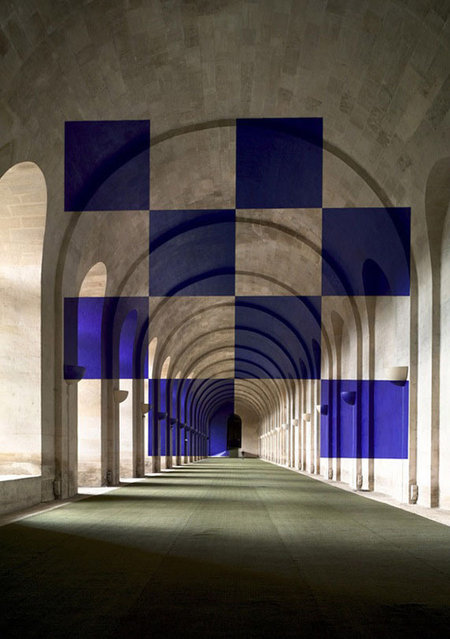
Felice Varini is a Swiss artist who was nominated for the 2000/2001 Marcel Duchamp Prize, known for his geometric perspective-localized paintings in rooms and other spaces, using projector-stencil techniques. According to mathematics professor and art critic Joël Koskas, “A work of Varini is an anti-Mona Lisa”.
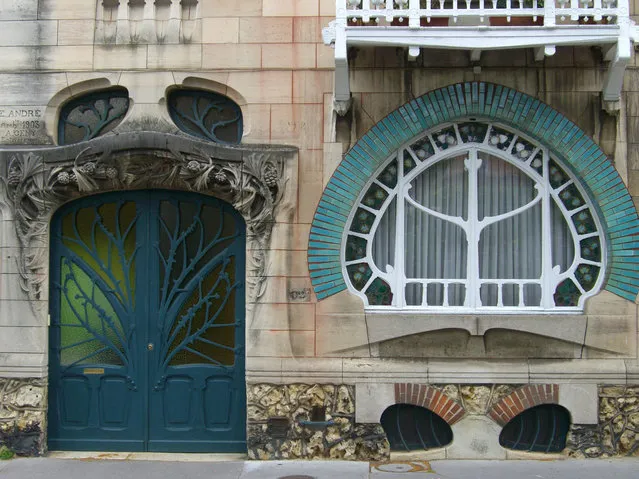
This house was designed by the architect Emile André (1871-1933) from Nancy, France. Some of his work still visible in Nancy includes the Huot House built in 1903.
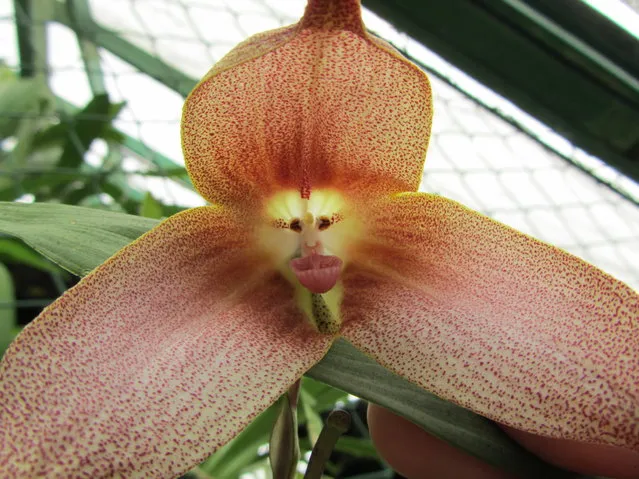
The Monkey orchid (Orchis simia) is an orchid species of the Orchis genus. It is known for its pungent odor, which some say is similar to that of feces.
The Nicobar pigeon (Caloenas nicobarica) is a pigeon found on small islands and in coastal regions from the Nicobar Islands, east through the Malay Archipelago, to the Solomons and Palau. It is the only living member of the genus Caloenas and the closest living relative of the extinct dodo.
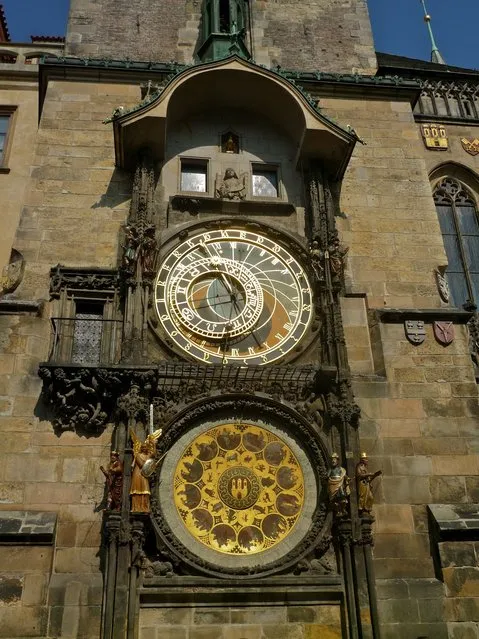
The Prague astronomical clock, or Prague orloj, is a medieval astronomical clock located in Prague, the capital of the Czech Republic. The clock was first installed in 1410, making it the third-oldest astronomical clock in the world and the oldest one still working.
The Sleepy Underwing or Pink Underwing (Catocala concumbens) is a moth of the Noctuidae family. It is found in eastern North America, west across the southern half of the Prairie Provinces to eastern Alberta.