Napoli fans celebrate after winning the Coppa Italia final against Juventus FC, in central Naples, Italy on June 17, 2020. Napoli won the Italian Cup with a 4-2 penalty shootout victory over Juventus following a 0-0 draw in a match played at the Rome Olympic Stadium. (Photo by Salvatore Laporta/IPA/Rex Features/Shutterstock)
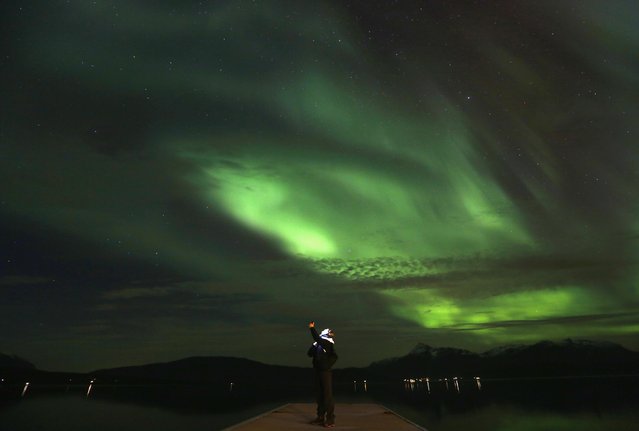
A tourist takes photos of an Aurora Borealis display (Northern Lights) over the Bals-Fiord north of the Arctic Circle, near the village of Mestervik late September 30, 2014. (Photo by Yannis Behrakis/Reuters)
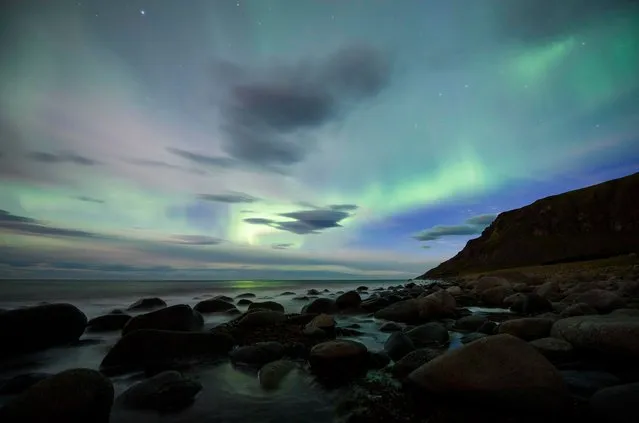
The northern lights, or aurora borealis, illuminate the sky over Flakstad beach on Lofoten Islands in the Arctic Circle on September 5, 2017. (Photo by Jonathan Nackstrand/AFP Photo)
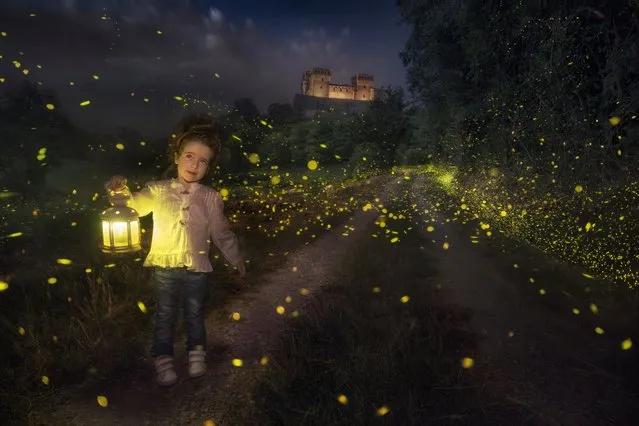
Thousands of fireflies dance around Aurora Ghizzi Panizza, age 4, in the grounds of the 15th-century Castello di Torrechiara in Parma, Italy on July 16, 2022. (Photo by Alberto Ghizzi Panizza/Animal News Agency)
The aurora borealis, or the northern lights occur over Derwentwater, near Keswick, England, Thursday October 8, 2015. The northern lights are the result of collisions between gaseous particles in the Earth's atmosphere with charged particles released from the sun. (Photo by Owen Humphreys/PA Wire via AP Photo)
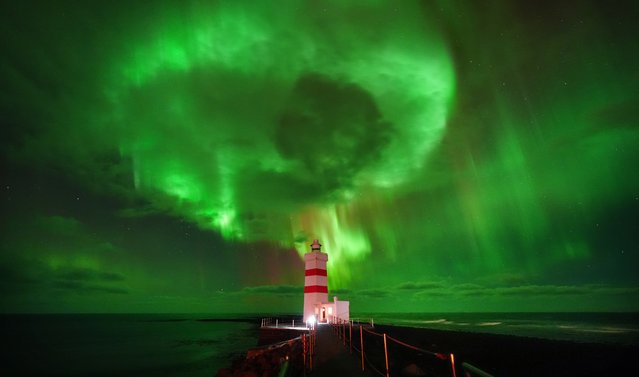
The aurora borealis, also known as the northern lights, visible above Old Gardur Lighthouse on the northern point of the Reykjanes peninsula in Iceland on Sunday, November 24, 2024. The lighthouse dates to 1897, and was one of the first built in Iceland. (Photo by Owen Humphreys/PA Images via Getty Images)
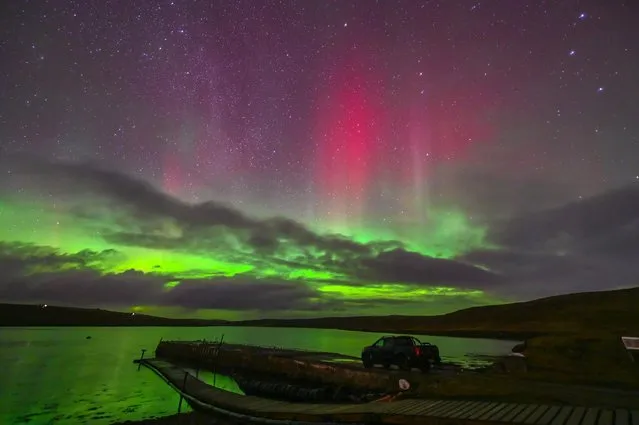
The northern lights as seen from from Yell in the Shetland Islands, Scotland on January 15, 2023. The aurora borealis is caused by collisions between electrically charged particles released from the sun that enter the Earth’s atmosphere and collide with gases such as oxygen and nitrogen. (Photo by Ryan Nisbet/Capture Media Agency)