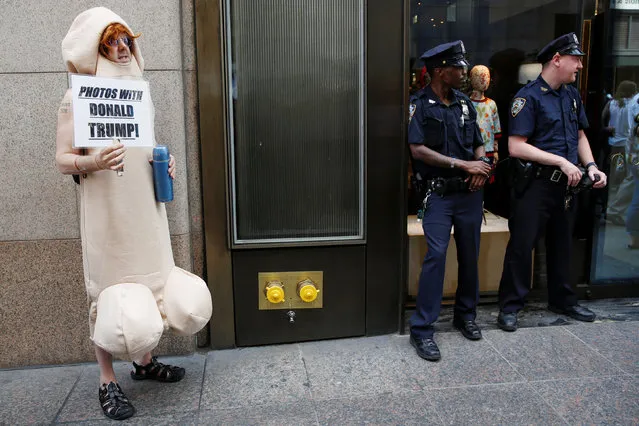
A man demonstrates outside Republican presidential candidate Donald Trump's news conference at Trump Tower in New York, U.S., May 31, 2016. (Photo by Shannon Stapleton/Reuters)
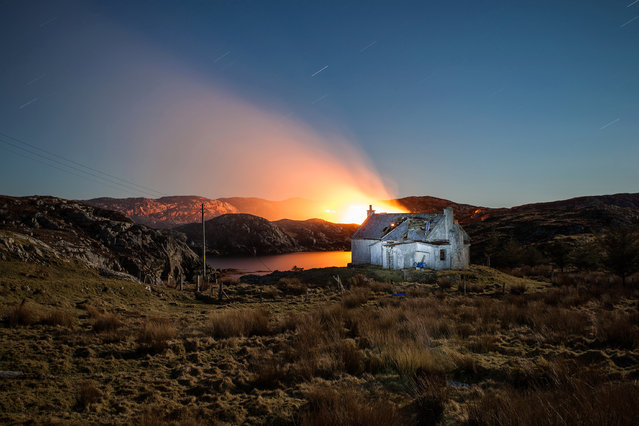
Photographer John Maher, once the drummer with punk bank Buzzcocks, travelled to the Outer Hebrides to photograph abandoned crofters’ cottages – many of which, like this one, have seemingly been untouched since. Here: “Peat Fire”. Taken in March 2013 on the east coast of Harris. The fire is from muir-burning, when farmers burn off grasses and heather to improve grazing for their sheep. (Photo by John Maher/The Guardian)
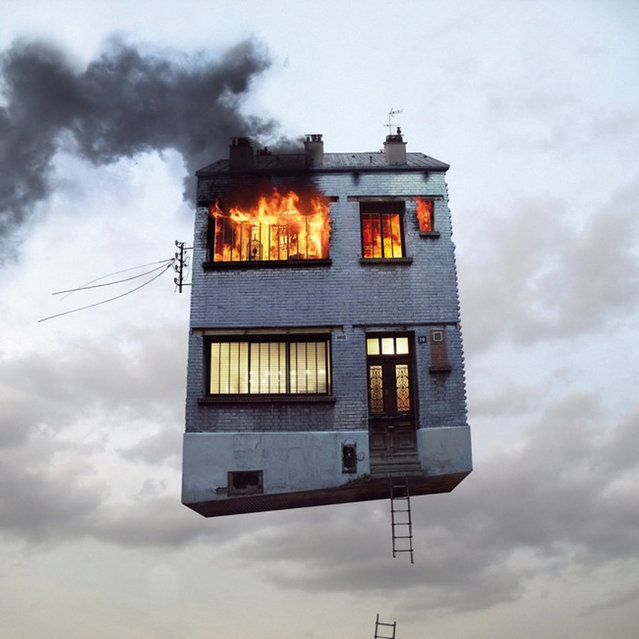
One of the most creative photoseries I’ve seen so far is definitely this one from the French photographer Laurent Chéhère and his Flying Houses. The serie has a sur-real but still very realistic out-come, with ofcourse, some help of our great friend Photoshop.
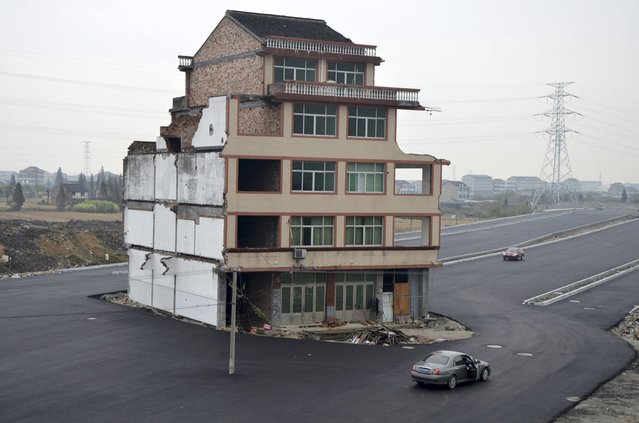
An isolated five-floor building stands in the middle of a new road on November 22, 2012 in Wenling, Zhejiang Province of China. Zhejiang Province of China. 67-year-old Luo Baogen and his 65-year-old wife from Xiazhangyang village still live in the half-demolished residential building, because they are dissatisfied with the relocation compensation. The road, which leads to the Wenling Railway Station, has not been put into use. (Photo by China Foto Press)
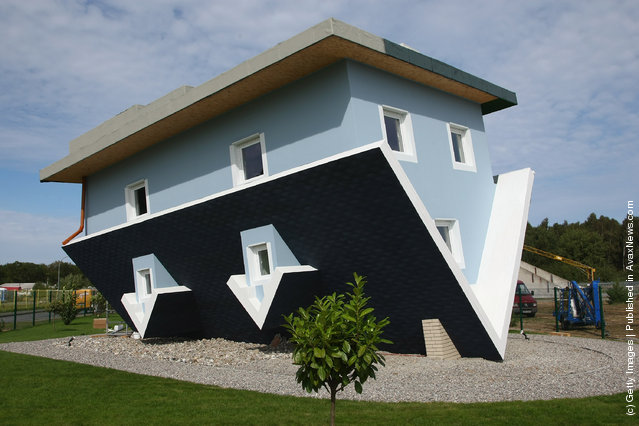
“The World Stands on its Head” (“Die Welt Steht Kopf”) House on the Baltic Sea Island of Usedom stands nearly completed on September 3, 2008 in Trassenheide, Germany. The upside down house, complete with upside down interior furnishings, is the brainchild of Klaudiusz Golos and Sebastian Mikiciuk, and will become a local tourist attraction. (Photo by Sean Gallup/Getty Images)
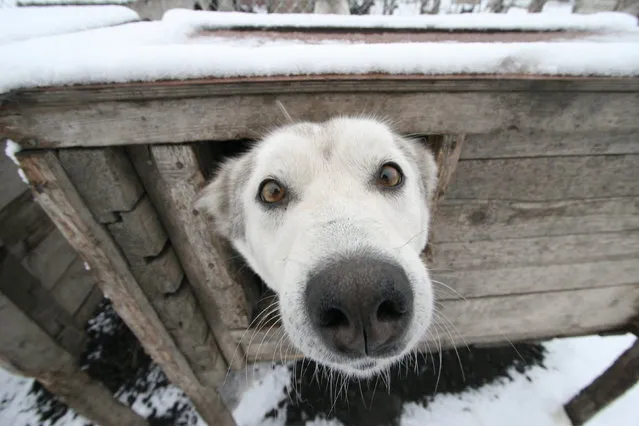
Sled dogs in Svalbard, Norway live in little houses built a foot or two off the ground so they remain accessible even after snowstorm. Raising the floor above the cold ground also keeps the dogs warmer in the winter.
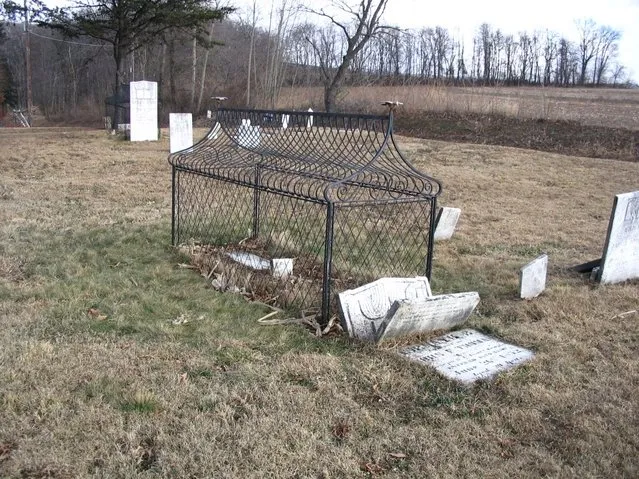
Mortsafes were contraptions designed to protect graves from disturbance. Resurrectionists had supplied the schools of anatomy in Scotland since the early 18th century. This was due to the necessity for medical students to learn anatomy by attending dissections of human subjects, which was frustrated by the very limited allowance of dead bodies – for example the corpses of executed criminals – granted by the government, which controlled the supply.