Loading...
Done
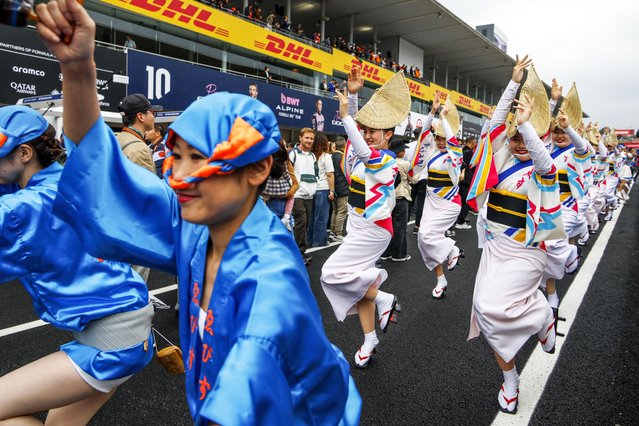
Japanese dancers perform the Awa-odori in the pitlane during the driver parade before the 2025 Formula 1 Japanese Grand Prix at the Suzuka Circuit, in Suzuka, Japan, 06 April 2025. (Photo by Franck Robichon/EPA)

Japanese dancers perform the Awa-odori in the pitlane during the driver parade before the 2025 Formula 1 Japanese Grand Prix at the Suzuka Circuit, in Suzuka, Japan, 06 April 2025. (Photo by Franck Robichon/EPA)
Details
29 Apr 2025 02:19:00
Perfect Predators: White Sharks

The great white shark, Carcharodon carcharias, also known as the great white, white pointer, white shark, or white death, is a species of large lamniform shark which can be found in the coastal surface waters of all the major oceans. The great white shark is mainly known for its size, with the largest individuals known to have approached or exceeded 6 m (20 ft) in length, and 2,268 kg (5,000 lb) in weight. This shark reaches its maturity around 15 years of age and can have a life span of over 30 years.
Details
01 Apr 2013 10:02:00


D=OUT (ダウト) – Koi no Bakansu (恋のバカンス) – Japanese
Details
15 Mar 2013 13:04:00
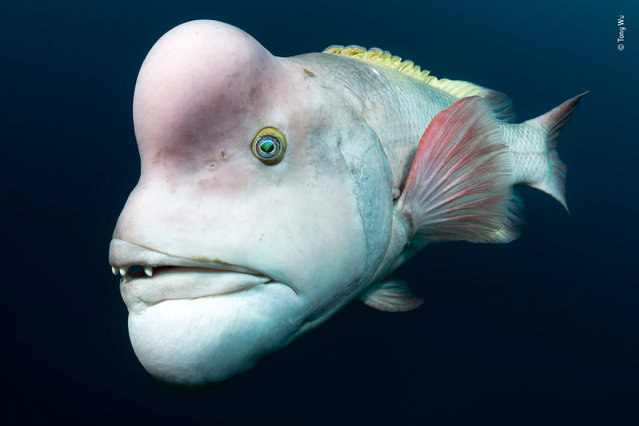
Looking for love by Tony Wu, USA. Highly commended, Animal Portraits. “Accentuating his mature appearance with pastel colours, protruding lips and an outstanding pink forehead, this Asian sheepshead wrasse sets out to impress females and see off rivals, which he will head-butt and bite, near Japan’s remote Sado Island. Individuals start out as females, and when they reach a certain age and size – up to a metre (more than 3 feet) long – can transform into males. Long-lived and slow-growing, the species is intrinsically vulnerable to overfishing”. (Photo by Tony Wu/2018 Wildlife Photographer of the Year)

Looking for love by Tony Wu, USA. Highly commended, Animal Portraits. “Accentuating his mature appearance with pastel colours, protruding lips and an outstanding pink forehead, this Asian sheepshead wrasse sets out to impress females and see off rivals, which he will head-butt and bite, near Japan’s remote Sado Island. Individuals start out as females, and when they reach a certain age and size – up to a metre (more than 3 feet) long – can transform into males. Long-lived and slow-growing, the species is intrinsically vulnerable to overfishing”. (Photo by Tony Wu/2018 Wildlife Photographer of the Year)
Details
03 Sep 2018 08:17:00
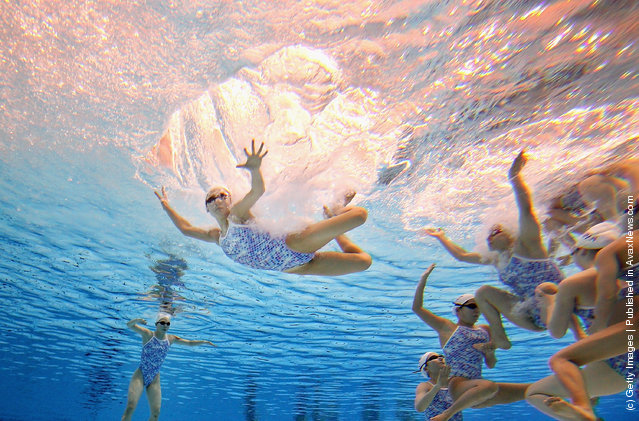
Japanese team trains before the 6th FINA Synchronised Swimming World Trophy at the Water Cube

Japanese team trains before the 6th FINA Synchronised Swimming World Trophy at the Water Cube on December 8, 2011 in Beijing, China. (Photo by Feng Li/Getty Images)
Details
09 Dec 2011 11:09:00


A Japanese girl poses in a costume at a Chara Fes (character festival) event on October 26, 2003 in Tokyo. Cosplay (costume play) is becoming popular among Japanese youths, whereby participants dress up as their favourite characters from comics, computer games and animation. (Photo by Junko Kimura/Getty Images)
Details
03 May 2011 12:05:00


“The Southern Tamandua, Collared Anteater or Lesser Anteater (Tamandua tetradactyla) is a species of anteater from South America. It is a solitary animal, found in many habitats from mature to highly disturbed secondary forests and arid savannas. It feeds on ants, termites and bees. It has very strong foreclaws that can be used to break insect nests or to defend itself”. – Wikipedia

Photo: A three-month-old baby Southern Tamandua “Konbu” lies on its mother Tae's back at Sunshine International Aquarium on July 7, 2009 in Tokyo, Japan. Baby Southern Tamandua feels safe and comfortable holding onto something and normally stays on the mother's back until around 3 months old. (Photo by Junko Kimura/Getty Images)
Details
19 May 2011 10:31:00
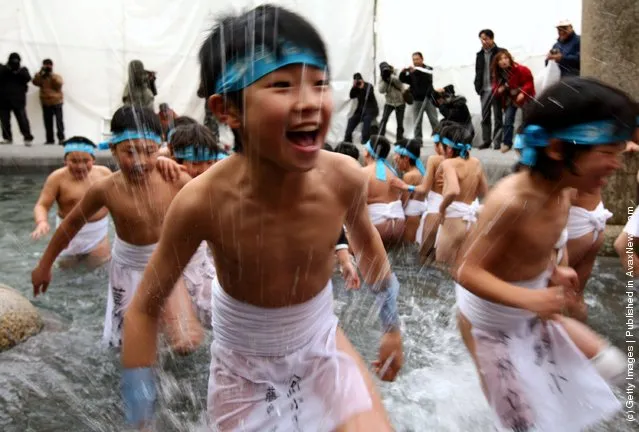
Japanese children wear loincloths as they splash about in freezing cold water during Saidaiji Naked Festival, at Saidaiji Temple

“A Hadaka Matsuri (“Naked Festival”) is a type of Japanese festival, or matsuri, in which participants wear a minimum amount of clothing; usually just a Japanese loincloth (called fundoshi), sometimes with a short happi coat, and rarely completely naked. Whatever the clothing, it is considered to be above vulgar, or everyday, undergarments, and on the level of holy Japanese shrine attire. Naked festivals are held in dozens of places throughout Japan every year, usually in the summer or winter. The most famous festival is held in Okayama, where the festival originated. Every year, over 9,000 men participate in this festival”. – Wikipedia

Photo: Japanese men wear loincloths as they splash about in freezing cold water during Saidaiji Naked Festival, at Saidaiji Temple on February 18, 2012 in Okayama, Japan. (Photo by Buddhika Weerasinghe/Getty Images)

Details
19 Feb 2012 12:18:00