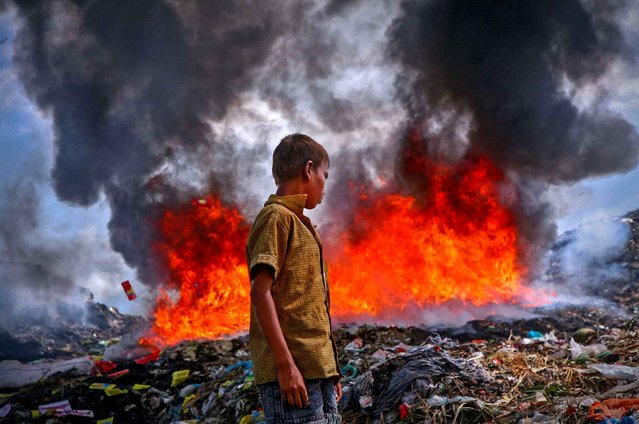
A boy looks for sellable materials close to the burning garbage in the permanent waste land under Sylhet City Corporation for a living, on January 15, 2015. (Photo by Md. Akhlas Uddin/Pacific Press)
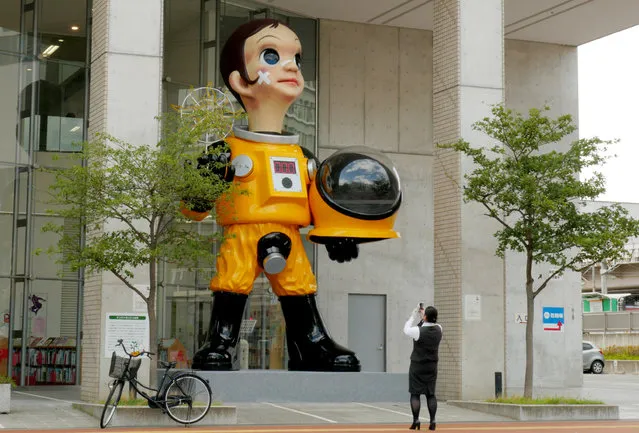
A woman takes a picture of a statue of a child wearing what appears to be a hazardous material suit in Fukushima, Japan on August 14, 2018. (Photo by Kwiyeon Ha/Reuters)
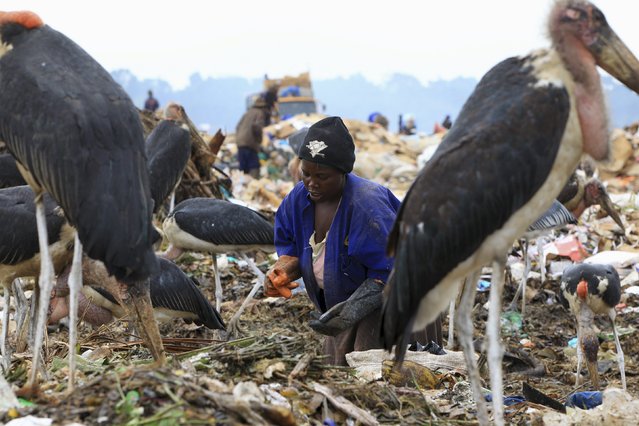
A woman whose livelihood depends on selling recyclable wastes collects trash from a dumping site while surrounded by Marabou storks on the outskirts of Uganda's capital Kampala March 31, 2015. (Photo by James Akena/Reuters)
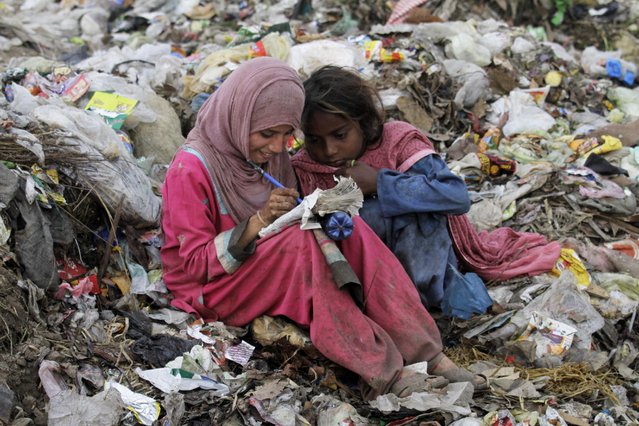
A Pakistani scavenger girl writes on a notebook she collected from a garbage, while another girl sits next to her in Lahore, Pakistan, Wednesday, April 1, 2015. Thousands of children pick recyclable items from waste dumping points to earn living for their poor families. (Photo by K. M. Chaudary/AP Photo)
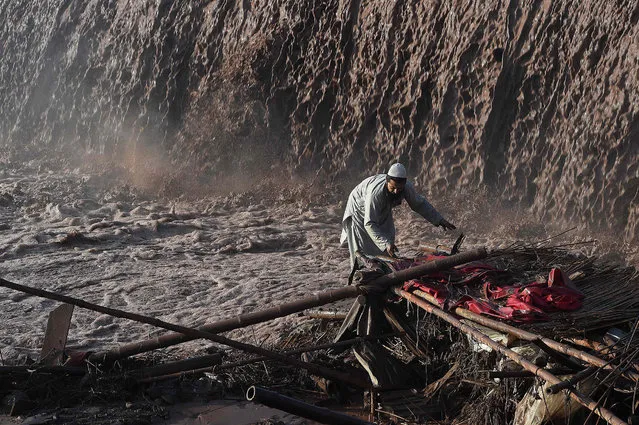
A Pakistani vendor tries to salvage materials after flood water destroyed his shop following heavy rain on the outskirts of Peshawar on April 4, 2016. (Photo by A. Majeed/AFP Photo)
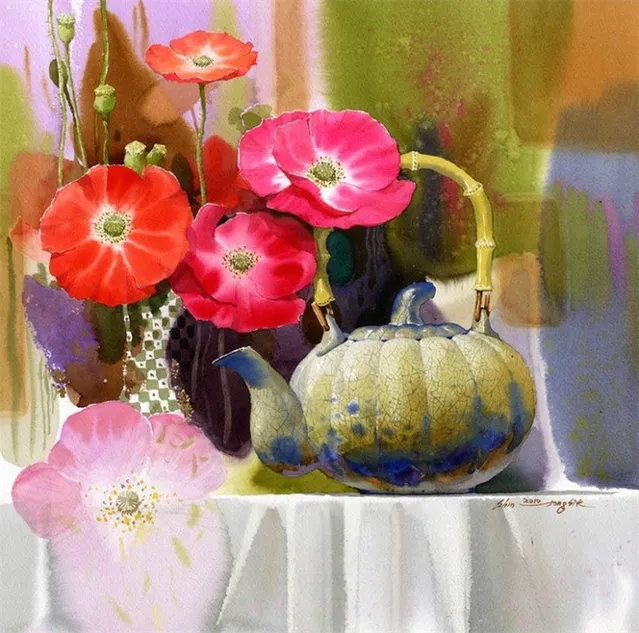
Watercolorist Shin Jong Sik is famous for expressing clean, transparent colors and his still life paintings express colorful, dignified and deep feeling. Taking flowers, dishes and hemp cloth as materials, he does not compose as they are seen but recomposes with new ideas.
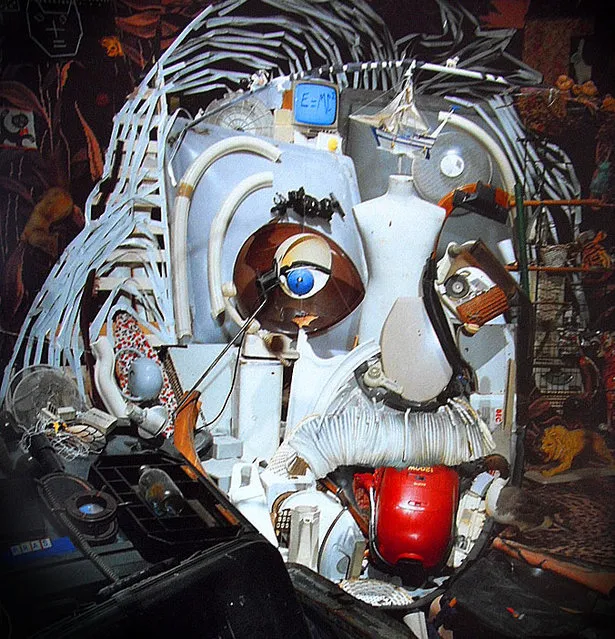
Bernard Pras uses objects and materials he finds in landfills to create his incredible anamorphic sculptures. His sculptures are often recreations of famous works of art, but he puts his own unique spin on these classics with his amazing optical illusion stacking technique.
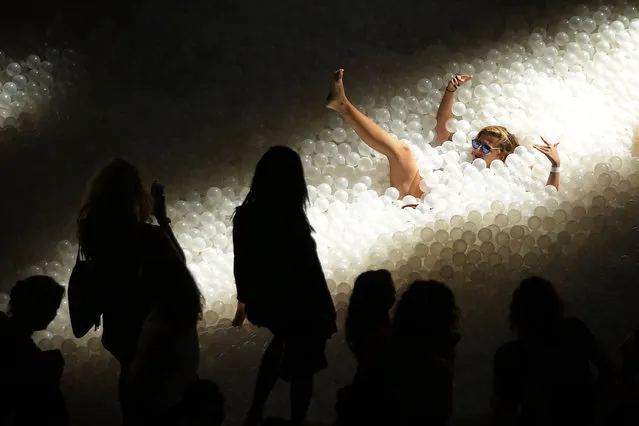
Members of the general public enjoy the “BEACH” at the National Building Museum August 25, 2015 in Washington, DC. The “BEACH” is an interactive architectural installation, with an “ocean” of nearly one million recyclable translucent plastic balls, that brings the experience of going to the beach indoor. (Photo by Alex Wong/Getty Images)