Loading...
Done
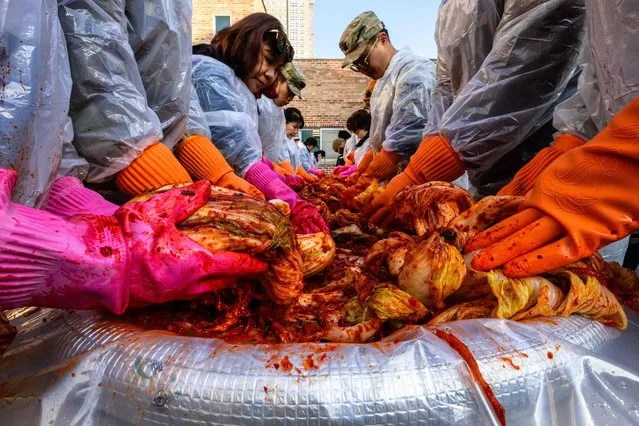
Participants make kimchi during an event where soldiers from the US, South Korea and residents collaborated by making the side dish for needy members of the local community in Dongducheon, Gyeonggi Province, about 38 kilometers north of Seoul, on November 22, 2023. Participants produced 2,500 kilograms of fresh kimchi, which was divided into 250 boxes and distributed to needy households in the local community after the event. (Photo by Anthony Wallace/AFP Photo)

Participants make kimchi during an event where soldiers from the US, South Korea and residents collaborated by making the side dish for needy members of the local community in Dongducheon, Gyeonggi Province, about 38 kilometers north of Seoul, on November 22, 2023. Participants produced 2,500 kilograms of fresh kimchi, which was divided into 250 boxes and distributed to needy households in the local community after the event. (Photo by Anthony Wallace/AFP Photo)
Details
04 Dec 2023 04:54:00
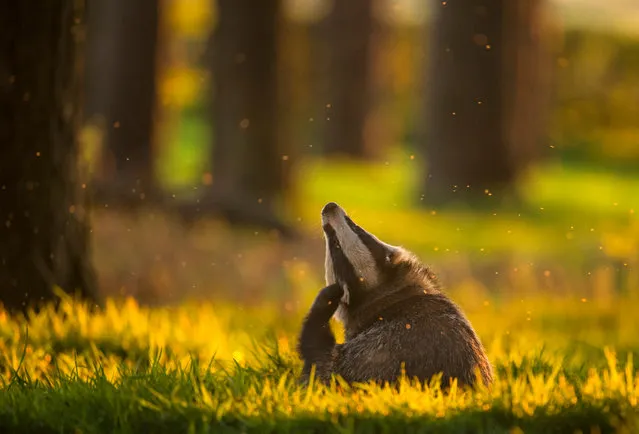
Andrew Parkinson, animal behaviour category winner: Crepuscular Contentment, Derbyshire. “In 15 years of working with badgers I’ve never seen a badger sit out in the open to have a scratch. I was sat concealed behind a tree and downwind so it was especially nice that the badger had his back to me, demonstrating just how inconspicuous and inconsequential my presence was”. (Photo by Andrew Parkinson/British Wildlife Photography Awards 2017)

Andrew Parkinson, animal behaviour category winner: Crepuscular Contentment, Derbyshire. “In 15 years of working with badgers I’ve never seen a badger sit out in the open to have a scratch. I was sat concealed behind a tree and downwind so it was especially nice that the badger had his back to me, demonstrating just how inconspicuous and inconsequential my presence was”. (Photo by Andrew Parkinson/British Wildlife Photography Awards 2017)
Details
10 Nov 2017 09:01:00
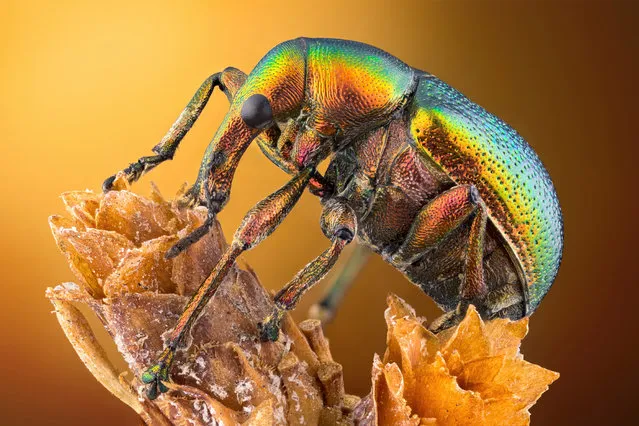
14th Place. Leaf roller weevil (Byctiscus betulae) lateral view. Image Stacking, Reflected Light 3.7X (objective lens magnification). (Photo by Özgür Kerem Bulur/Nikon Small World Photomicrography 2020)

14th Place. Leaf roller weevil (Byctiscus betulae) lateral view. Image Stacking, Reflected Light 3.7X (objective lens magnification). (Photo by Özgür Kerem Bulur/Nikon Small World Photomicrography 2020)
Details
15 Oct 2020 00:03:00
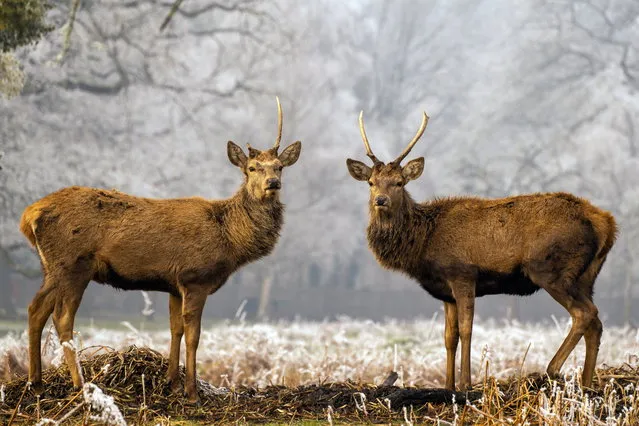
Two young deer seem to look bashfully at the camera after a playfight in Bushy Park, London early February 2023. (Photo by Lesley Marshall/South West News Service)

Two young deer seem to look bashfully at the camera after a playfight in Bushy Park, London early February 2023. (Photo by Lesley Marshall/South West News Service)
Details
12 Feb 2023 02:37:00
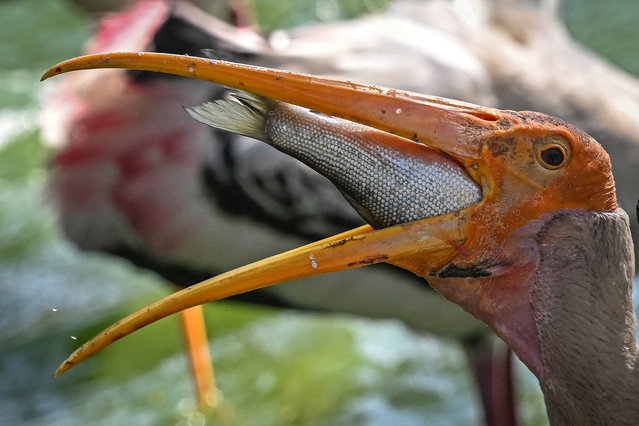
A painted stork eats a fish as it is pictured in the Delhi Zoo in New Delhi on December 5, 2024. (Photo by Sajjad Hussain/AFP Photo)

A painted stork eats a fish as it is pictured in the Delhi Zoo in New Delhi on December 5, 2024. (Photo by Sajjad Hussain/AFP Photo)
Details
15 Dec 2024 02:32:00
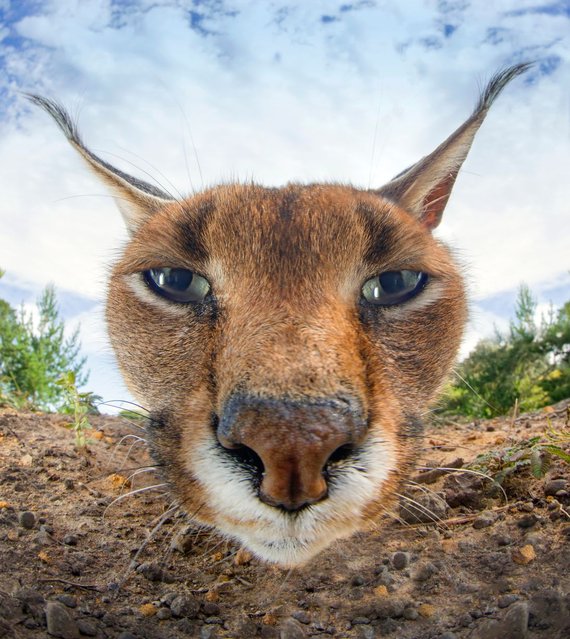
A close up of a caracal lynx's face looking into a camera on January 2014 in Western Cape, South Africa. (Photo by Dale Morris/Barcroft Media)

A close up of a caracal lynx's face looking into a camera on January 2014 in Western Cape, South Africa. (Photo by Dale Morris/Barcroft Media)
Details
30 Mar 2014 11:50:00
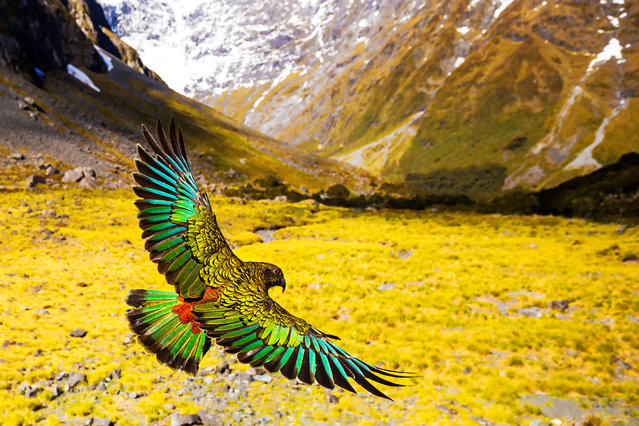
Kea are the only true alpine parrots in the world and thrive as cunning opportunists in the freezing conditions of the Southern Alps. Kea are thought to have developed their wide array of food-finding strategies during the last great ice age, where they learned to adapt using their unusual powers of curiosity. (Photo by Tom Walker/BBC Pictures/The Guardian)

Kea are the only true alpine parrots in the world and thrive as cunning opportunists in the freezing conditions of the Southern Alps. Kea are thought to have developed their wide array of food-finding strategies during the last great ice age, where they learned to adapt using their unusual powers of curiosity. (Photo by Tom Walker/BBC Pictures/The Guardian)
Details
19 Jul 2016 13:03:00
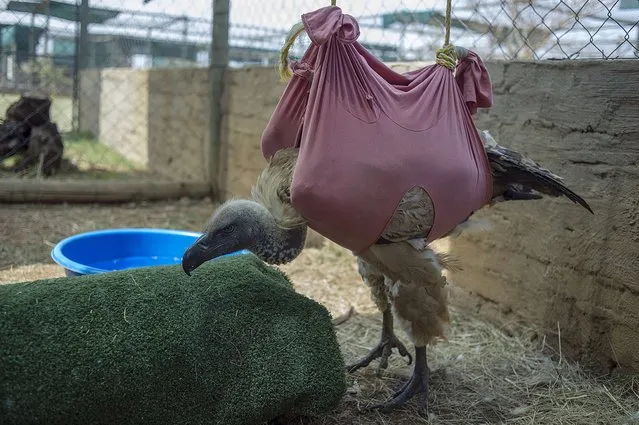
An injured vulture is treated at the VulPro Vulture Rehabilitation Centre in Hartebeepoortdam in the Magalisburg region on September 15, 2015. Confined to southern Africa, just under 4,000 breeding pairs of Cape Vultures remain in the wild, mostly in South Africa, Lesotho and Botswana. Unless conservation efforts are successful, Africa's largest vulture species may be facing eventual extinction. (Photo by Mujahid Safodien/AFP Photo)

An injured vulture is treated at the VulPro Vulture Rehabilitation Centre in Hartebeepoortdam in the Magalisburg region on September 15, 2015. Confined to southern Africa, just under 4,000 breeding pairs of Cape Vultures remain in the wild, mostly in South Africa, Lesotho and Botswana. Unless conservation efforts are successful, Africa's largest vulture species may be facing eventual extinction. (Photo by Mujahid Safodien/AFP Photo)
Details
19 Sep 2015 12:27:00