Loading...
Done
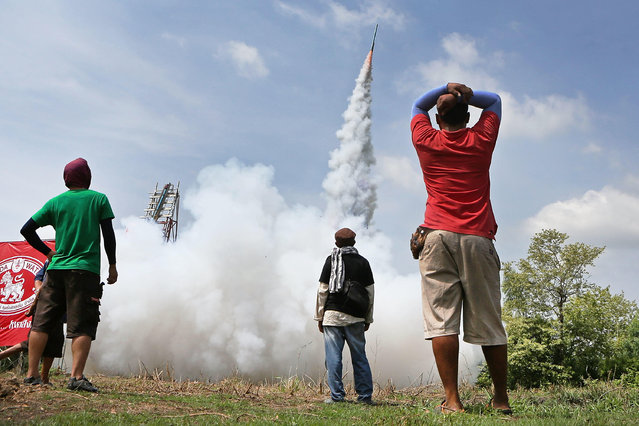
Yasothon resident look on as huge, handmade rockets are launched into the air during the Bun Bang Fai festival on May 11, 2014 in Yasothon, Thailand. During the Bun Bang Fai rocket festival, Thai residents launch enormous home-made rockets into the air to gain Buddhist merit and to celebrate the beginning of the rainy season. (Photo by Taylor Weidman/Getty Images)

Yasothon resident look on as huge, handmade rockets are launched into the air during the Bun Bang Fai festival on May 11, 2014 in Yasothon, Thailand. During the Bun Bang Fai rocket festival, Thai residents launch enormous home-made rockets into the air to gain Buddhist merit and to celebrate the beginning of the rainy season. (Photo by Taylor Weidman/Getty Images)
Details
14 May 2014 05:56:00
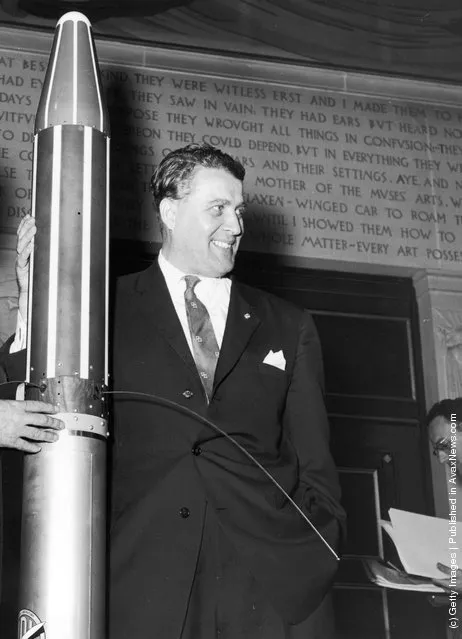
German-born American engineer Dr Wernher von Braun (1912 - 1977) with a model of the Explorer orbiting space satellite which he designed, 1958

“Wernher Magnus Maximilian Freiherr von Braun (March 23, 1912 – June 16, 1977) was a German-born rocket scientist, aerospace engineer, space architect, and one of the leading figures in the development of rocket technology in Nazi Germany during World War II and, subsequently, the United States”. – Wikipedia

Photo: German-born American engineer Dr. Wernher von Braun with a model of the Explorer orbiting space satellite which he designed. (Photo by Keystone/Getty Images). 1958
Details
22 Mar 2012 11:18:00


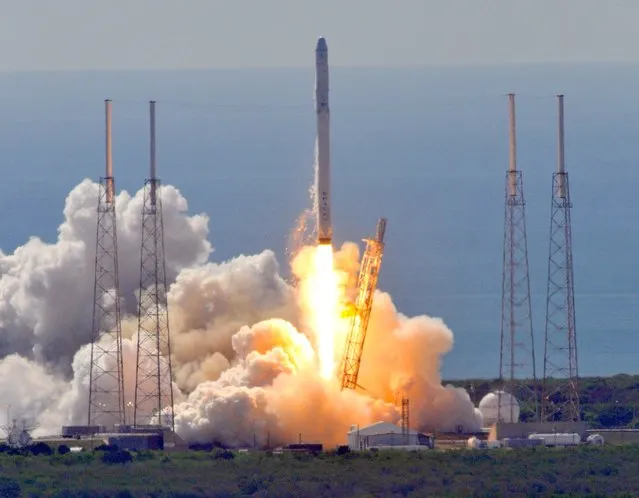
SpaceX, the space transportation company built from scratch by visionary billionaire Elon Musk, has the grand goal of space travel evolution through the use of re-usable rockets. Its technology – which has proven its worth several times – can reduce the costs of space transportation to its fraction, making it a more affordable way of reaching orbit or traveling beyond.
Details
12 Aug 2015 08:47:00
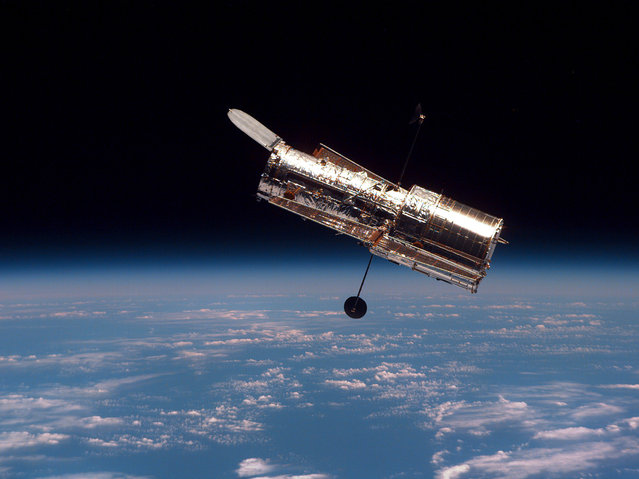
The Hubble Space Telescope is shown following its release from the space shuttle Discovery Wednesday, February 19, 1997. The Hubble Space Telescope, one of NASA'S crowning glories, marks its 25th anniversary on Friday, April 24, 2015. With more than 1 million observations, including those of the farthest and oldest galaxies ever beholden by humanity, no man-made satellite has touched as many minds or hearts as Hubble. (Photo by AP Photo/NASA)

The Hubble Space Telescope is shown following its release from the space shuttle Discovery Wednesday, February 19, 1997. The Hubble Space Telescope, one of NASA'S crowning glories, marks its 25th anniversary on Friday, April 24, 2015. With more than 1 million observations, including those of the farthest and oldest galaxies ever beholden by humanity, no man-made satellite has touched as many minds or hearts as Hubble. (Photo by AP Photo/NASA)
Details
24 Apr 2015 11:25:00
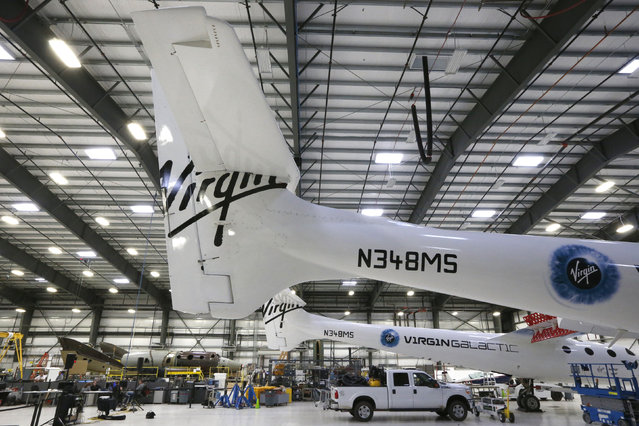
Virgin Galactic's new spaceship N202VG (bottom L) is seen behind the WhiteKnightTwo carrier aircraft mothership (front), which landed safely after splitting from SpaceShipTwo, in a hangar at Mojave Air and Space Port in Mojave, California, November 4, 2014. (Photo by Lucy Nicholson/Reuters)

Virgin Galactic's new spaceship N202VG (bottom L) is seen behind the WhiteKnightTwo carrier aircraft mothership (front), which landed safely after splitting from SpaceShipTwo, in a hangar at Mojave Air and Space Port in Mojave, California, November 4, 2014. (Photo by Lucy Nicholson/Reuters)
Details
05 Nov 2014 12:07:00
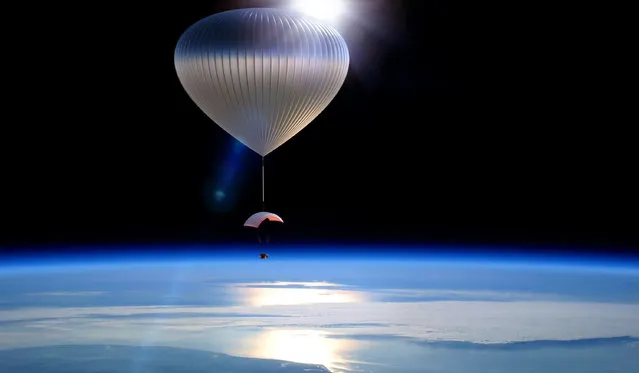
This undated image provided by World View shows World View capsule and balloon spacecraft that will rise to 100,000 feet above Earth for passengers to see the curvature of the planet and the blackness of space. (Photo by World View via AP Photo)

This undated image provided by World View shows World View capsule and balloon spacecraft that will rise to 100,000 feet above Earth for passengers to see the curvature of the planet and the blackness of space. Space tourism companies are employing designs including winged vehicles, vertical rockets with capsules and high-altitude balloons. While developers envision ultimately taking people to orbiting habitats, the moon or beyond, the immediate future involves short flights into or near the lowest reaches of space without going into orbit. (Photo by World View via AP Photo)
Details
15 Feb 2016 10:28:00
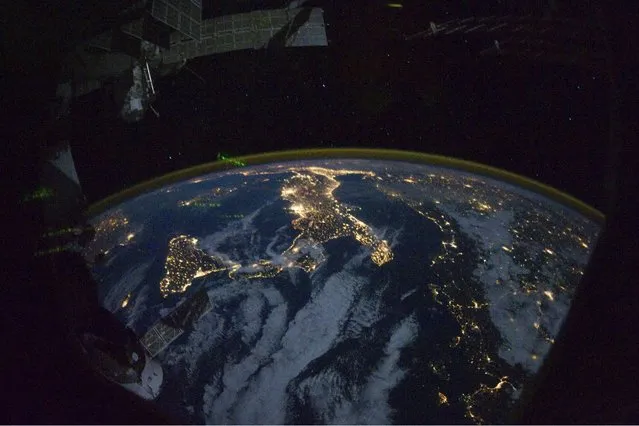
This image provided by NASA shows parts of Europe and Africa very easily recognizable in this night time image shot by one of the Expedition 25 crew members aboard the International Space Station flying 220 miles above Earth on Thursday Oct. 28, 2010. The view “looks” northward over Sicily and the “boot” of Italy, with the Mediterranean Sea representing most of the visible water in the view and the Adriatic Sea to the right of center. Tunisia is partially visible at left. Part of a docked Russian spacecraft and other components of the ISS are in the foreground. (Photo by AP photo/NASA)

This image provided by NASA shows parts of Europe and Africa very easily recognizable in this night time image shot by one of the Expedition 25 crew members aboard the International Space Station flying 220 miles above Earth on Thursday October 28, 2010. The view “looks” northward over Sicily and the “boot” of Italy, with the Mediterranean Sea representing most of the visible water in the view and the Adriatic Sea to the right of center. Tunisia is partially visible at left. Part of a docked Russian spacecraft and other components of the ISS are in the foreground. (Photo by AP Photo/NASA)
Details
11 May 2013 12:29:00
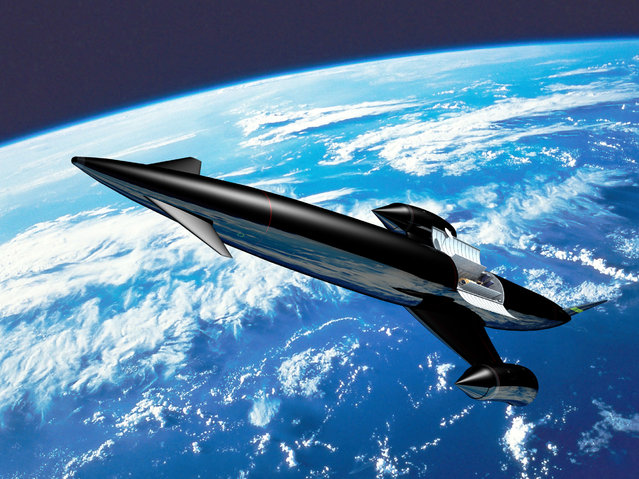
Artist's impression of Skylon. (Photo by Reaction Engines Ltd)

“A small British company with a dream of building a re-usable space plane has won an important endorsement from the European Space Agency (ESA) after completing key tests on its novel engine technology. Reaction Engines Ltd believes its Sabre engine, which would operate like a jet engine in the atmosphere and a rocket in space, could displace rockets for space access and transform air travel by bringing any destination on Earth to no more than four hours away”. – Chris Wickham via Reuters. Photo: Artist's impression of Skylon. (Photo by Reaction Engines Ltd)
Details
29 Nov 2012 10:31:00