Loading...
Done
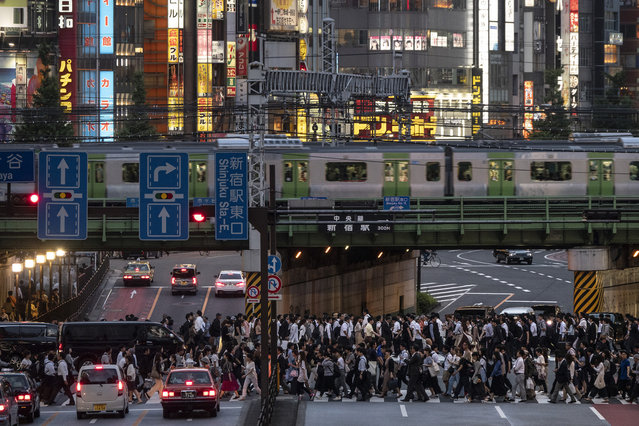
In this Tuesday, June 4, 2019, photo, a Yamanote Line train travels above commuters walking across the crossing during evening rush hours in the Shinjuku district of Tokyo. Operated by the East Japan Railway Co., the Yamanote Line in Tokyo makes a loop around the center of the city, connecting 29 stations that include key stops such as Shinjuku, Shibuya and Ikebukuro. A complete loop of about an hour offers scenes of Japanese daily lives. (Photo by Jae C. Hong/AP Photo)

In this Tuesday, June 4, 2019, photo, a Yamanote Line train travels above commuters walking across the crossing during evening rush hours in the Shinjuku district of Tokyo. Operated by the East Japan Railway Co., the Yamanote Line in Tokyo makes a loop around the center of the city, connecting 29 stations that include key stops such as Shinjuku, Shibuya and Ikebukuro. A complete loop of about an hour offers scenes of Japanese daily lives. (Photo by Jae C. Hong/AP Photo)
Details
27 Jun 2019 00:03:00
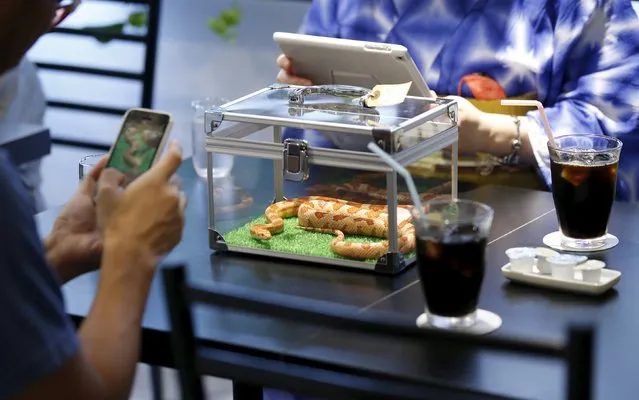
Customers take photos of a snake at the Tokyo Snake Center, a snake cafe, in Tokyo's Harajuku shopping district  August 14, 2015. (Photo by Toru Hanai/Reuters)

Customers take photos of a snake at the Tokyo Snake Center, a snake cafe, in Tokyo's Harajuku shopping district August 14, 2015. The cafe has on display 35 non-venomous snakes of 20 different breeds. Open six days a week, the cafe allows customers to enjoy food and beverages while watching a small snake slither around in a cage on their table for a 1,000 yen (8.04 dollars). By paying an additional fee, customers get to hold and pet the snake. (Photo by Toru Hanai/Reuters)
Details
15 Aug 2015 11:42:00
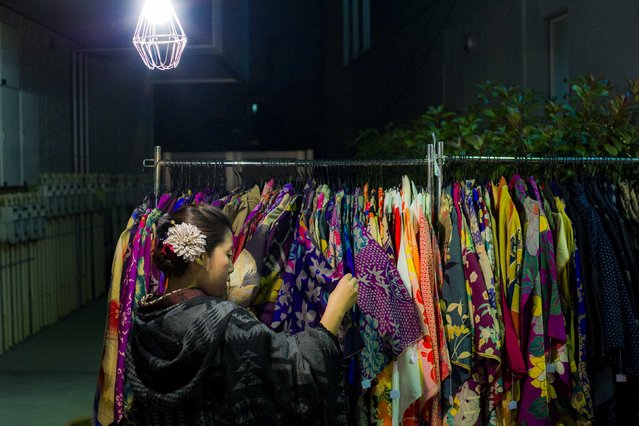
A woman browses through kimonos for sale at Boroichi flea market in Tokyo December 15, 2014. In the 16th century, Boroichi was a place for farmers to buy and sell rags, known as boro, for mending clothes and weaving sandals. Now in its 436th year, the original spirit lingers, with about 700 stands hawking fabric, used clothes and piles of rags. Others sell kitchen tools, pottery, seaweed and spices. (Photo by Thomas Peter/Reuters)

A woman browses through kimonos for sale at Boroichi flea market in Tokyo December 15, 2014. In the 16th century, Boroichi was a place for farmers to buy and sell rags, known as boro, for mending clothes and weaving sandals. Now in its 436th year, the original spirit lingers, with about 700 stands hawking fabric, used clothes and piles of rags. Others sell kitchen tools, pottery, seaweed and spices. About 200,000 people flock to the market, which is only open for four mid-winter days a year – two in December and two in January. (Photo by Thomas Peter/Reuters)
Details
19 Dec 2014 12:50:00
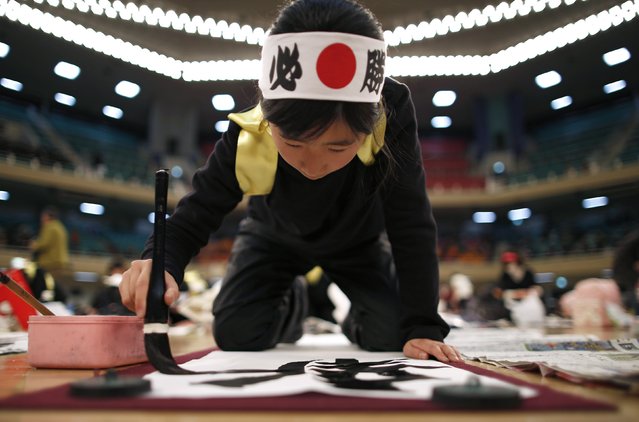
A Japanese girl participates in a calligraphy contest to the celebrate the New Year in Tokyo January 5, 2015. Over 3,000 calligraphers, having qualified in country wide competitions throughout Japan, took part in the annual contest to celebrate the new year. (Photo by Issei Kato/Reuters)

A Japanese girl participates in a calligraphy contest to the celebrate the New Year in Tokyo January 5, 2015. Over 3,000 calligraphers, having qualified in country wide competitions throughout Japan, took part in the annual contest to celebrate the new year. (Photo by Issei Kato/Reuters)
Details
06 Jan 2015 11:51:00
“Lip color”. Shibuya, 2012. (Asian (Street) Impressions)

“Lip color”. Shibuya, 2012. (Photo and caption by Asian (Street) Impressions)
Details
20 Oct 2013 09:11:00
“Milk Moustaches”. (Photo and caption by Ben Torode)

“Milk Moustaches”. (Photo and caption by Ben Torode)
Details
01 Nov 2013 12:02:00
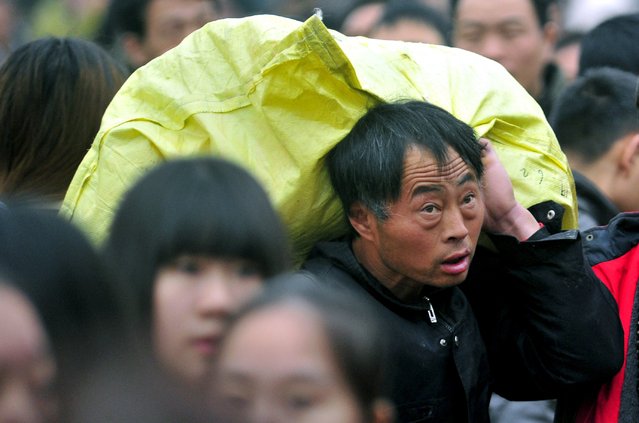
A man carries a bag on his back in Guangzhou, Guangdong province, January 26, 2016. According to traffic police, over 2.9 billion trips will be made around China during the 40-day Spring Festival travel rush, which started on January 24. (Photo by Reuters/Stringer)

A man carries a bag on his back in Guangzhou, Guangdong province, January 26, 2016. According to traffic police, over 2.9 billion trips will be made around China during the 40-day Spring Festival travel rush, which started on January 24. (Photo by Reuters/Stringer)
Details
30 Jan 2016 13:00:00


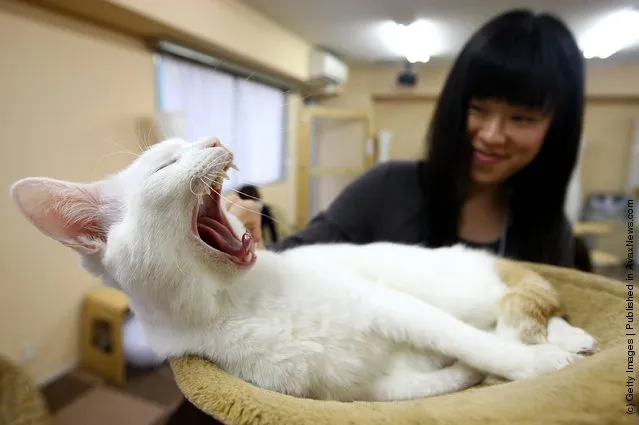
A cat yawns at Nekorobi cat cafe on January 20, 2009 in Tokyo, Japan. Cat cafes, where people can spend time with their favorite cat for about 10 US dollars an hour, are now getting more popular with people living in urban areas. The regular customers are mainly in their 20's to 30's and seaking healing by cats, or people who cannot afford to have pets full time. Some visiters come to the cat cafe three times a week. (Photo by Junko Kimura/Getty Images)
Details
05 Jun 2011 11:00:00