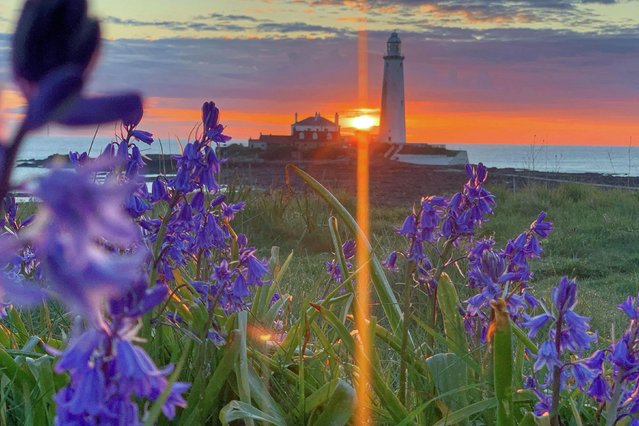
Sunrise over St Mary's lighthouse north of Whitley Bay on the coast of north east England on Wednesday, May 19, 2021. (Photo by Owen Humphreys/PA Images via Getty Images)
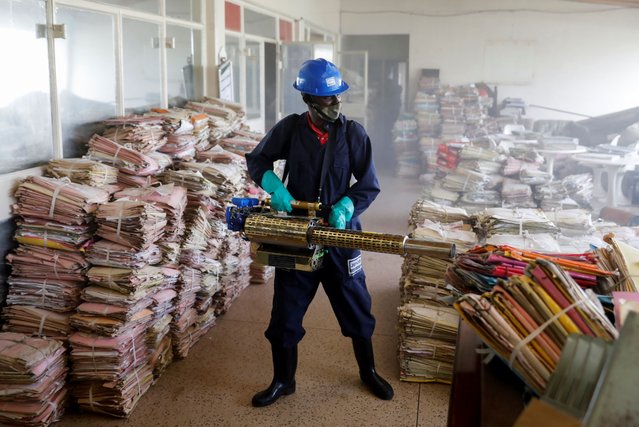
A sanitation worker fumigates using sodium hypochlorite in an archive room to fight the spread of the coronavirus disease (COVID-19) in the Milimani commercial courts in Nairobi, Kenya, July 17, 2020. (Photo by Baz Ratner/Reuters)
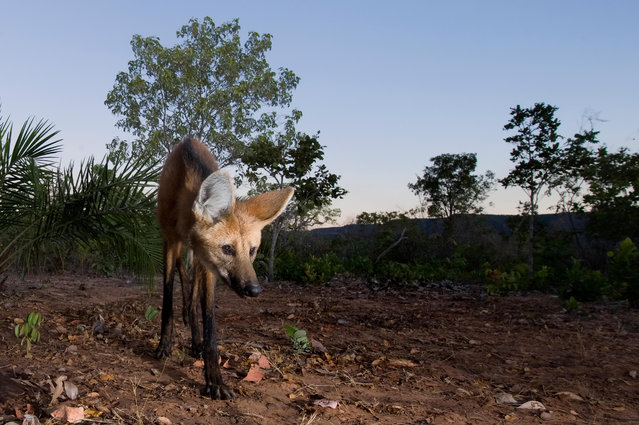
Global wildlife populations will decline by 67% by 2020 unless urgent action is taken to reduce human impact on species and ecosystems, warns the biennial Living Planet Index report from WWF (World Wide Fund for Nature) and ZSL (Zoological Society of London). From elephants to eels, here are some of the wildlife populations most affected by human activity. Here: The maned wolf is among the large mammals in the Brazilian Cerrado that are threatened by the increasing conversion of grasslands into farmland for grazing and growing crops. (Photo by Ben Cranke/Nature Picture Library/Alamy Stock Photo)
The Bridge “Rakotzbrücke” is pictured against trees in autumn colours in the the eastern German town of Kromlau November 4, 2014. (Photo by Hannibal Hanschke/Reuters)
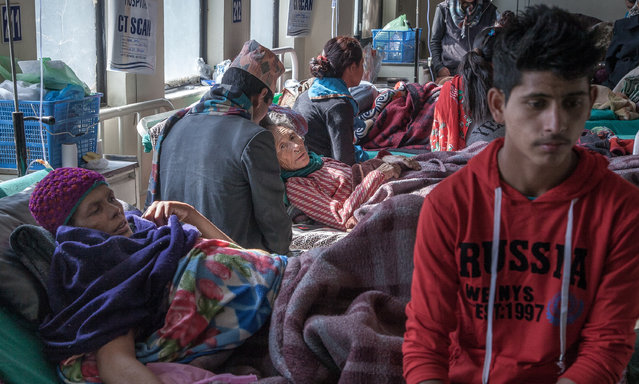
One of the most significant challenges related to cancer in Nepal is the lack of awareness around the prognosis of the disease, as many patients, their families and even healthcare professionals consider cancer to be an incurable disease at any stage. This results in significant delays in bringing patients to hospitals, and high rates of advanced stage cancers and mortality. (Photo by Omar Havana)
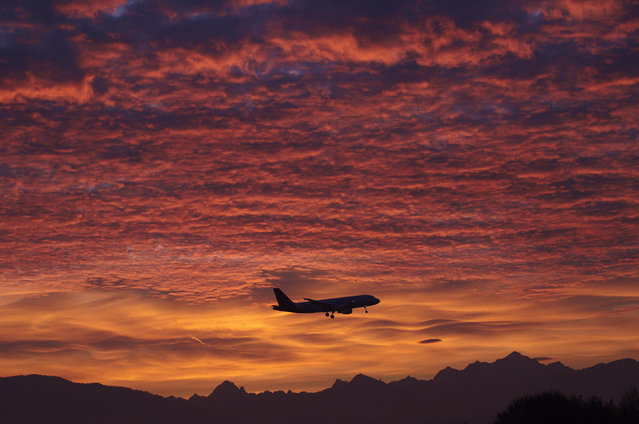
A Brussels Airlines aircraft prepares for landing in Cointrin airport during sunrise over the Mont Blanc in Geneva December 1, 2011. (Photo by Denis Balibouse/Reuters)
A Sotheby's employee poses with a “Return of the Jedi” promotional C-3PO Helmet 1983, estimated at £15,000-£25,000 created by George Lucas' visual effects company during a photocall at Sotheby's in London, Britain on December 6, 2019. (Photo by Thomas Mukoya/Reuters)