Loading...
Done
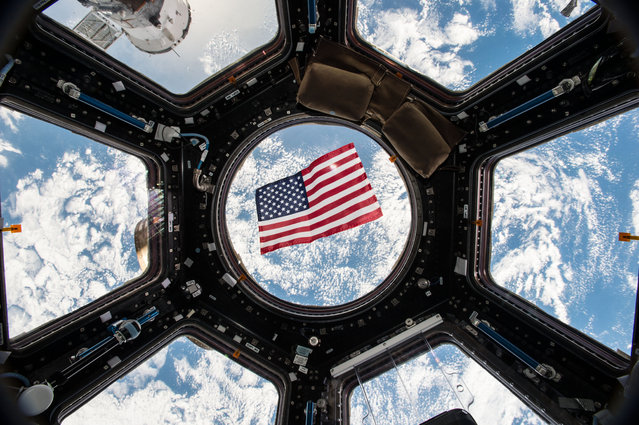
An American flag is visible in the windows of the cupola aboard the International Space Station. Thanks to a bill passed by Texas legislators in 1997 that put in place technical voting procedure for astronauts – nearly all of whom live in Texas – they have the ability to vote from space through specially designed absentee ballots. To preserve the integrity of the secret vote, the ballot is encrypted and only accessible by the astronaut and the county clerk responsible for casting the ballot. (Photo by NASA)

An American flag is visible in the windows of the cupola aboard the International Space Station. Thanks to a bill passed by Texas legislators in 1997 that put in place technical voting procedure for astronauts – nearly all of whom live in Texas – they have the ability to vote from space through specially designed absentee ballots. To preserve the integrity of the secret vote, the ballot is encrypted and only accessible by the astronaut and the county clerk responsible for casting the ballot. (Photo by NASA)
Details
10 Nov 2016 12:35:00
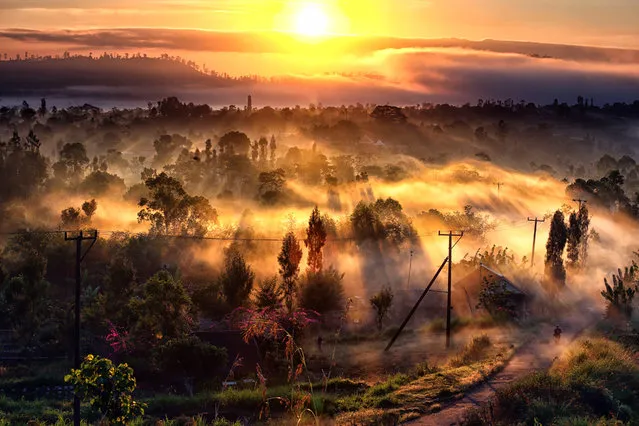
“Misty Morning”. Every morning, people expect sunny weather. Photo location: Bali, Indonesia. (Photo and caption by Henry Adam/National Geographic Photo Contest)

“Misty Morning”. Every morning, people expect sunny weather. Photo location: Bali, Indonesia. (Photo and caption by Henry Adam/National Geographic Photo Contest)
Details
02 Oct 2014 10:43:00
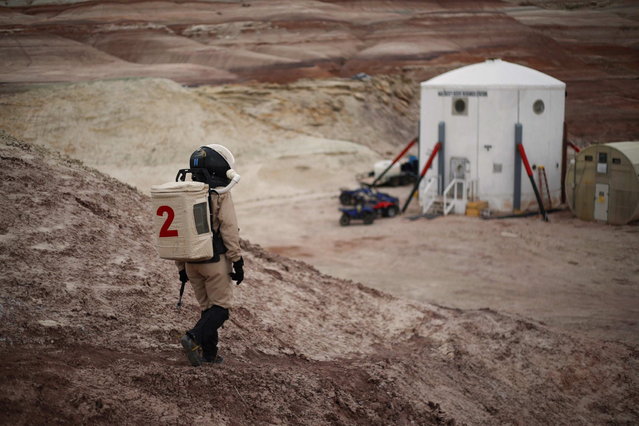
Csilla Orgel, a geologist of Crew 125 EuroMoonMars B mission, makes her way back to the Mars Desert Research Station (MDRS) in the Utah desert March 3, 2013. (Photo by Jim Urquhart/Reuters)

NASA says it could be another 20 years before humans touch down on Mars, but in a sense, the Mars Society has been exploring the red planet for more than a decade – in Utah. Photo: Csilla Orgel, a geologist of Crew 125 EuroMoonMars B mission, makes her way back to the Mars Desert Research Station (MDRS) in the Utah desert March 3, 2013. The MDRS aims to investigate the feasibility of a human exploration of Mars and uses the Utah desert's Mars-like terrain to simulate working conditions on the red planet. Scientists, students and enthusiasts work together developing field tactics and studying the terrain. All outdoor exploration is done wearing simulated spacesuits and carrying air supply packs and crews live together in a small communication base with limited amounts of electricity, food, oxygen and water. Everything needed to survive must be produced, fixed and replaced on site. (Photo by Jim Urquhart/Reuters)
Details
14 Mar 2013 12:11:00
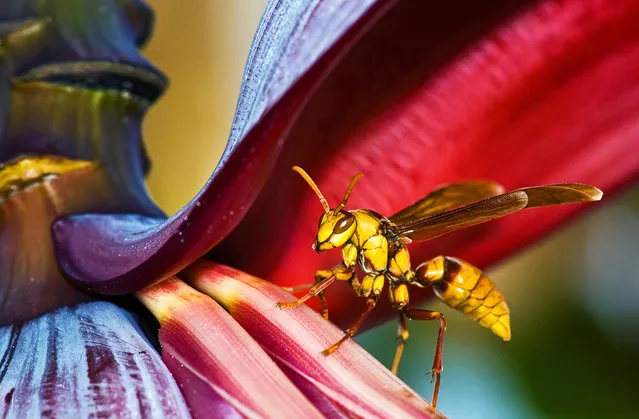
“A huge wasp measuring 2.5 inches in length, visiting the banana tree in my front yard”. (Photo and comment by John Matzick, USA/2013 Sony World Photography Awards

“A huge wasp measuring 2.5 inches in length, visiting the banana tree in my front yard”. (Photo and comment by John Matzick, USA/2013 Sony World Photography Awards via The Atlantic)


Details
07 Feb 2013 14:23:00
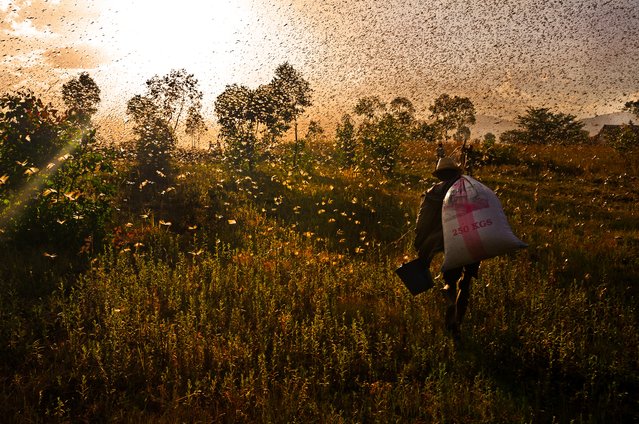
“Locusts & Men”. Oppression, interaction, collaboration. In the life cycle of nature nothing is lost, but the coexistence of different species is sometimes difficult. In Madagascar periodically returns the archaic antagonism between man and the migratory locust, in a circle of life where the two species are looking for space and food for their survival. Photo location: Madagascar, 2013. (Photo and caption by Michele Martinelli/National Geographic Photo Contest)

“Locusts & Men”. Oppression, interaction, collaboration. In the life cycle of nature nothing is lost, but the coexistence of different species is sometimes difficult. In Madagascar periodically returns the archaic antagonism between man and the migratory locust, in a circle of life where the two species are looking for space and food for their survival. At the end of the day a man walks home carrying on his shoulders the heavy bag which contains the locusts captured during the day. The insects provide nutritious meals for the man and his family. Photo location: Madagascar, 2013. (Photo and caption by Michele Martinelli/National Geographic Photo Contest)

ATTENTION! All pictures are presented in high resolution. To see Hi-Res images – just TWICE click on any picture. In other words, click small picture – opens the BIG picture. Click BIG picture – opens VERY BIG picture.
Details
03 Dec 2013 10:59:00
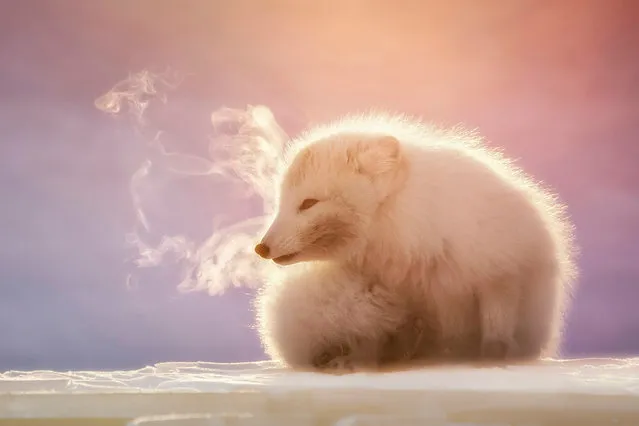
Breath of an Arctic fox by Marco Gaiotti, Italy. Marco was watching this little Arctic fox as it incessantly called another nearby. Gradually he noticed the fox’s wet breath was quickly freezing in the air after each call. It was late winter in Spitsbergen, Svalbard, and the air was -35C (-31F). Photographing Arctic foxes is often frustrating, as they are normally running around fast in search of food, but this one was very relaxed and let Marco get close enough to focus on it, with the light glowing perfectly in the background. (Photo by Marco Gaiotti/Wildlife Photographer of the Year 2021)

Breath of an Arctic fox by Marco Gaiotti, Italy. Marco was watching this little Arctic fox as it incessantly called another nearby. Gradually he noticed the fox’s wet breath was quickly freezing in the air after each call. It was late winter in Spitsbergen, Svalbard, and the air was -35C (-31F). Photographing Arctic foxes is often frustrating, as they are normally running around fast in search of food, but this one was very relaxed and let Marco get close enough to focus on it, with the light glowing perfectly in the background. (Photo by Marco Gaiotti/Wildlife Photographer of the Year 2021)
Details
05 Dec 2021 06:36:00
Nino, a ten-year-old toreador apprentice of the French Tauromachy Centre, nicknamed El Nino, touches a practice bull at the bullring of Garons, near Nimes, September 25, 2013. (Photo by Jean-Paul Pelissier/Reuters)

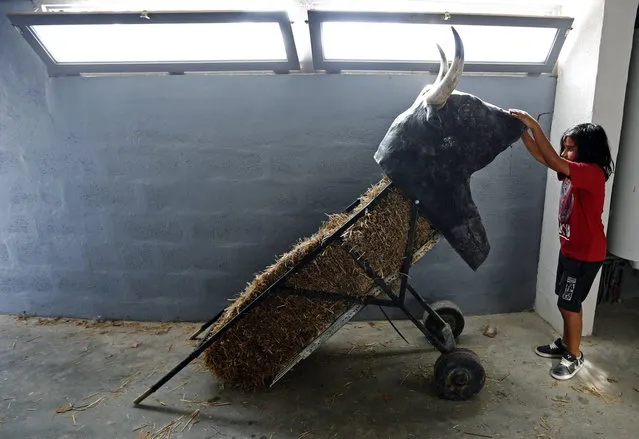
Nino, a ten-year-old toreador apprentice of the French Tauromachy Centre, nicknamed El Nino, touches a practice bull at the bullring of Garons, near Nimes, September 25, 2013. Since 1983, the French Tauromachy Centre in Nimes has trained some 1,000 youths in the art of bullfighting. Twenty of them have gone on to become professional matadors, facing fighting bulls in the arena. Twice a week, students take courses with a matador to learn the movements and gestures of the bullfighter in the ring, but without an animal present. Students train with calves in the surrounding fields during spring, and regularly participate in beginner's bullfights (becerradas) without killing calves. Solal has been taking courses for three years and Nino, for just a year now. Both are normally enrolled in French public schools, but have one thought in mind – bullfighting. They share a passion linked to the city of Nimes, famous for its ferias and bullring. (Photo by Jean-Paul Pelissier/Reuters)
Details
06 Nov 2013 10:12:00
A relative (L) of Champa Devi, 88, sits next to her body, minutes after her death at Mukti Bhavan (Salvation House) at Varanasi, in the northern Indian state of Uttar Pradesh, June 21, 2014. (Photo by Danish Siddiqui/Reuters)

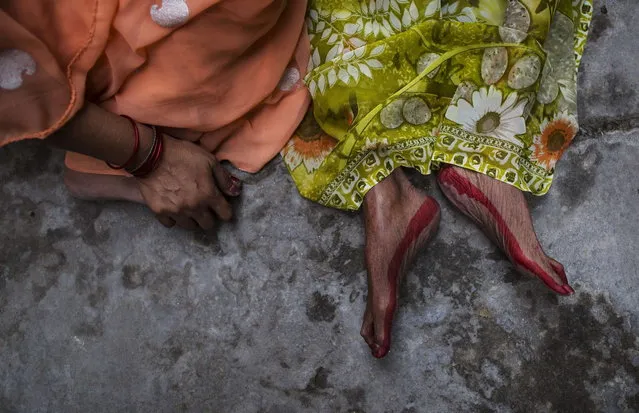
A relative (L) of Champa Devi, 88, sits next to her body, minutes after her death at Mukti Bhavan (Salvation House) at Varanasi, in the northern Indian state of Uttar Pradesh, June 21, 2014. The city of Varanasi, on the banks of the River Ganges, is widely considered Hinduism's holiest city and many Hindus believe that dying there and having their remains scattered in the Ganges allows their soul to escape a cycle of death and rebirth, attaining “moksha” or salvation. “Mukti Bhavan” or “Salvation House”, is a charity-run hostel that caters for people who wish to come to Varanasi to die. Guests can normally stay up to two weeks after which, if they haven't yet passed away, they are gently asked to leave. (Photo by Danish Siddiqui/Reuters)
Details
24 Jul 2014 12:32:00