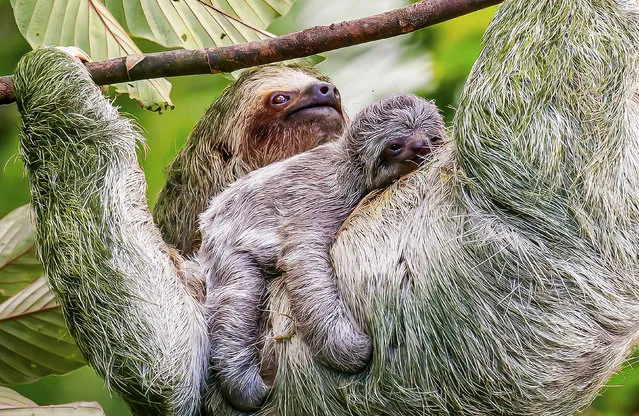
A baby sloth uses his mother as a hammock while she feasts on papayas in Heredia province in Costa Rica in April 2023. (Photo by William Steele/Solent News)
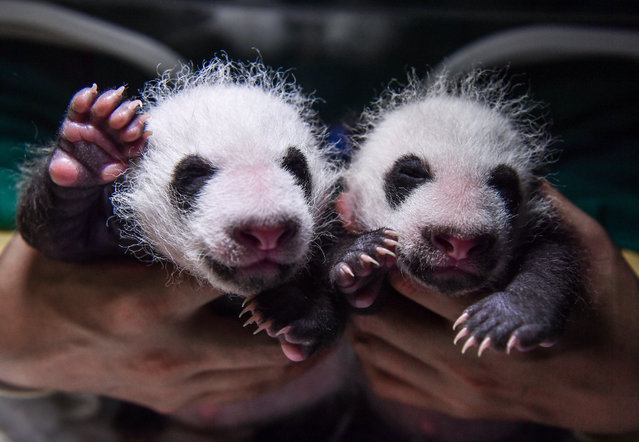
One-month-old cubs given birth by giant panda “Su Shan” are seen at Shenshuping giant panda base on August 17, 2021 in Aba Tibetan and Qiang Autonomous Prefecture, Sichuan Province of China. (Photo by He Haiyang/VCG via Getty Images)
Lea Meyer of Germany falls at the water in the women's 3000m Steeplechase heats at the World Athletics Championships Oregon22 at Hayward Field in Eugene, Oregon, USA, 16 July 2022. (Photo by Robert Ghement/EPA/EFE)
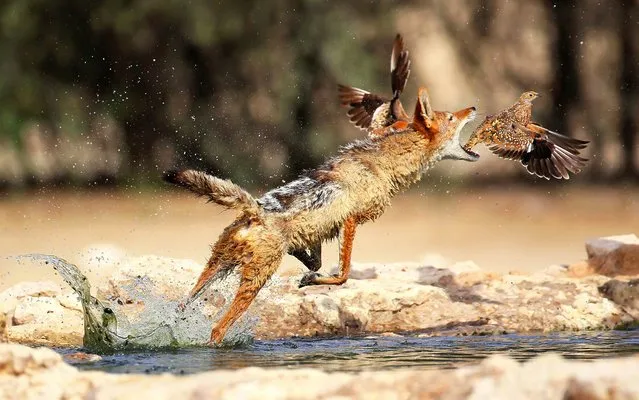
Against the scorching sun, a hungry jackal chases a flock of birds looking for a quick morning snack. Taken in South Africa's Kgalagadi Transfrontier National Park, these images capture the moment a lone hunter tries, and then succeeds, in his pursuit. (Photo by John Mullineux/Solent News)
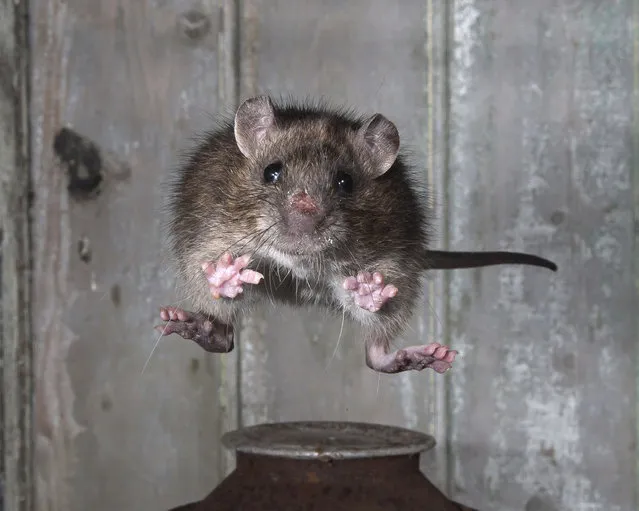
A) 1st place WINNER – Roy Rimmer. “This rat was in an outdoor set I made, the set up is two meters long and a meter wide made of Perspex,it has a plywood front with holes cut in for my camera and flash guns, I placed two rusty paint cans in the set up and the rat would leap from one can too the other, I had to use flash to freeze the action”.
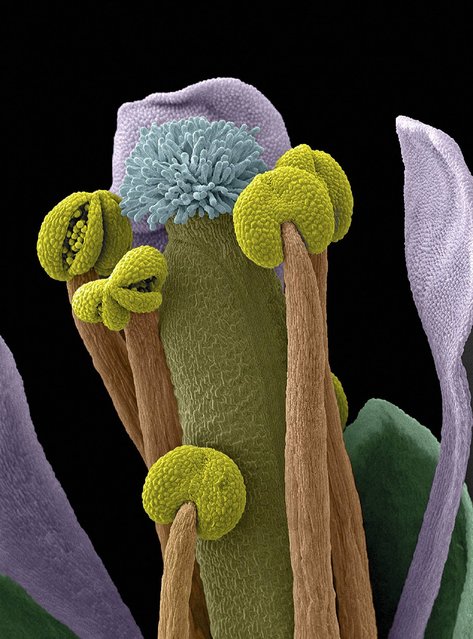
Beautiful, strange and occasionally alarming pictures from the shortlist for this year’s Wellcome image awards – which celebrate the very best in science photography and imaging – from an x-ray of a bat to a micrograph of a kidney stone. The exhibition opens on 12 March at three science centres and the Museum of Science and Industry in Manchester. Photo: Scanning electron micrograph (SEM) of an Arabidopsis thaliana flower, also commonly known as thale cress. Some of the anthers are open, revealing pollen grains ready for dispersal. Arabidopsis was the first plant to have its entire genome sequenced and is widely used as a model organism in molecular and plant biology. Horizontal width of image is 1200 microns. Magnification 100x. (Photo by Stefan Eberhard/Wellcome Images)