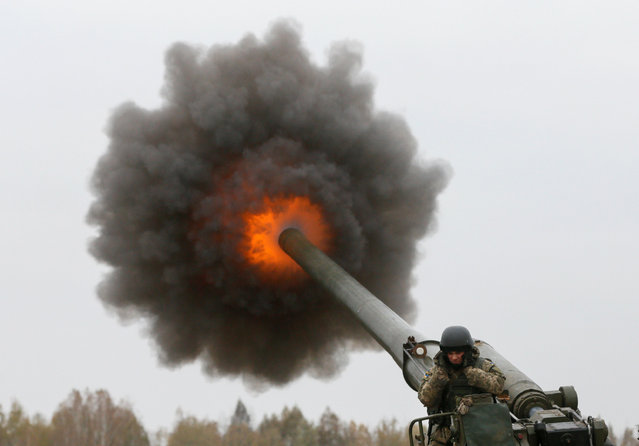
A Ukrainian serviceman fires a 2S7 Pion self-propelled gun during military exercises near the village of Divychky in Kiev region, Ukraine, October 21, 2016. (Photo by Valentyn Ogirenko/Reuters)
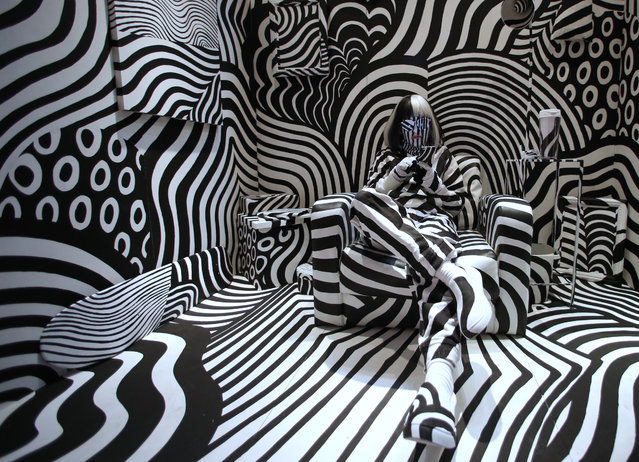
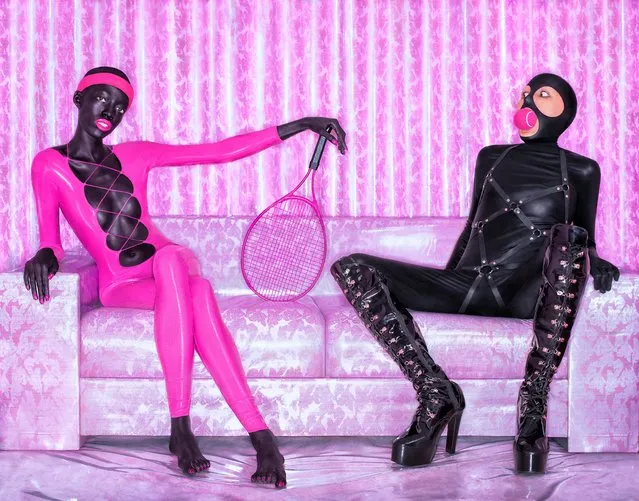
Model feebee poses as part of art installation “Dazzle room” made by artist Shigeki Matsuyama at Room 32 fashion and design exhibition in Tokyo, Friday, February 19, 2016. Matsuyama's installation features a strong contrast of black and white, which he learned from dazzle camouflage used mainly in World War I, in Tokyo, Friday, Feb. 19, 2016. (Photo by Shuji Kajiyama/AP Photo)
This photo taken on March 10, 2025 shows the former disaster prevention office building in Minamisanriku Town, Miyagi Prefecture, lit up on the eve of the 14th anniversary of the 2011 earthquake and tsunami disaster. (Photo by JIJI Press/AFP Photo)
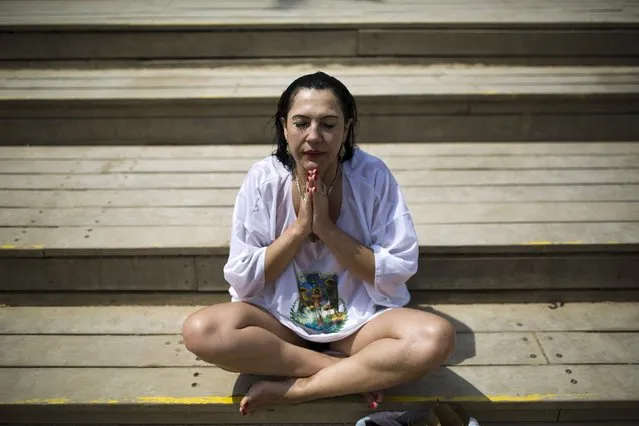
A Christian pilgrim prays during her visit to the baptismal site known as Qasr el-Yahud on the banks of the Jordan River near the West Bank city of Jericho April 9, 2015. A day ahead of Orthodox Good Friday, the Easter period draws many Christian tourists to visit well-known religious sites, including Qasr el-Yahud, where it is believed John the Baptist baptised Jesus. (Photo by Amir Cohen/Reuters)
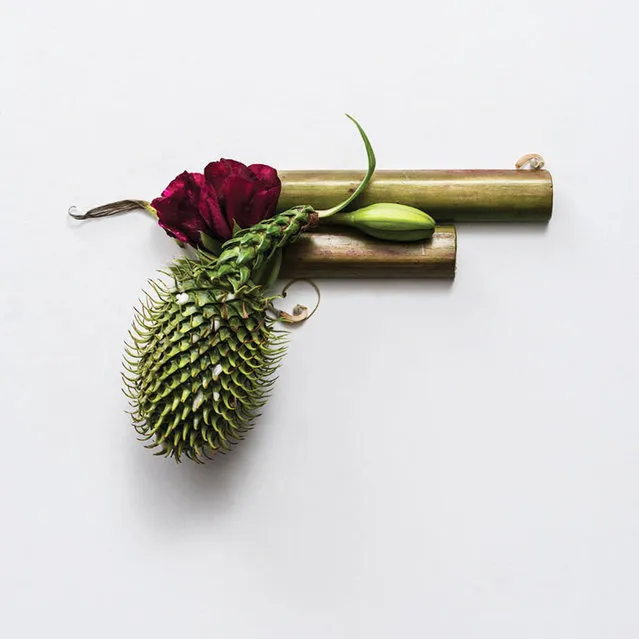
Wouldn’t it be wonderful if all weapons were created by Sonia Rentsch rather than by gunsmiths? In the series Harm Less, Sonia had constructed a number of firearms using various plants. Of course people might say that it’s not the guns that kill people; it’s the people that kill people. However, this statement is completely false. Can you imagine some equivalent of school shooting if the guns were not available? Yes, some crazy kid would still be able to bring a weapon to class, but most likely it would be a club or a penknife, making him easily tamable. (Photo by Sonia Rentsch)
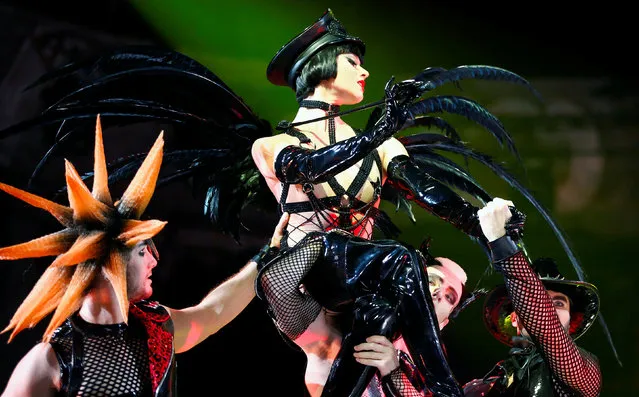
Dancers attend a photocall for the new “The One – Grand Show” at Friedrichstadt-Palast in Berlin, Germany September 28, 2016. The show, which features costumes by French fashion designer Jean Paul Gaultier, premieres on 06 October. (Photo by Hannibal Hanschke/Reuters)
Photographer Pol Kurucz’s vivid collection of photos explores issues faced by black Brazilian women, from political misrepresentation to unrealistic beauty standards. Kolor Collective is a Rio de Janeiro-based creative group that challenges the struggle faced by black women in Brazil through theatrical and provocative art. It was founded in 2015 by Franco-Hungarian photographer Pol Kurucz, who often touches on his own experiences of discrimination to call out sensitive social problems. (Photo by Kolor Art Collective/The Guardian)