Loading...
Done
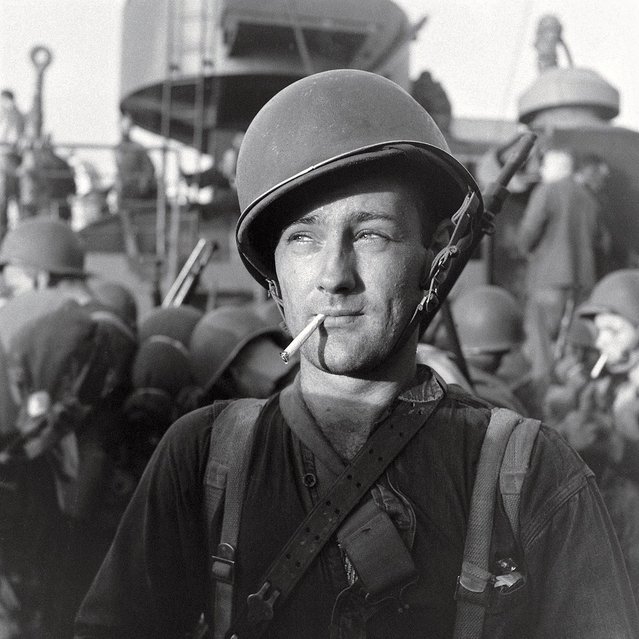
An American Marine readies to land on Guadalcanal during the five-month struggle for the island between late 1942 and early 1943. Three thousand miles south of Tokyo, Guadalcanal was a major shipping point for military supplies. The Allied victory there in February, 1943, marked a major turning point in the war after a string of Japanese victories in the Pacific. (Photo by Joe Scherschel/Time & Life Pictures)

An American Marine readies to land on Guadalcanal during the five-month struggle for the island between late 1942 and early 1943. Three thousand miles south of Tokyo, Guadalcanal was a major shipping point for military supplies. The Allied victory there in February, 1943, marked a major turning point in the war after a string of Japanese victories in the Pacific. (Photo by Joe Scherschel/Time & Life Pictures)
Details
10 Mar 2013 12:50:00
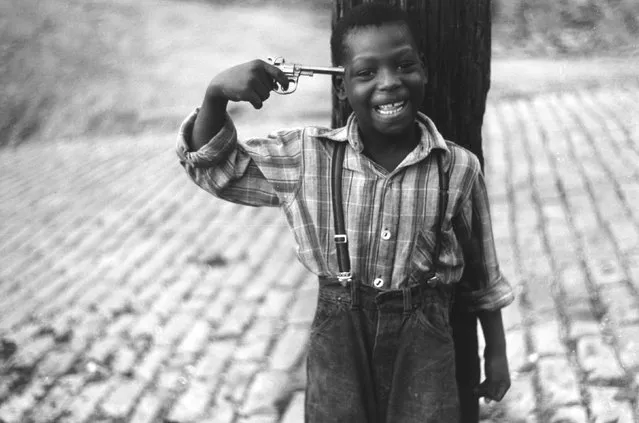
Usa, Pittsburgh, Pennsylvania, 1950. (Photo by Elliott Erwitt/Contrasto)

USA, Pittsburgh, Pennsylvania, 1950. (Photo by Elliott Erwitt/Contrasto)
Details
27 May 2013 11:50:00
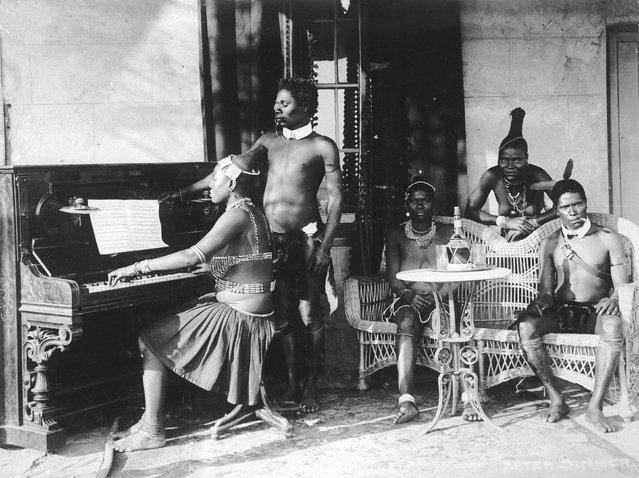
circa 1925:  A Zulu woman playing the piano while a group of others sit and listen.  (Photo by General Photographic Agency/Getty Images)

“The Zulu are the largest South African ethnic group, with an estimated 10–11 million people living mainly in the province of KwaZulu-Natal. Small numbers also live in Zimbabwe, Zambia, and Mozambique. Their language, Zulu, is a Bantu language; more specifically, part of the Nguni subgroup. The Zulu Kingdom played a major role in South African history during the 19th and 20th centuries. Under apartheid, Zulu people were classed as third-class citizens and suffered from state-sanctioned discrimination. They remain today the most numerous ethnic group in South Africa, and now have equal rights along with all other citizens”. – Wikipedia.

Photo: A Zulu woman playing the piano while a group of others sit and listen (to put it briefly, Englishmen scoff over Zulu). South Africa, circa 1925. (Photo by General Photographic Agency)

Details
03 Feb 2014 09:40:00


“Snowflake (c. 1964 – November 24, 2003) was an albino gorilla. He was the only known albino gorilla so far, and the most popular resident of the Barcelona Zoo in Catalonia, Spain. Originally named Nfumu Ngui in Fang language ("white gorilla") by his captor, he was then nicknamed Floquet de Neu (Catalan for little snowflake) by his keeper Jordi Sabater Pi. On his arrival to Barcelona where he was given an official reception by the then Mayor of Barcelona, Josep Maria de Porcioles, in November 1966, he was called Blancanieves (“Snow White”) in the newspaper Tele/Exprés. But he became famous with the name given to him by Sabater when National Geographic Magazine featured him on the main page in March 1967, with the English name Snowflake. This name spread among the press (Stern, Life, Paris-Match) and was later translated to Spanish as Copito de Nieve. Sabater himself called the gorilla Floquet or Copi, and in the later years Nfumu. The asteroid 95962 Copito, discovered by Catalan astronomer J. Manteca, is named in his honour”.

Details
07 Mar 2011 15:50:00
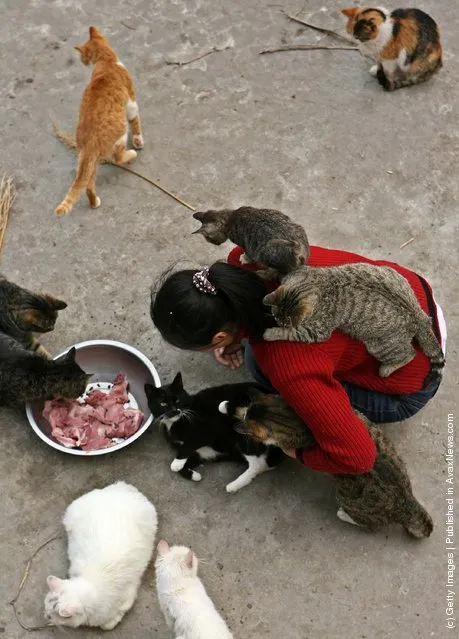
Animal Lover Duo Zirong's Family And Their Adopted Cats

Chinese woman Duo Zirong feeds stray cats at her home February 14, 2006 in Shanghai, China. Duo Zirong, a Daur ethnic minority group woman from Inner Mongolia and reported as the “Cat Woman”, has housed about 300 cats with her Shanghainese husband Liu Junluo and mother-in-law. (Photo by China Photos/Getty Images)
Details
09 Oct 2011 08:57:00
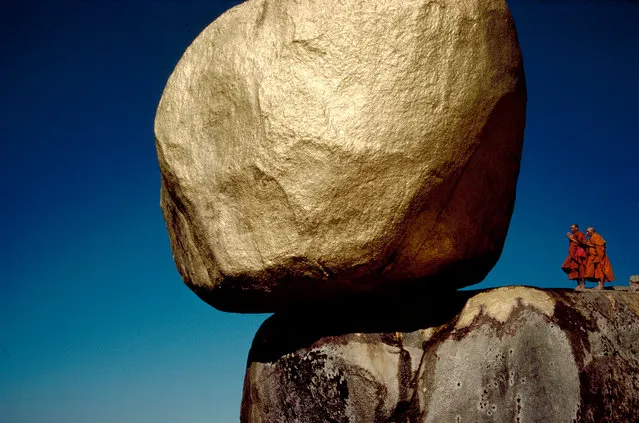
Kyaiktiyo, Burma, 1978. The Golden Rock at Shwe Pyi Daw (the Golden Country), the Buddhist holy place. Hiroji Kubota writes: “I was desperate to keep a distance from America for a while; luckily, I found Burma and its gentle and compassionate people. In the spring of 1978, on the top of the hill where I took this photo, I had two Leica bodies: the one with Tri-X and the other with Kodachrome 64. Soon after, I realised that the colour one looked very colourful and was more powerful. That was my decisive moment, to become a colour photographer”. (Photo by Hiroji Kubota/Magnum Photos)

Kyaiktiyo, Burma, 1978. The Golden Rock at Shwe Pyi Daw (the Golden Country), the Buddhist holy place. Hiroji Kubota writes: “I was desperate to keep a distance from America for a while; luckily, I found Burma and its gentle and compassionate people. In the spring of 1978, on the top of the hill where I took this photo, I had two Leica bodies: the one with Tri-X and the other with Kodachrome 64. Soon after, I realised that the colour one looked very colourful and was more powerful. That was my decisive moment, to become a colour photographer”. (Photo by Hiroji Kubota/Magnum Photos)
Details
10 Jun 2016 13:30:00
Models wait for their turn at an audition for the upcoming Lakme Fashion Week (LFW) Summer/Resort 2017 in Mumbai, India, 14 December 2016. Around 83 national and international models participated in the audition from which five got selected. The LFW Summer/Resort 2017 is scheduled to start from 01 to 05 February 2017. (Photo by Divyakant Solanki/EPA)

Models wait for their turn at an audition for the upcoming Lakme Fashion Week (LFW) Summer/Resort 2017 in Mumbai, India, 14 December 2016. Around 83 national and international models participated in the audition from which five got selected. The LFW Summer/Resort 2017 is scheduled to start from 01 to 05 February 2017. (Photo by Divyakant Solanki/EPA)
Details
15 Dec 2016 09:15:00
The Digital Art of Dan Luvisi

Dan Luvisi reimagines beloved animated characters and turns them into grimy, twisted, hideous personas that may have just scarred us of our fondest memories from childhood forever. Photo: “The Cook”. (Photo by Dan Luvisi)
Details
23 May 2014 11:12:00