Loading...
Done
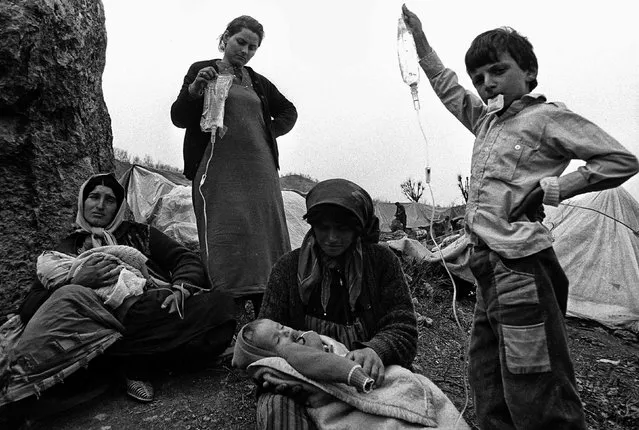
Iraqi Kurdish refugees wait with children in Cukurca refugee camp in Turkey April 8, 1991. Reuters photographers have chronicled Kurdish refugee crises over the years. In 1991 Srdjan Zivulovic documented refugees in Cukurca who had escaped a military operation by Saddam Hussein's government in Iraq aimed at “Arabising” Kurdish areas in the north. (Photo by Srdjan Zivulovic/Reuters)

Iraqi Kurdish refugees wait with children in Cukurca refugee camp in Turkey April 8, 1991. Reuters photographers have chronicled Kurdish refugee crises over the years. In 1991 Srdjan Zivulovic documented refugees in Cukurca who had escaped a military operation by Saddam Hussein's government in Iraq aimed at “Arabising” Kurdish areas in the north. Hundreds of thousands fled into Turkey and Iran. Images shot in recent months show familiar scenes as crowds of people flee Islamic State militants in Syria. There are as many as 30 million Kurds, spread through Turkey, Iraq, Syria and Iran. Most Kurds are Sunni Muslims, but tend to feel more loyalty to their Kurdishness, rather than their religion. (Photo by Srdjan Zivulovic/Reuters)
Details
14 Nov 2014 14:09:00
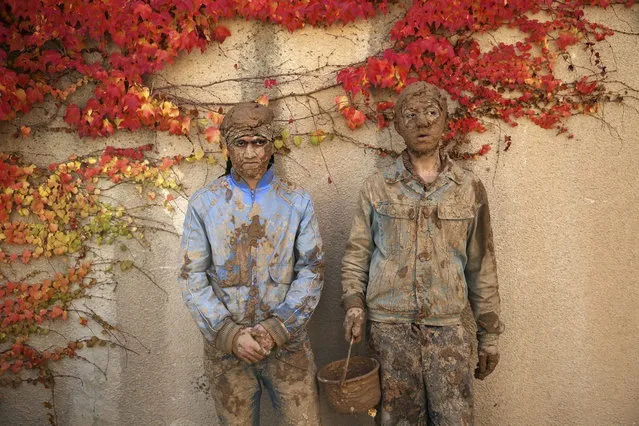
Iranian mourners cover themselves with mud during Ashoura, marking the death anniversary of Imam Hussein, the grandson of Islam's Prophet Muhammad, at the city of Bijar, west of the capital Tehran, Iran, Thursday, November 14, 2013. Hussein, one of Shiite Islam's most beloved saints, was killed in a 7th century battle at Karbala, Iraq. (Photo by Ebrahim Noroozi/AP Photo)

Iranian mourners cover themselves with mud during Ashoura, marking the death anniversary of Imam Hussein, the grandson of Islam's Prophet Muhammad, at the city of Bijar, west of the capital Tehran, Iran, Thursday, November 14, 2013. Hussein, one of Shiite Islam's most beloved saints, was killed in a 7th century battle at Karbala, Iraq. (Photo by Ebrahim Noroozi/AP Photo)
Details
18 Nov 2013 09:13:00
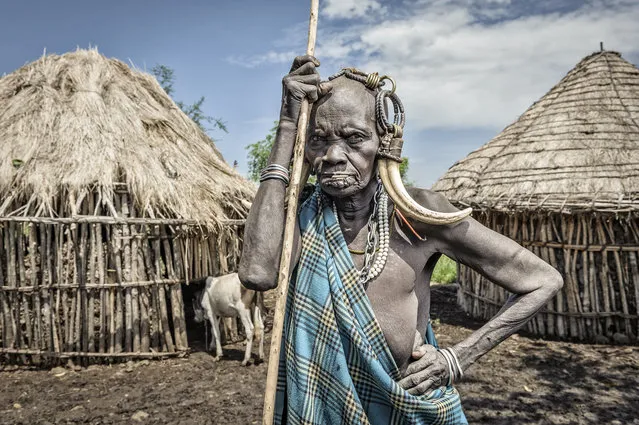
“Old Mursi woman”. Old woman by the huts of her village. Location: Marenke, Omo valley, Ethiopia. (Photo and caption by Jorge Fernandez/National Geographic Traveler Photo Contest)

“Old Mursi woman”. Old woman by the huts of her village. Location: Marenke, Omo valley, Ethiopia. (Photo and caption by Jorge Fernandez/National Geographic Traveler Photo Contest)

ATTENTION! All pictures are presented in high resolution. To see Hi-Res images – just TWICE click on any picture. In other words, click small picture – opens the BIG picture. Click BIG picture – opens VERY BIG picture.
Details
24 Jun 2013 09:55:00
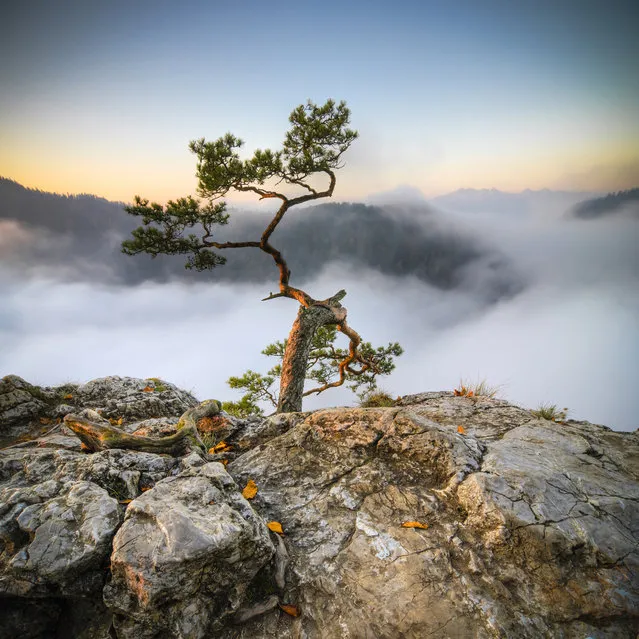
“Sokolica”. Sokolica, Poland. (Photo and caption by Marcin Kęsek/National Geographic Traveler Photo Contest)

“Sokolica”. Sokolica, Poland. (Photo and caption by Marcin Kęsek/National Geographic Traveler Photo Contest)

ATTENTION! All pictures are presented in high resolution. To see Hi-Res images – just TWICE click on any picture. In other words, click small picture – opens the BIG picture. Click BIG picture – opens VERY BIG picture.
Details
25 Jun 2013 09:13:00
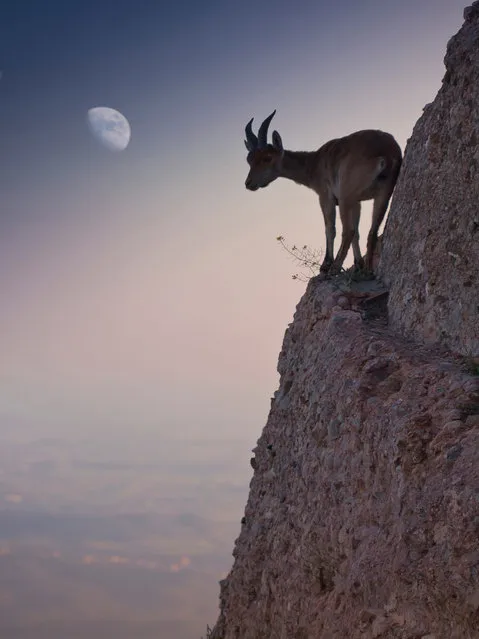
“For a bouquet of flowers”. Photographs made ​​in the last hours of the day. A goat is directed by a dangerous way to eat a small bouquet of flowers. Location: España, Barcelona, Montserrat. (Photo and caption by Renato Lopez Baldo/National Geographic Traveler Photo Contest)

“For a bouquet of flowers”. Photographs made ​​in the last hours of the day. A goat is directed by a dangerous way to eat a small bouquet of flowers. Location: España, Barcelona, Montserrat. (Photo and caption by Renato Lopez Baldo/National Geographic Traveler Photo Contest)

ATTENTION! All pictures are presented in high resolution. To see Hi-Res images – just TWICE click on any picture. In other words, click small picture – opens the BIG picture. Click BIG picture – opens VERY BIG picture.
Details
25 Jun 2013 12:51:00
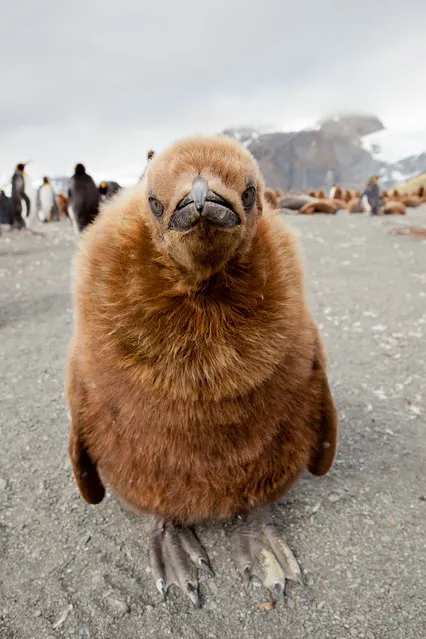
“Cub”. In the colony of penguins in South Georgia. (Photo and caption by Ondrej Zaruba/National Geographic Traveler Photo Contest)

“Cub”. In the colony of penguins in South Georgia. (Photo and caption by Ondrej Zaruba/National Geographic Traveler Photo Contest)

ATTENTION! All pictures are presented in high resolution. To see Hi-Res images – just TWICE click on any picture. In other words, click small picture – opens the BIG picture. Click BIG picture – opens VERY BIG picture.
Details
28 Jun 2013 12:32:00
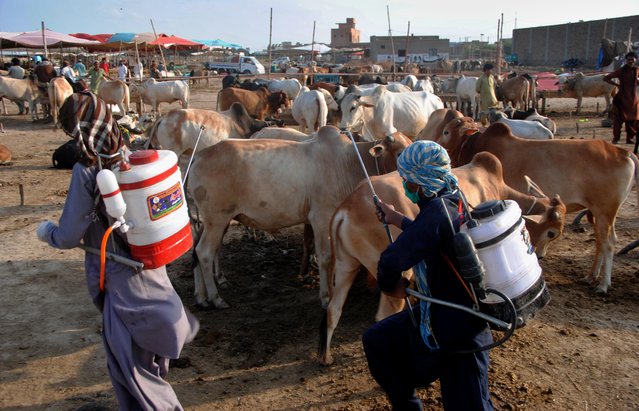
Health workers wearing face masks spray disinfectant liquid on sacrificial animals amid concerns over the spread of the SARS-CoV-2 coronavirus that causes the pandemic COVID-19 disease ahead of the Muslim festival of Eid al-Adha at an animal market in Hyderabad, southern Pakistan, 21 July 2020. Eid al-Adha, also known as the Festival of the Sacrifice, is the second and holiest of the two main Islamic holidays celebrated each year (the other one being Eid al-Fitr). Every year, on the 10th day of the Islamic lunar month of Dhu al-Hijjah, Muslims around the world ritually slaughter a sacrificial animal and split the meat into three parts: one is reserved for the family, another for friends and relatives, and the third is given to the poor and needy. The Saudi Supreme Court has declared that the first day of Eid al-Adha this year falls on 31 July. (Photo by Nadeem Khawar/EPA/EFE)

Health workers wearing face masks spray disinfectant liquid on sacrificial animals amid concerns over the spread of the SARS-CoV-2 coronavirus that causes the pandemic COVID-19 disease ahead of the Muslim festival of Eid al-Adha at an animal market in Hyderabad, southern Pakistan, 21 July 2020. (Photo by Nadeem Khawar/EPA/EFE)
Details
23 Jul 2020 00:07:00
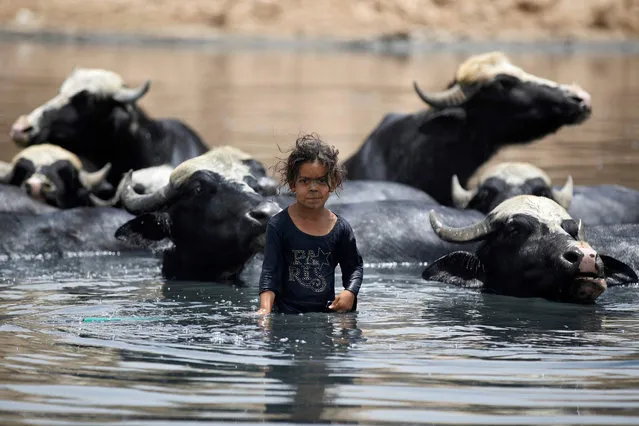
A young Iraqi shepherdess cools down buffaloes in wastewater filling the dried-up Diyala river which was a tributary of the Tigris, in the Al-Fadiliyah district east of Baghdad, on June 26, 2022. Iraq's drought reflects a decline in the level of waterways due to the lack of rain and lower flows from upstream neighboring countries Iran and Turkey. (Photo by Ahmad Al-Rubaye/AFP Photo)

A young Iraqi shepherdess cools down buffaloes in wastewater filling the dried-up Diyala river which was a tributary of the Tigris, in the Al-Fadiliyah district east of Baghdad, on June 26, 2022. Iraq's drought reflects a decline in the level of waterways due to the lack of rain and lower flows from upstream neighboring countries Iran and Turkey. (Photo by Ahmad Al-Rubaye/AFP Photo)
Details
07 Jul 2022 04:21:00