Loading...
Done
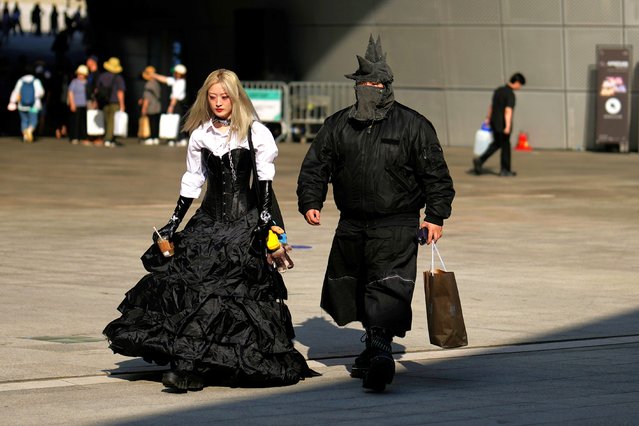
Visitors outside the venue for Seoul fashion week in Seoul, South Korea on September 3, 2024. (Photo by Lee Jin-man/AP Photo)

Visitors outside the venue for Seoul fashion week in Seoul, South Korea on September 3, 2024. (Photo by Lee Jin-man/AP Photo)
Details
28 Sep 2024 02:20:00
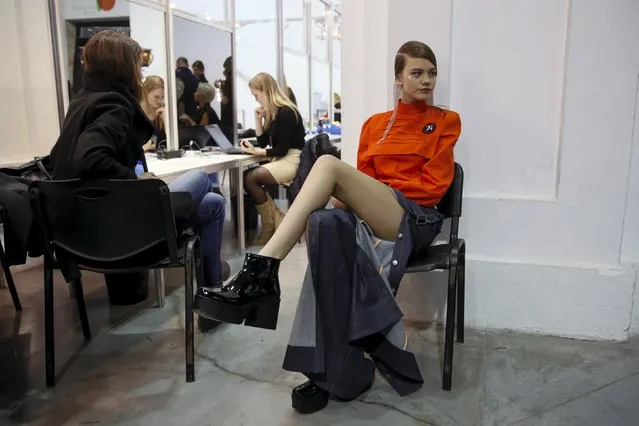
Models wait backstage during the Ukrainian Fashion Week in Kiev, October 16, 2015. (Photo by Valentyn Ogirenko/Reuters)

Models wait backstage during the Ukrainian Fashion Week in Kiev, October 16, 2015. (Photo by Valentyn Ogirenko/Reuters)
Details
19 Oct 2015 08:08:00
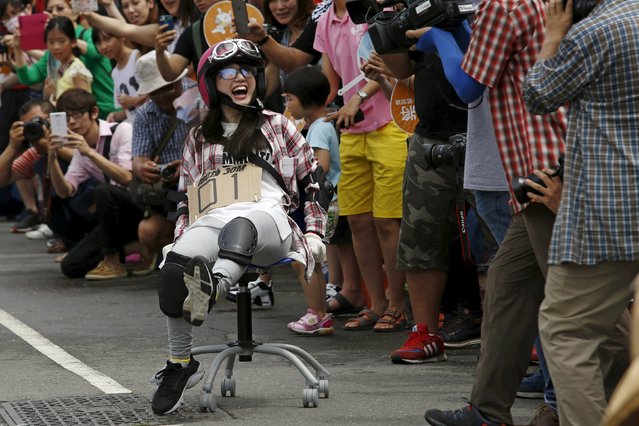
A competitor laughs while taking part in the office chair race ISU-1 Grand Prix in Tainan, southern Taiwan April 24, 2016. (Photo by Tyrone Siu/Reuters)

A competitor laughs while taking part in the office chair race ISU-1 Grand Prix in Tainan, southern Taiwan April 24, 2016. It was the first time such a race was held in Tainan, as part of the “ISU-1 GP” (Grand Prix) that began in Japan in 2010, according to businesses on Jhengsing Street and Haian Road in the city's West Central District and the city's Tourism Bureau, which organized the event. The fastest rider only took six seconds to complete the 30-meter race. (Photo by Tyrone Siu/Reuters)
Details
25 Apr 2016 09:48:00
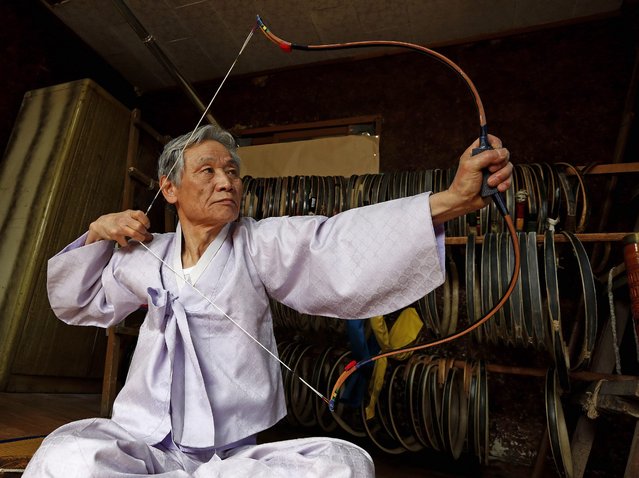
South Korean traditional bow artisan Kwon Yeong-Hak works on a bow in his workshop in Yecheon-gun, Gyeongsangbuk-do, South Korea, 26 February 2015. (Photo by Jeon Heon-Kyun/EPA)

South Korean traditional bow artisan Kwon Yeong-Hak works on a bow in his workshop in Yecheon-gun, Gyeongsangbuk-do, South Korea, 26 February 2015. Kwon Yeong-Hak still crafts his bows in the traditional way, carrying on a four-generation family business. The Gakgung bow, of which Kwon is one of the last remaining artisans, is unique to Korea, and is constructed with a variety of materials, including water buffalo horn, oak, bamboo and cattle spinal sinew. A ban on the import of water buffalo horns has put the Gakgung tradition at risk. (Photo by Jeon Heon-Kyun/EPA)
Details
24 Mar 2015 09:54:00
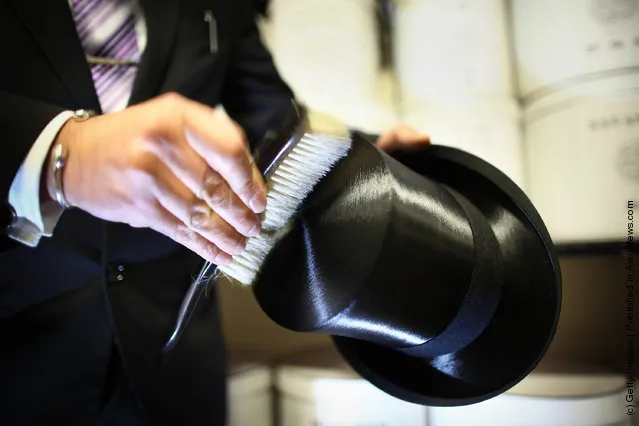
Historic Hatters of James Lock and Co

Assistant Manager Jayesh Vaghela brushes a vintage silk top hat at Lock & Co. Hatters on March 22, 2011 in London, England. Founded in St. James's in 1676, when Charles II was on the throne, this family owned business has provided hats for Royalty and the gentry for over 300 years. Staff report that sales of formal hats are booming ahead of the wedding of Prince William and Kate Middleton in Westminster Abbey on April 29, 2011.
Details
27 Mar 2011 12:56:00
Mick Dodge AKA "The Barefoot Sensei

If you were to meet this guy in the woods, especially if it’s nighttime, you’d probably think that it’s a local troll or a yeti. However, in reality, he’s no yeti. His name is Mick Dodge, and before deciding to live in the woods, he was a marine for six years at Fort Lewis. It is hard to tell what moved him to leave the busy life of the city and start living in the Hoh Rain Forest. It could have been that he decided the leave the stressful life of the city, or maybe he simply loves the solitary life of a hermit. Another thing that is peculiar about Mick Dodge is that most of the time he walks barefoot, hence the nickname “The Barefoot Sensei”.
Details
27 Nov 2014 14:54:00
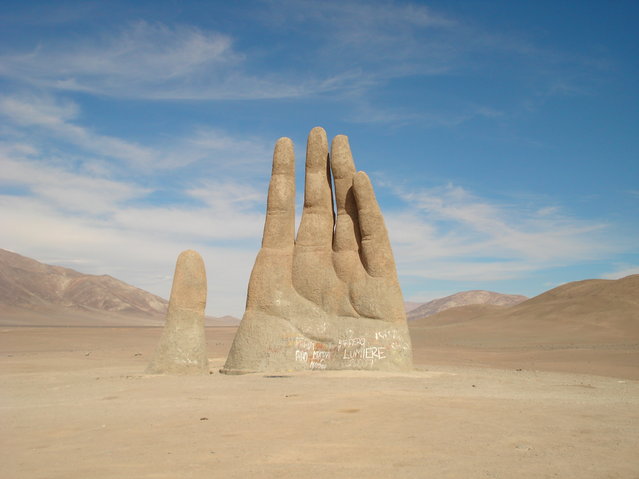
The Giant Hand of Atacama

The Mano de Desierto is a large-scale sculpture of a hand located in the Atacama Desert in Chile, 75 km to the south of the city of Antofagasta, on the Panamerican Highway. The nearest point of reference is the “Ciudad Empresarial La Negra” (La Negra Business City). The sculpture was constructed by the Chilean sculptor Mario Irarrázabal at an altitude of 1,100 meters above sea level. Irarrázabal used the human figure to express emotions like injustice, loneliness, sorrow and torture. Its exaggerated size is said to emphasize human vulnerability and helplessness. The work has a base of iron and cement, and stands 11 metres (36 ft) tall. Funded by Corporación Pro Antofagasta, a local booster organization, the sculpture was inaugurated on March 28, 1992.
Details
21 Dec 2013 10:18:00
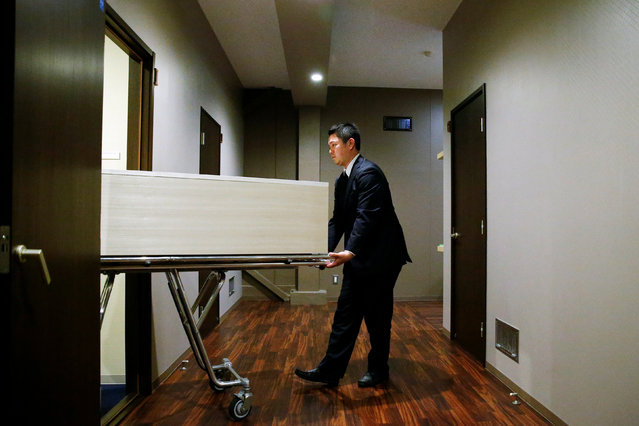
A staff member removes a coffin from a room of the “Corpse Hotel” in Kawasaki, Japan, April 20, 2016. (Photo by Thomas Peter/Reuters)

A staff member removes a coffin from a room of the “Corpse Hotel” in Kawasaki, Japan, April 20, 2016. Many so-called corpse hotels have emerged as a flourishing business in the city following a crunch in crematoriums. Families can rent a room in Sousou on a daily charge of 9,000 Japanese yen (£58, €74, $84) to keep the body of the deceased relative for up to four days until they find a crematorium. (Photo by Thomas Peter/Reuters)
Details
30 Apr 2016 09:46:00