Loading...
Done
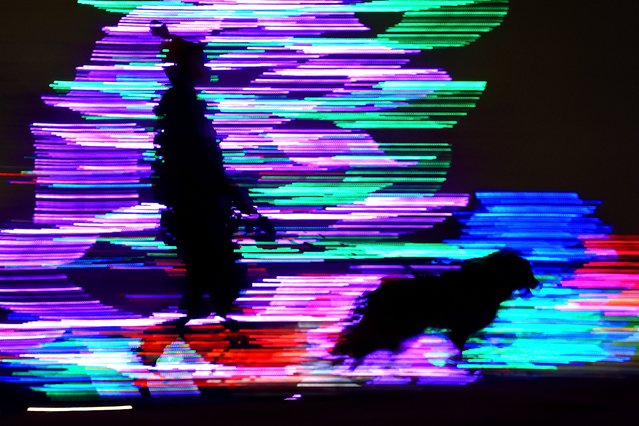
In this photo taken with a long exposure, a person walks a dog past Christmas lights in a park, Sunday, December 15, 2024, in Lenexa, Kan. (Photo by USA Today)

In this photo taken with a long exposure, a person walks a dog past Christmas lights in a park, Sunday, December 15, 2024, in Lenexa, Kan. (Photo by USA Today)
Details
08 Jan 2025 04:10:00
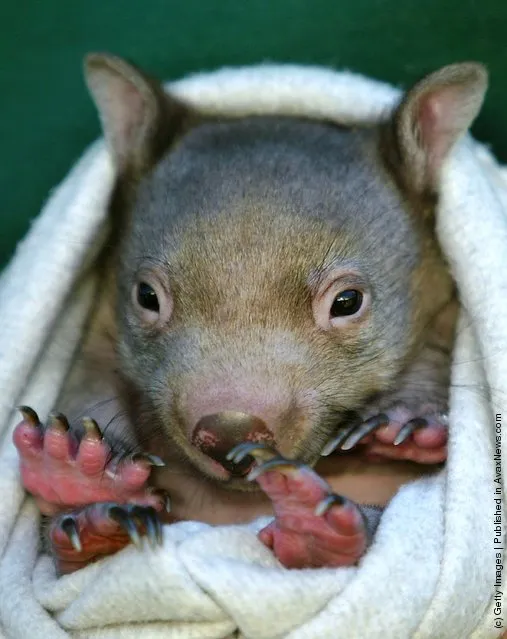
A baby Common Wombat

“Wombats are Australian marsupials; they are short-legged, muscular quadrupeds, approximately 1 metre (39 in) in length with a short, stubby tail. They are adaptable in their habitat tolerances, and are found in forested, mountainous, and heathland areas of south-eastern Australia, including Tasmania, as well as an isolated patch of about 300 ha in Epping Forest National Park in central Queensland”. – Wikipedia

Photo: “Abdul”, a baby Common Wombat, is one of the marsupials on show during the spring baby boom at Taronga Zoo September 1, 2005 in Sydney, Australia. “Abdul” was orphaned when his mother was killed by a car. (Photo by Mark Nolan/Getty Images)
Details
20 Aug 2011 11:23:00
A model presents a creation from the Versace Fall-Winter 2022/2023 collection during Fashion Week in Milan, Italy, February 25, 2022. (Photo by Alessandro Garofalo/Reuters)

A model presents a creation from the Versace Fall-Winter 2022/2023 collection during Fashion Week in Milan, Italy, February 25, 2022. (Photo by Alessandro Garofalo/Reuters)
Details
28 Feb 2022 04:40:00
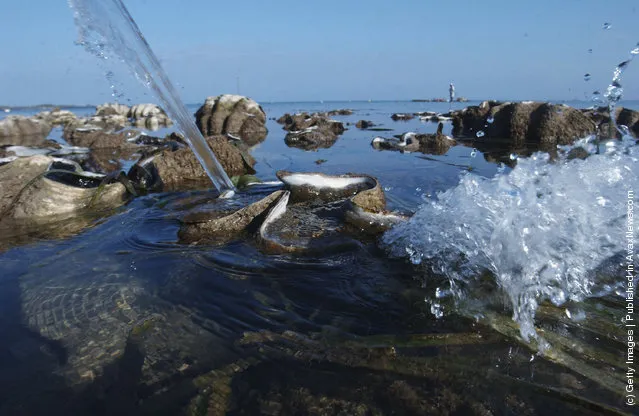
Tridacna Gigas, or Giant Clams

“The giant clam, Tridacna gigas (known as pā’ua in Cook Islands Māori), is the largest living bivalve mollusc. T. gigas is one of the most endangered clam species. It was mentioned as early as 1825 in scientific reports. One of a number of large clam species native to the shallow coral reefs of the South Pacific and Indian oceans, they can weigh more than 200 kilograms (440 lb) measure as much as 120 cm (47 in) across, and have an average lifespan in the wild of 100 years or more”. – Wikipedia

Photo: Tridacna Gigas, or Giant Clams spew water as a traditional fisherman passes by a small sanctuary on January 23, 2004 near Bolinao in the Northern Philippines. The clams, prime builders for coral reefs and providing shelter for spawning fish and other marine life, are exposed by low tides in the sanctuary. Overfishing and pollution throughout the country are not only threatening food security, but are also starting to choke one of the few working clam sanctuaries in the world. (Photo by David Greedy/Getty Images)
Details
01 Oct 2011 13:10:00
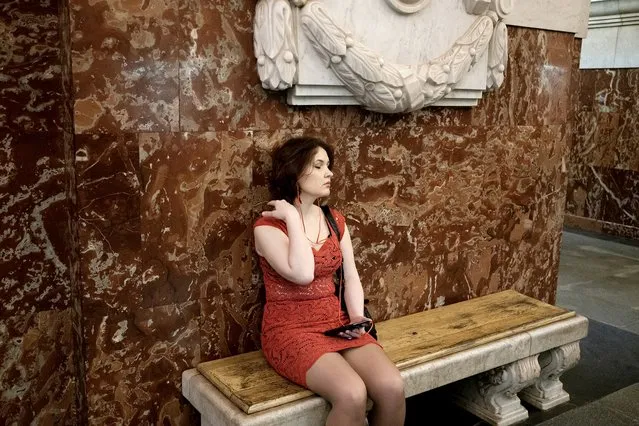
At the Krasnopresnenskaya station, the benches come from the Cathedral of Christ-Sauveur, which was built from 1839 to 1883 in memory of the victory of Russia against the army of Napoleon I. The cathedral was destroyed under Stalin in 1931, but the benches remained intact. Metro architects decided to install them in some stations. (Photo by Didier Bizet/The Washington Post)

At the Krasnopresnenskaya station, the benches come from the Cathedral of Christ-Sauveur, which was built from 1839 to 1883 in memory of the victory of Russia against the army of Napoleon I. The cathedral was destroyed under Stalin in 1931, but the benches remained intact. Metro architects decided to install them in some stations. (Photo by Didier Bizet/The Washington Post)
Details
24 Jan 2018 06:23:00
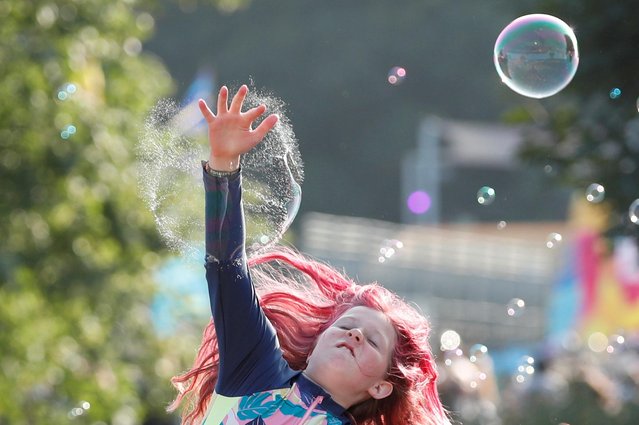
A young festivalgoer jumps to burst a bubble at Latitude Festival at Henham Park, Britain, July 22, 2021. (Photo by Peter Cziborra/Reuters)

A young festivalgoer jumps to burst a bubble at Latitude Festival at Henham Park, Britain, July 22, 2021. (Photo by Peter Cziborra/Reuters)
Details
23 Sep 2021 08:16:00
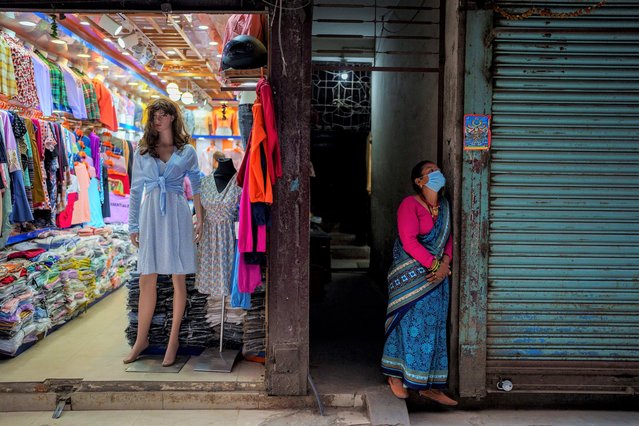
A Nepalese woman wearing a mask as a precaution against the coronavirus stands next to the clothing store in Kathmandu, Nepal, Tuesday, April 26, 2022. (Photo by Niranjan Shrestha/AP Photo)

A Nepalese woman wearing a mask as a precaution against the coronavirus stands next to the clothing store in Kathmandu, Nepal, Tuesday, April 26, 2022. (Photo by Niranjan Shrestha/AP Photo)
Details
19 Aug 2022 04:44:00
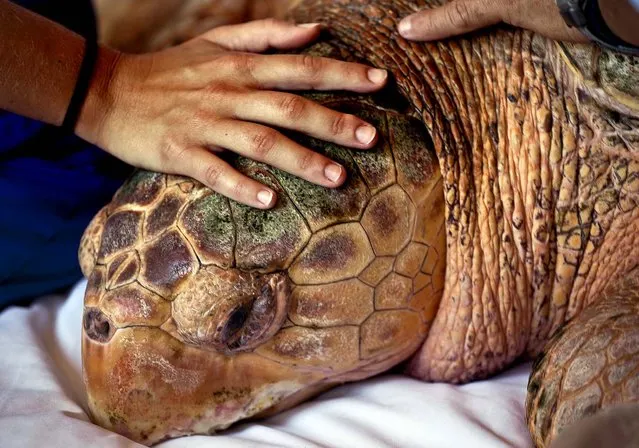
Kahuna is kept calm and steady on the gurney by staff and volunteers

Kahuna, an injured loggerhead turtle, returns to the ocean after years of rehabilitation. It has been two years since Kahuna, a 209-pond loggerhead turtle, was rescued from the wild by biologists at FPL’s St. Lucie Power. Half of one of her flippers had been sliced off, and the other flipper was badly injured. On top of that, she had severe bone infection doctors tried for months to cure with antibiotics, only to have it come back once they stopped the medicine.

Photo: Kahuna is kept calm and steady on the gurney by staff and volunteers.
Details
14 Jul 2012 09:24:00