Loading...
Done
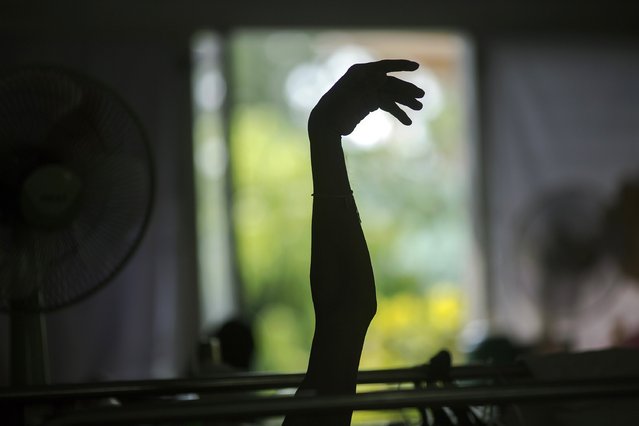
A terminally ill patient raises his arm in a hospice for those dying of AIDS at the Buddhist temple Wat Prabat Nampu in Lopburi province, north of Bangkok November 30, 2014. From 1992, the temple has provided housing for HIV positive patients and palliative care for those in the final stages of the AIDS disease. (Photo by Damir Sagolj/Reuters)

A terminally ill patient raises his arm in a hospice for those dying of AIDS at the Buddhist temple Wat Prabat Nampu in Lopburi province, north of Bangkok November 30, 2014. From 1992, the temple has provided housing for HIV positive patients and palliative care for those in the final stages of the AIDS disease. Data from 2013 estimates Thailand has 450,000 people living with HIV/AIDS, but only 353,000 have access to life-saving antiretroviral drugs. (Photo by Damir Sagolj/Reuters)
Details
08 Dec 2014 11:52:00
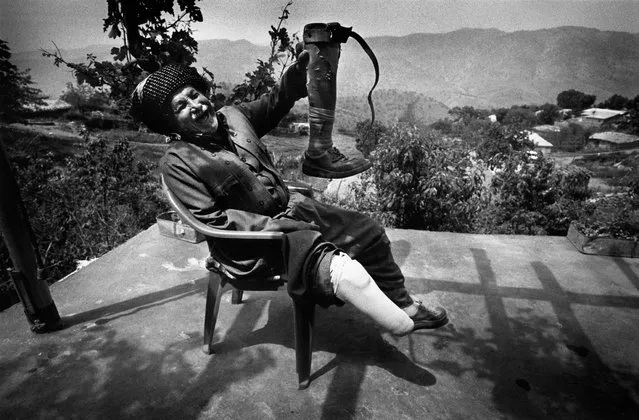
Ismail Mustafa, seen in 2007. “I was collecting mushrooms on the hill near here. I didn’t see the mine. There was a huge explosion. When I woke up I saw that both my legs were gone; I thought my life was over. My brother and another guy were with me. They made a stretcher from sticks and tied it together with clothing. It took two hours to get off the mountain. ‘My daughter has also been injured. She found a shell and brought it into the house and put it on the fire. She didn’t know what she was doing at the time – she was only three. She is blind and has lost an arm”. (Photo by Sean Sutton for the Mines Advisory Group/The Guardian)

Ismail Mustafa, seen in 2007. “I was collecting mushrooms on the hill near here. I didn’t see the mine. There was a huge explosion. When I woke up I saw that both my legs were gone; I thought my life was over. My brother and another guy were with me. They made a stretcher from sticks and tied it together with clothing. It took two hours to get off the mountain. ‘My daughter has also been injured. She found a shell and brought it into the house and put it on the fire. She didn’t know what she was doing at the time – she was only three. She is blind and has lost an arm”. (Photo by Sean Sutton for the Mines Advisory Group/The Guardian)
Details
08 Sep 2017 09:33:00
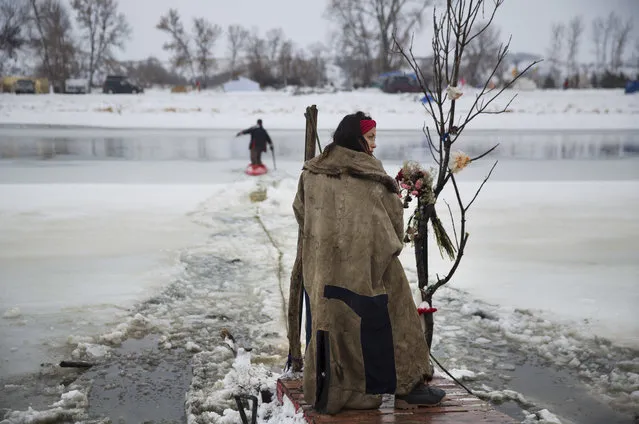
In this Thursday, December 1, 2016 photo, Cat Bigney, part of the Oglala Native American tribe, waits on the shore of the Cannonball river for travelers to arrive by canoe at the Oceti Sakowin camp where people have gathered to protest the Dakota Access oil pipeline in Cannon Ball, N.D. So far, those at the camp have shrugged off the heavy snow, icy winds and frigid temperatures. But if they defy next week's government deadline to abandon the camp, demonstrators know the real deep freeze lies ahead. Life-threatening wind chills and towering snow drifts could mean the greatest challenge is simple survival. (Photo by David Goldman/AP Photo)

In this Thursday, December 1, 2016 photo, Cat Bigney, part of the Oglala Native American tribe, waits on the shore of the Cannonball river for travelers to arrive by canoe at the Oceti Sakowin camp where people have gathered to protest the Dakota Access oil pipeline in Cannon Ball, N.D. So far, those at the camp have shrugged off the heavy snow, icy winds and frigid temperatures. But if they defy next week's government deadline to abandon the camp, demonstrators know the real deep freeze lies ahead. Life-threatening wind chills and towering snow drifts could mean the greatest challenge is simple survival. (Photo by David Goldman/AP Photo)
Details
06 Dec 2016 10:22:00
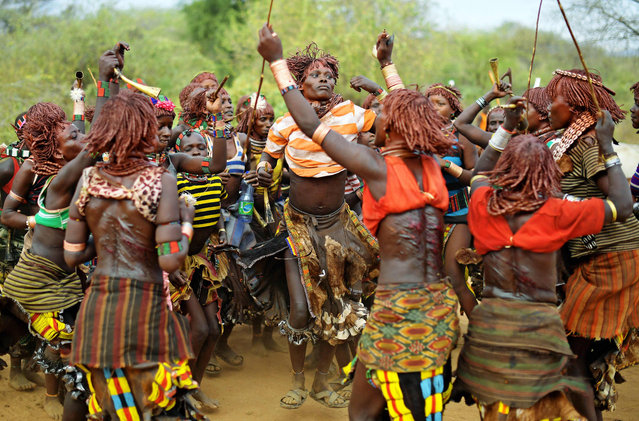
Hamar women dance before a bull jumping ceremony in Ethiopia's southern Omo Valley region near Turmi on September 19, 2016. The Hamar are a Nilotic ethnic group in Ethiopia. The construction of the Gibe III dam, the third largest hydroelectric plant in Africa, and large areas of very “thirsty” cotton and sugar plantations and factories along the Omo river are impacting heavily on the lives of tribes living in the Omo Valley who depend on the river for their survival and way of life. Human rights groups fear for the future of the tribes if they are forced to scatter, give up traditional ways through loss of land or ability to keep cattle as globalisation and development increases. (Photo by Carl De Souza/AFP Photo)

Hamar women dance before a bull jumping ceremony in Ethiopia's southern Omo Valley region near Turmi on September 19, 2016. The Hamar are a Nilotic ethnic group in Ethiopia. The construction of the Gibe III dam, the third largest hydroelectric plant in Africa, and large areas of very “thirsty” cotton and sugar plantations and factories along the Omo river are impacting heavily on the lives of tribes living in the Omo Valley who depend on the river for their survival and way of life. (Photo by Carl De Souza/AFP Photo)
Details
02 Oct 2016 08:45:00


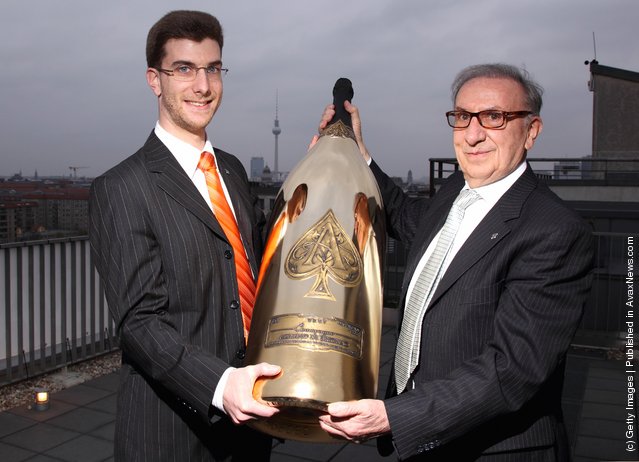
(R-L) Jean-Jacques Cattier and his son Alexandre Cattier pose with the world largest bottle of Champagne “The Midas” by Armand de Brignac on April 6, 2011 in Berlin, Germany. The Midas is a massive 30-liter vessel and weights exactly 100 pounds. It's like having 40 pieces of the 750ml in one. Number one champagne brand in the world, Armand de Brignac is the luxury Champagne from the award-winning Champagne Cattier chateau of Chigny-les-Roses, France. (Photo by Andreas Rentz/Getty Images)
Details
09 Apr 2011 06:50:00
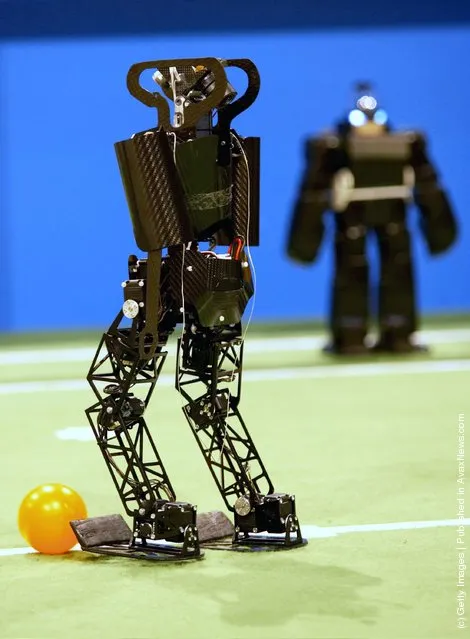
Humanoid robots of the children size league compete during the RoboCup 2006 football world championships

“RoboCup is an international robotics competition founded in 1997. The aim is to develop autonomous soccer robots with the intention of promoting research and education in the field of artificial intelligence. The name RoboCup is a contraction of the competition's full name, «Robot Soccer World Cup», but there are many other stages of the competition such as «Search and Rescue» and «Robot Dancing»”. – Wikipedia

Photo: Humanoid robots of the children size league compete during the RoboCup 2006 football world championships final at the Congress Centre on June 18, 2006 in Bremen, Germany. (Photo by Malte Christians/Bongarts/Getty Images)
Details
25 Oct 2011 13:22:00
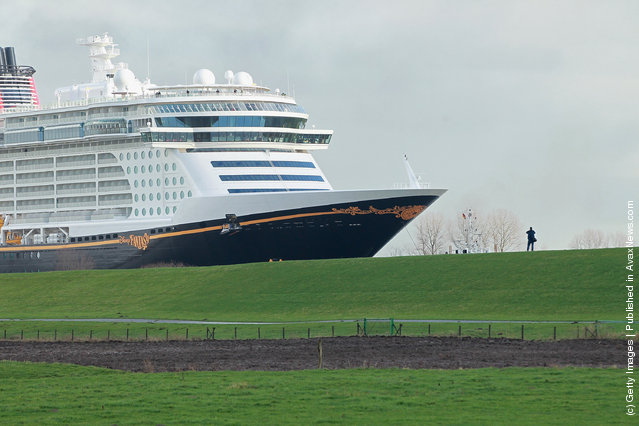
Tugboats haul the “Disney Fantasy” cruise ship backwards down Ems river after the ship departed from the Meyer Werft shipyards

An onlooker watches as the “Disney Fantasy” cruise ship is hauled backwards by a tugboat down the Ems River after the ship departed from the Meyer Werft shipyards on January 20, 2012 in Papenburg, Germany. The completed 130,000-tonne ship, which is 1,115 feet long and can accomodate 5,450 passengers, cast and crew, was on its way to the North Sea. (Photo by Sean Gallup/Getty Images)
Details
05 Feb 2012 12:56:00
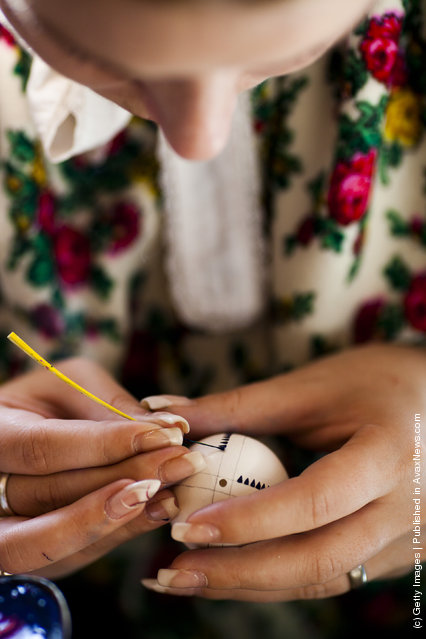
Melanie Baier from the village Obergurig wearing a traditional Lusatian sorbian folk dress, paints an Easter egg in traditional Sorbian motives at the annual Easter egg market

Melanie Baier from the village Obergurig wearing a traditional Lusatian sorbian folk dress, paints an Easter egg in traditional Sorbian motives at the annual Easter egg market on March 24, 2012 in Schleife, near Hoyerswerda, Germany. Easter egg painting is a strong part of Sorbian tradition and visual elements within the painting are meant to ward off evil. (Photo by Carsten Koall/Getty Images)
Details
25 Mar 2012 12:06:00