Loading...
Done
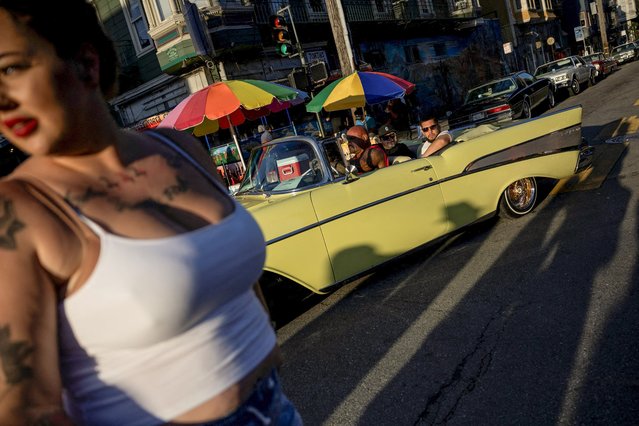
People take part in a lowrider car show celebrating lowriding culture and supporting immigration, in San Francisco, California, U.S., September 20, 2025. (Photo by Manuel Orbegozo/Reuters)

People take part in a lowrider car show celebrating lowriding culture and supporting immigration, in San Francisco, California, U.S., September 20, 2025. (Photo by Manuel Orbegozo/Reuters)
Details
02 Oct 2025 04:58:00
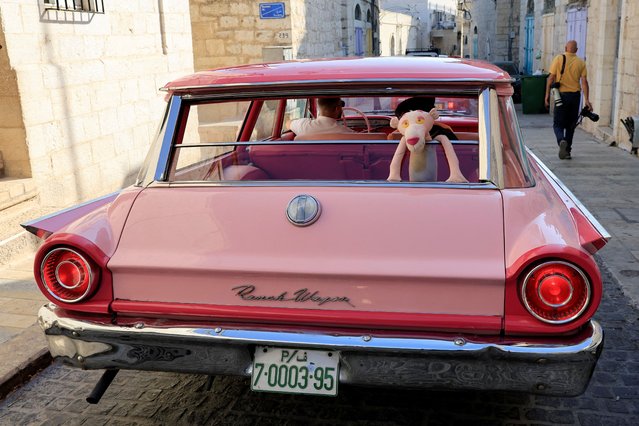
Palestinians drive classic cars during a gathering organized by the Bethlehem municipality near the Church of the Nativity in Manger Square in Bethlehem in the Israeli-occupied West Bank, on October 17, 2025. (Photo by Mussa Qawasma/Reuters)

Palestinians drive classic cars during a gathering organized by the Bethlehem municipality near the Church of the Nativity in Manger Square in Bethlehem in the Israeli-occupied West Bank, on October 17, 2025. (Photo by Mussa Qawasma/Reuters)
Details
17 Nov 2025 02:18:00


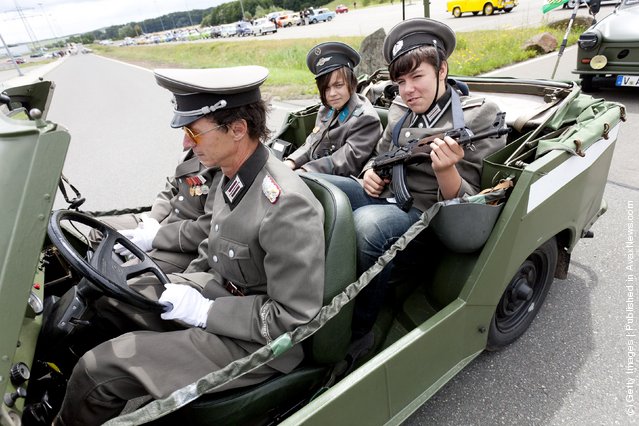
“The Trabant is a car that was produced by former East German auto maker VEB Sachsenring Automobilwerke Zwickau in Zwickau, Sachsen. It was the most common vehicle in East Germany, and was also exported to countries both inside and outside the communist bloc. The main selling points was that it had room for four adults and luggage in a compact, light and durable shell and that it was fast (when introduced) and durable. With its mediocre performance, smoky two-stroke engine, and production shortages, the Trabant is often cited as an example of the disadvantages of centralized planning; on the other hand, it is regarded with derisive affection as a symbol of the failed former East Germany and of the fall of communism (in former West Germany, as many East Germans streamed into West Berlin and West Germany in their Trabants after the opening of the Berlin Wall in 1989). It was in production without any significant changes for nearly 30 years with 3,096,099 Trabants produced in total”. – Wikipedia

Photo: Enthusiasts weared in uniforms of the former eastern german army trive in a military Trabant car as fans and owners of East German-era Trabant cars gather at the 2011 International Trabantfahrer Treffen (International Trabant Drivers Meeting) on June 26, 2011 in Zwickau, Germany. The Trabant, also known as the Trabi, was among the main cars produced in communist East Germany and built by VEB Sachsenring Automobilwerke in Zwickau for 30 years until 1989. Today the car has cult status for many followers and one company, IndiKar, is even seeking to revive the brand in a modern, electric version. (Photo by Carsten Koall/Getty Images)
Details
27 Jun 2011 12:21:00
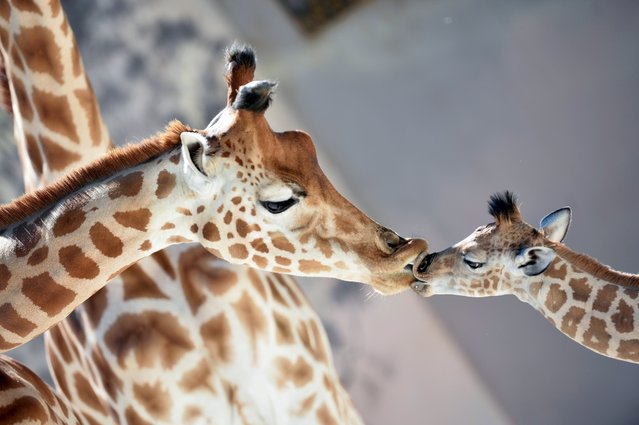
Baby giraffe of Niger (Giraffa Camelopardalis) “Kenai” (R), born on August 25, 2016, kisses his mother “Dioni” on August 31, 2016 at the zoo of La Fleche, northwestern France. (Photo by Jean-Francois Monier/AFP Photo)

Baby giraffe of Niger (Giraffa Camelopardalis) “Kenai” (R), born on August 25, 2016, kisses his mother “Dioni” on August 31, 2016 at the zoo of La Fleche, northwestern France. (Photo by Jean-Francois Monier/AFP Photo)
Details
04 Sep 2016 09:14:00
Fantastic Realism Illustrator By Adrian Chesterman

Born in London of Scottish descent, Adrian Chesterman, British painter and illustrator, was educated at the William Harvey School in Kent. It was here that he first discovered his burning passion for the visual arts.
Details
01 Aug 2014 10:15:00
Yan Zhengming (R), 94, and his wife Zhou Suqing (C), 90, attend their wedding ceremony at their home, on the 70th anniversary of their marriage, in Quxian county of Dazhou, Sichuan province, China, May 15, 2015. (Photo by Reuters/Stringer)

Yan Zhengming (R), 94, and his wife Zhou Suqing (C), 90, attend their wedding ceremony at their home, on the 70th anniversary of their marriage, in Quxian county of Dazhou, Sichuan province, China, May 15, 2015. The wedding, organized by local charity groups, was a long-time wish of veteran of the World War Two Yan, who married Zhou 70 years ago, but could not afford to have a wedding ceremony, local media reported. (Photo by Reuters/Stringer)
Details
17 May 2015 11:56:00


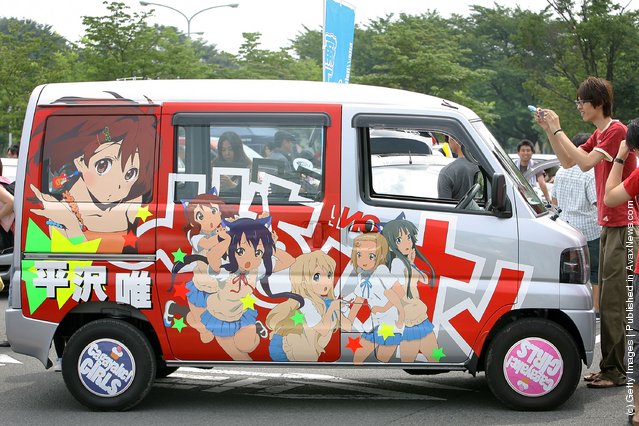
“Itasha (痛車), literally “painmobile”, is a Japanese term for an otaku fad of individuals decorating the bodies of their cars with fictional characters of anime, manga, or video games (especially bishōjo game or eroge). These characters are predominately “cute” female. The decorations usually involve paint schemes and stickers. Automobiles are called Itasha, while similar motorcycles and bicycles are called itansha (痛単車) and itachari (痛チャリ), respectively”. – Wikipedia


Photo: A visitor takes pictures of an anime-decorated «Itasha» car displayed during the “Moe Fes in Washimiya” at Washimiya Town Hall on July 18, 2009 in Washimiya, Saitama, Japan. Itasha, a word derived from “itai” (painful) and “sha” (car), are vehicles decorated with mostly female characters from Japanese manga, anime and video games. (Photo by Kiyoshi Ota/Getty Images)
Details
02 May 2011 08:38:00
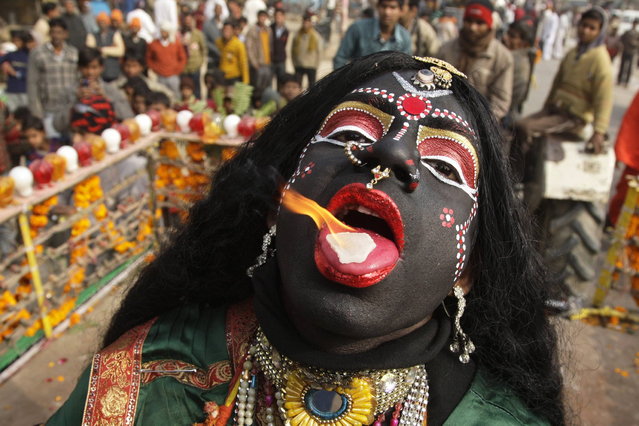
A man dressed as Hindu goddess Kali, the goddess of power, performs with a burning camphor tablet on his tongue during a religious procession ahead of the “Kumbh Mela”, or Pitcher Festival, in the northern Indian city of Allahabad January 6, 2013. During the festival, hundreds of thousands of Hindus take part in a religious gathering at the banks of the river Ganges. The festival is held every 12 years in different Indian cities. (Photo by Jitendra Prakash/Reuters)

A man dressed as Hindu goddess Kali, the goddess of power, performs with a burning camphor tablet on his tongue during a religious procession ahead of the “Kumbh Mela”, or Pitcher Festival, in the northern Indian city of Allahabad January 6, 2013. During the festival, hundreds of thousands of Hindus take part in a religious gathering at the banks of the river Ganges. The festival is held every 12 years in different Indian cities. (Photo by Jitendra Prakash/Reuters)
Details
14 Jan 2013 10:54:00