Loading...
Done
Bird Boxes

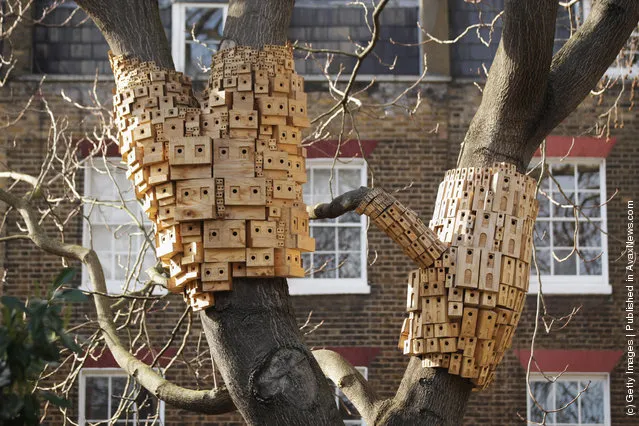
An installation consisting of a series of bird boxes is displayed in a tree in Duncan Terrace Gardens in Islington on March 24, 2011 in London, England. The boxes by artists Bruce Gilchrist and Jo Joelson of “London Fieldworks”, were designed to reflect the architecture of the Georgian terraces and flats that surround the park in the community gardens. (Photo by Dan Kitwood/Getty Images)
Details
05 Sep 2011 11:36:00
Autumn Colours

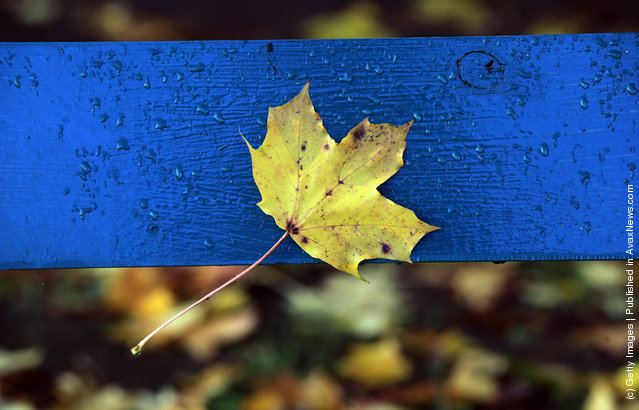
An autumn leaf sticks to a bench near the Bishops Castle near Wells Cathedral on November 1, 2011 in Wells, England. According to a number of nature watchers the autumn colours are currently reaching their peak following an unusually warm September and October which has led to trees holding onto their leaves longer than normal. (Photo by Matt Cardy/Getty Images)
Details
03 Nov 2011 09:37:00
Picturesque Zao Ski Resort In Japan

The picturesque Zao Ski Resort, one of Japan's oldest and most popular ski destinations, is illuminated on February 10, 2007 in Yamagata Prefecture, Tohoku region of Honshu island, Japan. Coniferous trees such as the Aomori white fir lie covered with chrystallised ice and snow (described as “silver frost” or “snow monsters”) and attract visitors. (Photo by Koichi Kamoshida/Getty Images)
Details
24 Dec 2011 13:31:00


“Rapa das Bestas is the name of an operation that involves cutting the manes of the horses that are performed in the curros (enclosed which retain the horses) held in various locations in Galicia (Spain).

The best known is the Rapa das Bestas of Sabucedo, in the city hall of A Estrada, which lasts three days: the First Saturday, Sunday and Monday in July. In fact, the name given to the celebration (Rapa das Bestas of Sabucedo), while in most places speaking about curros, including curros de Valga, etc”. – Wikipedia

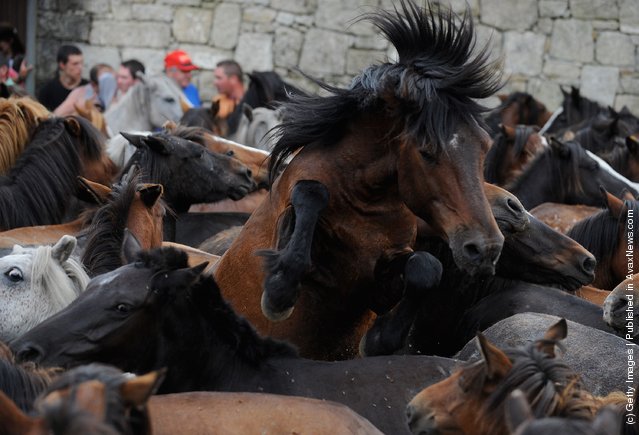
Photo: A wild horse leaps up during the Rapa das Bestas (shearing of the beasts) festival on July 2, 2011 in Sabucedo, Spain. Hundreds of wild horses are rounded up from the mountains and trimmed and marked in the corral. (Photo by Denis Doyle/Getty Images)
Details
03 Jul 2011 12:30:00
The Lun-class Ekranoplane was used by the Soviet Navy starting in 1987, and wasn't retired until the late 1990s, after the Soviet Union's fall. (Igor113)

“The Lun-class ekranoplan (NATO reporting name Duck) was a ground effect vehicle (GEV) designed by Rostislav Evgenievich Alexeev and used by the Soviet and Russian navies from 1987 until sometime in the late 1990s. It “flew” using the lift generated by the ground effect of its large wings when close to the surface of the water – about four metres or less. Although they might look similar and/or have related technical characteristics, ekranoplans like the Lun are not aircraft, seaplanes, hovercraft, or hydrofoils – ground effect is a separate technology altogether. The International Maritime Organization classifies these vehicles as maritime ships. The name Lun comes from the Russian for harrier”. – Wikipedia (Photo by Igor113)
Details
08 Aug 2014 10:51:00
Workers carry baskets of hand-picked tea leaves at the Makaibari Tea Estate in Kurseong, West Bengal, India, on Monday, September 8, 2014. The 155-year-old Makaibari Tea Estate recently sold it's Darjeeling tea, named Silver Tips Imperial, for $1,850 a kilo to buyers from the U.K., the U.S. and Japan, becoming the most expensive Indian tea ever sold. (Photo by Sanjit Das/Bloomberg)

Workers carry baskets of hand-picked tea leaves at the Makaibari Tea Estate in Kurseong, West Bengal, India, on Monday, September 8, 2014. The 155-year-old Makaibari Tea Estate recently sold it's Darjeeling tea, named Silver Tips Imperial, for $1,850 a kilo to buyers from the U.K., the U.S. and Japan, becoming the most expensive Indian tea ever sold. (Photo by Sanjit Das/Bloomberg)
Details
19 Oct 2014 12:41:00
The Blind Owl With Stars Eyes

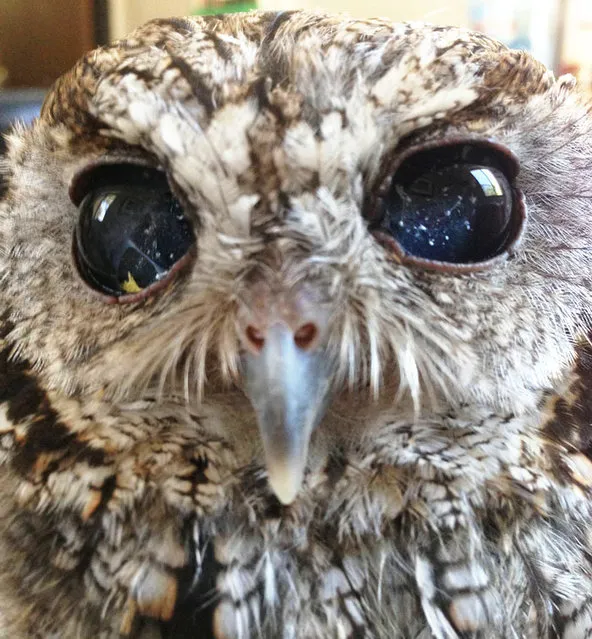
When you gaze into the eyes of this beautiful creature, you can almost make out constellations forming deep within. The name of this magnificent bird is Zeus, named after the Greek god of the sky for her one-of-a-kind eyes. The reason why she has such eyes is because she is blind. She was saved by a family in Southern California, when they found her injured on their front porch. After realizing that this poor creature is blind and unable to take care of itself, they took her to an animal hospital. After she healed up, everyone agreed that she should be sent to the Wildlife Learning Center. From that point on, Zeus has been happily living in the center. And though she cannot see, you can bet that her other senses are ten times as sharp. (Photo by Wildlife Learning Center)
Details
24 Nov 2014 13:31:00
The anthropomorphic robot named hitchBOT sits on the shoulder of Highway 102 to begin its 6000 kilometer cross country journey outside of Halifax, Nova Scotia, July 27, 2014. The hitch hiking robot is part of a social experiment to see if drivers will pick up and drop off the robot in one piece to an art gallery in Victoria, British Columbia. (Photo by Paul Darrow/Reuters)

The anthropomorphic robot named hitchBOT sits on the shoulder of Highway 102 to begin its 6000 kilometer cross country journey outside of Halifax, Nova Scotia, July 27, 2014. The hitch hiking robot is part of a social experiment to see if drivers will pick up and drop off the robot in one piece to an art gallery in Victoria, British Columbia. (Photo by Paul Darrow/Reuters)
Details
02 Aug 2014 13:12:00