Loading...
Done
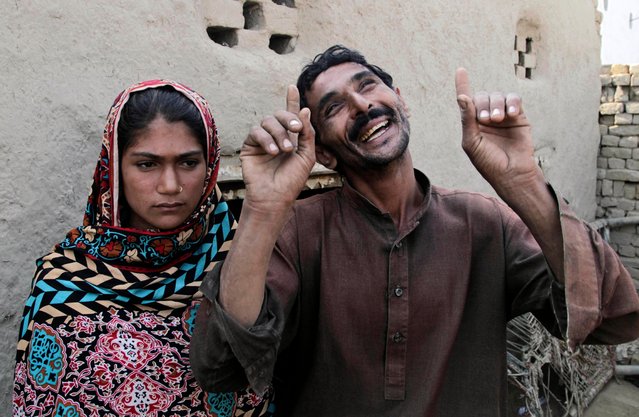
In this Tuesday, December 20, 2016 photo, Mohammad Ramzan, right, reacts while talking to The Associated Press with his young bride Saima in Jampur, Pakistan. Saima was given as a bride to the older man by her father so he could marry the groom’s sister, a practice of exchanging girls that is entrenched in conservative regions of Pakistan. It even has its own name in Urdu: Watta Satta, “give and take”. A mix of interests – family obligations, desire for sons, a wish to hand off a girl to a husband – can lead to a young teen in an a marriage she never sought. (Photo by K.M. Chaudhry/AP Photo)

In this Tuesday, December 20, 2016 photo, Mohammad Ramzan, right, reacts while talking to The Associated Press with his young bride Saima in Jampur, Pakistan. Saima was given as a bride to the older man by her father so he could marry the groom’s sister, a practice of exchanging girls that is entrenched in conservative regions of Pakistan. It even has its own name in Urdu: Watta Satta, “give and take”. A mix of interests – family obligations, desire for sons, a wish to hand off a girl to a husband – can lead to a young teen in an a marriage she never sought. (Photo by K.M. Chaudhry/AP Photo)
Details
31 Dec 2016 10:08:00
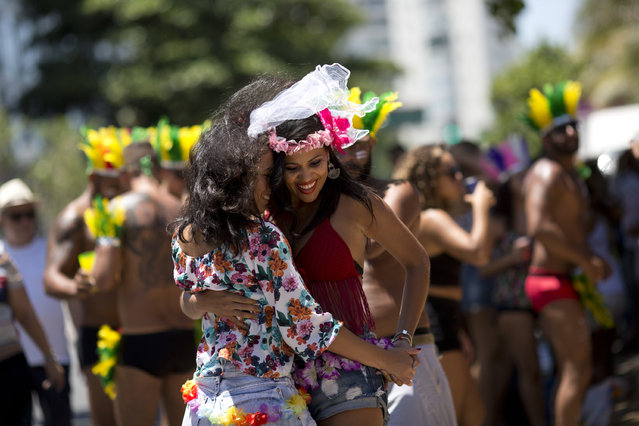
In this February 19, 2017 photo, a couple dances during the “If you don't give me....then you lend me” Carnival street party on Ipanema beach, in Rio de Janeiro, Brazil. The typical view of Carnival in Brazil is anything goes, with no headdress too big, no outfit too small, no song too ribald, but this year some organizers of the world's best known party are drawing the line at lyrics that are sexist, homophobic or racist. (Photo by Silvia Izquierdo/AP Photo)

In this February 19, 2017 photo, a couple dances during the “If you don't give me....then you lend me” Carnival street party on Ipanema beach, in Rio de Janeiro, Brazil. The typical view of Carnival in Brazil is anything goes, with no headdress too big, no outfit too small, no song too ribald, but this year some organizers of the world's best known party are drawing the line at lyrics that are sexist, homophobic or racist. (Photo by Silvia Izquierdo/AP Photo)
Details
24 Feb 2017 00:06:00


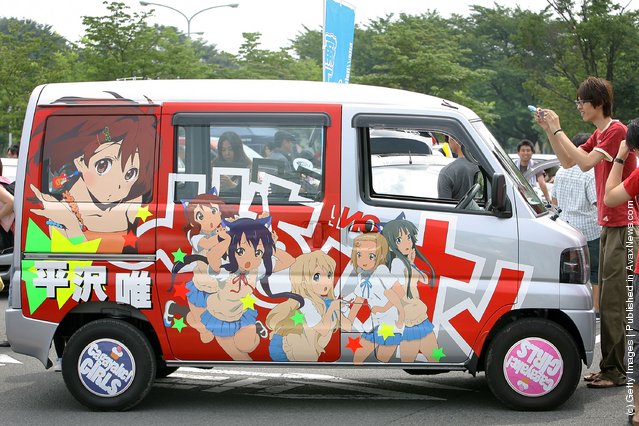
“Itasha (痛車), literally “painmobile”, is a Japanese term for an otaku fad of individuals decorating the bodies of their cars with fictional characters of anime, manga, or video games (especially bishōjo game or eroge). These characters are predominately “cute” female. The decorations usually involve paint schemes and stickers. Automobiles are called Itasha, while similar motorcycles and bicycles are called itansha (痛単車) and itachari (痛チャリ), respectively”. – Wikipedia


Photo: A visitor takes pictures of an anime-decorated «Itasha» car displayed during the “Moe Fes in Washimiya” at Washimiya Town Hall on July 18, 2009 in Washimiya, Saitama, Japan. Itasha, a word derived from “itai” (painful) and “sha” (car), are vehicles decorated with mostly female characters from Japanese manga, anime and video games. (Photo by Kiyoshi Ota/Getty Images)
Details
02 May 2011 08:38:00
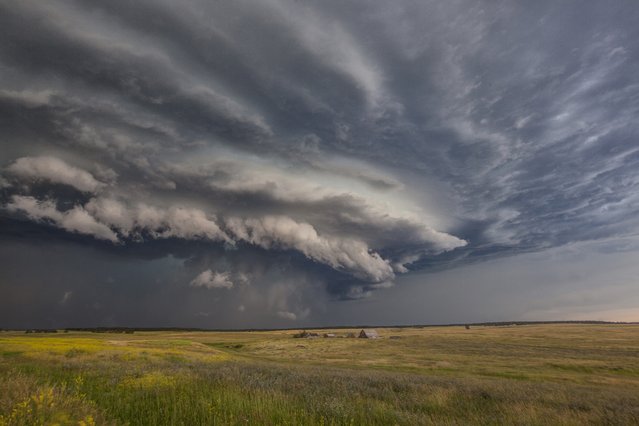
Double tornadoes, lightning storms and rotating supercells – this is what it's like to chase storms for a year. These dramatic images show apocalyptic weather throughout 2014 from a lightning storm to a pair of rainbows. Roger Hill, 57, has been chasing storms in the United States for thirty years and runs a tour operation with his wife Caryn. (Photo by Roger Hill/Barcroft Media)

Double tornadoes, lightning storms and rotating supercells – this is what it's like to chase storms for a year. These dramatic images show apocalyptic weather throughout 2014 from a lightning storm to a pair of rainbows. Roger Hill, 57, has been chasing storms in the United States for thirty years and runs a tour operation with his wife Caryn. Here: a hailstorm rolls over fields, on July 22, 2014, in South Dakota. (Photo by Roger Hill/Barcroft Media)
Details
04 Jan 2015 13:08:00
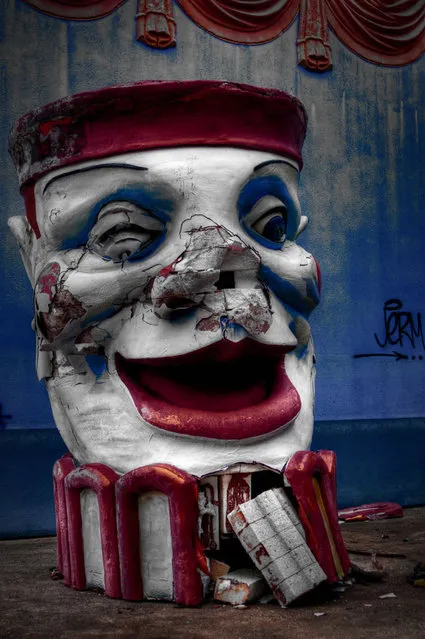
Abandoned Six Flags - New Orleans

Six Flags New Orleans, also abbreviated to SFNO, is an abandoned theme park in New Orleans, Louisiana, that has been closed since just before Hurricane Katrina struck in August 2005 and is currently owned by the city of New Orleans. Six Flags had previously owned the park since March 2002, but after assessing the devastation caused by Hurricane Katrina and the related exorbitant expenses of repairing the damage, sought to terminate their 75-year lease with the city, beginning in July 2006 and finally succeeding in September 2009. The park is located in Eastern New Orleans, in the Ninth Ward of the city, off Interstate 10. Despite various announced plans to redevelop the site, as of 2014, it is still an abandoned amusement park in extremely poor condition. It is a well-known urban exploration destination.
Details
29 Apr 2014 12:06:00
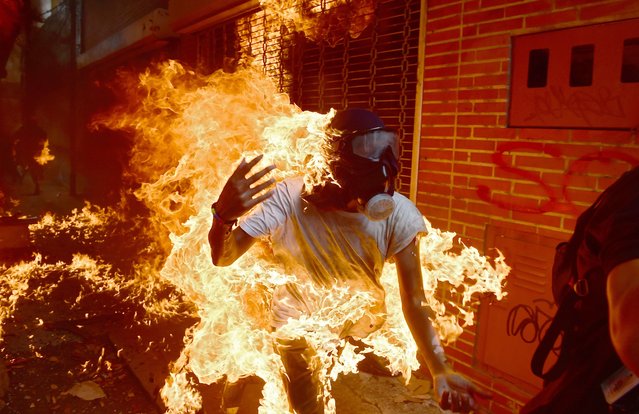
A demonstrator catches fire during clashes with riot police within a protest against Venezuelan President Nicolas Maduro, in Caracas on May 3, 2017. Venezuela's angry opposition rallied Wednesday vowing huge street protests against President Nicolas Maduro's plan to rewrite the constitution and accusing him of dodging elections to cling to power despite deadly unrest. (Photo by Ronaldo Schemidt/AFP Photo)

A demonstrator catches fire during clashes with riot police within a protest against Venezuelan President Nicolas Maduro, in Caracas on May 3, 2017. Venezuela's angry opposition rallied Wednesday vowing huge street protests against President Nicolas Maduro's plan to rewrite the constitution and accusing him of dodging elections to cling to power despite deadly unrest. (Photo by Ronaldo Schemidt/AFP Photo)
Details
20 Jan 2018 07:09:00
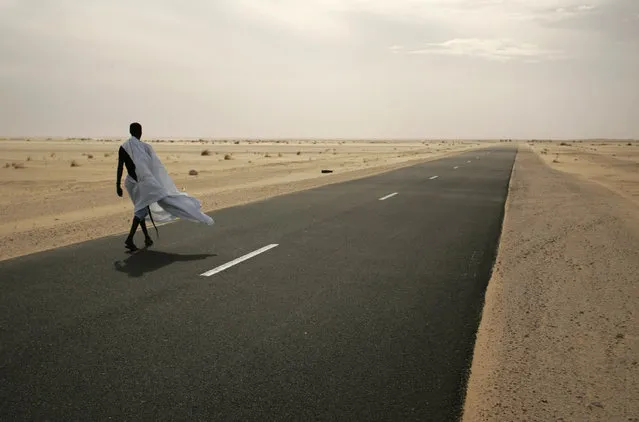
A man walks on the road between Nouahibou and Nouakchott, where three Spanish aid workers were abducted in Mauritania, December 3, 2009. (Photo by Rafael Marchante/Reuters)

A man walks on the road between Nouahibou and Nouakchott, where three Spanish aid workers were abducted in Mauritania, December 3, 2009. (Photo by Rafael Marchante/Reuters)
Details
04 Apr 2016 11:18:00
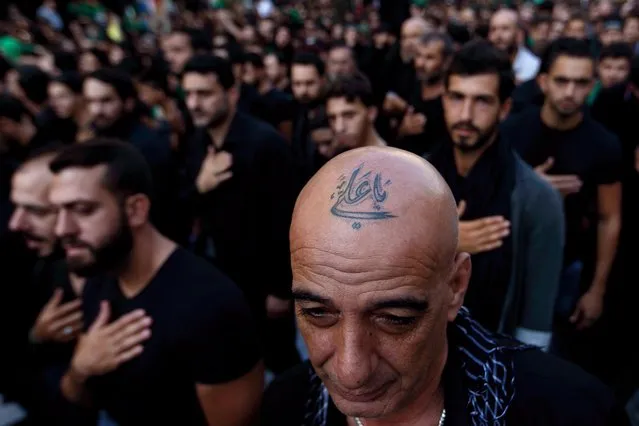
In this Saturday, Oct. 24, 2015 photo, a Lebanese Shiite supporter of Hezbollah with a tattoo on his head that reads in Arabic, “Oh Ali”, beats his chest during the holy day of Ashoura, in the southern suburb of Beirut, Lebanon. A growing number of Shiite Muslims in Lebanon are getting tattoos with religious and other Shiite symbols since the civil war in neighboring Syria broke out five years ago, fanning sectarian flames across the region. (Photo by Hassan Ammar/AP Photo)

In this Saturday, Oct. 24, 2015 photo, a Lebanese Shiite supporter of Hezbollah with a tattoo on his head that reads in Arabic, “Oh Ali”, beats his chest during the holy day of Ashoura, in the southern suburb of Beirut, Lebanon. A growing number of Shiite Muslims in Lebanon are getting tattoos with religious and other Shiite symbols since the civil war in neighboring Syria broke out five years ago, fanning sectarian flames across the region. (Photo by Hassan Ammar/AP Photo)
Details
30 Jul 2016 11:02:00