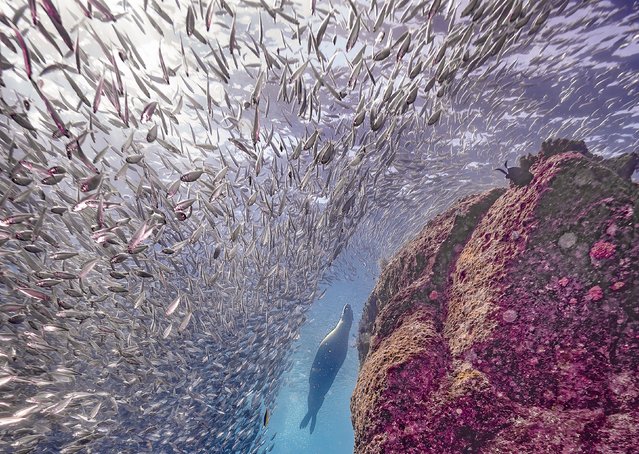
Sea lions make dinner plans in the Gulf of California early July 2024. The gulf is a primary source of sardines and anchovies, two of Mexico’s top marine resources. (Photo by Glenn Ostle/Solent News)
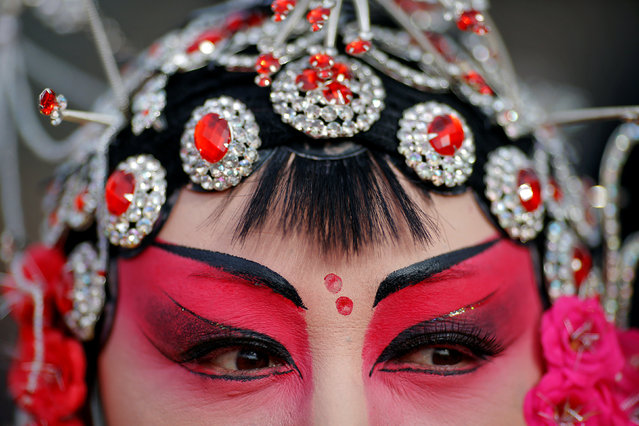
A performer in traditional costume waits for her turn to go on stage at Longtan park as the Chinese Lunar New Year, which welcomes the Year of the Rooster, is celebrated in Beijing, China January 29, 2017. (Photo by Damir Sagolj/Reuters)
A woman swigs from bottles of rum and coke before entering the Coachella Valley Music and Arts Festival in Indio, California April 12, 2015. (Photo by Lucy Nicholson/Reuters)
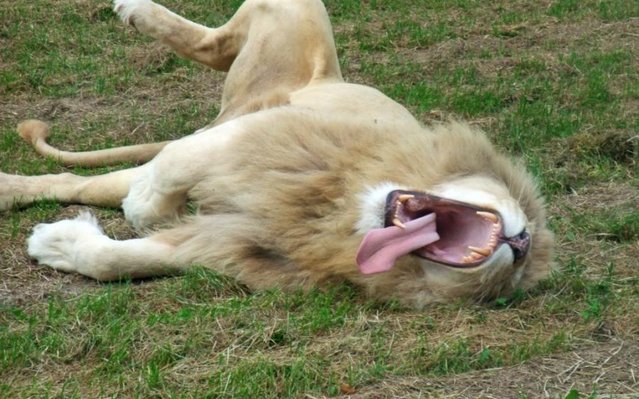
In animals, yawning can serve as a warning signal. For example, Charles Darwin, in his book The Expression of the Emotions in Man and Animals, mentioned that baboons yawn to threaten their enemies, possibly by displaying large canine teeth. Similarly, Siamese fighting fish yawn only when they see a conspecific (same species) or their own mirror-image, and their yawn often accompanies aggressive attack. Guinea pigs also yawn in a display of dominance or anger, displaying their impressive incisor teeth. This is often accompanied by teeth chattering, purring and scent marking.
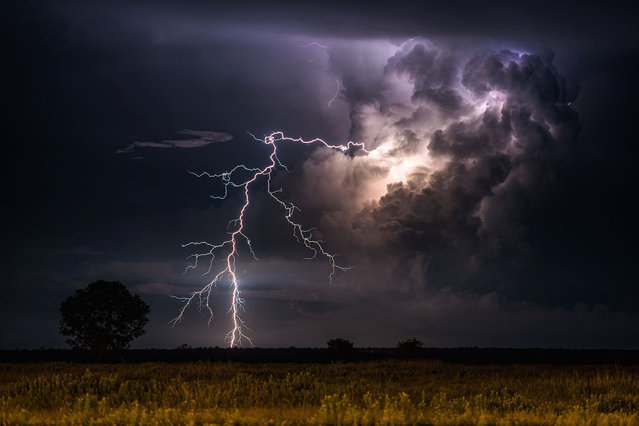
An incredible clear-air lightning display from storms to the east of Noonamah, just outside Darwin on April 6, 2015. (Photo by Jacci Ingham/The Guardian)
Participants run at the “Half-Naked Marathon” at Olympic Forest park in Beijing, China, February 28, 2016. This annual running event which requires participants to run half-naked, was organized to promote environmentally friendly lifestyles. (Photo by Kim Kyung-Hoon/Reuters)
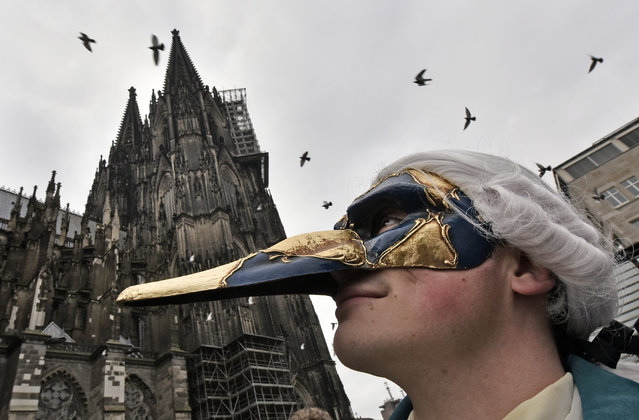
A dressed reveler looks up to the famous cathedral in Cologne, Germany, Wednesday, November 11, 2015. Thousands of carnival supporters celebrate the traditional beginning of the carnival season in Germany. (Photo by Martin Meissner/AP Photo)