Loading...
Done
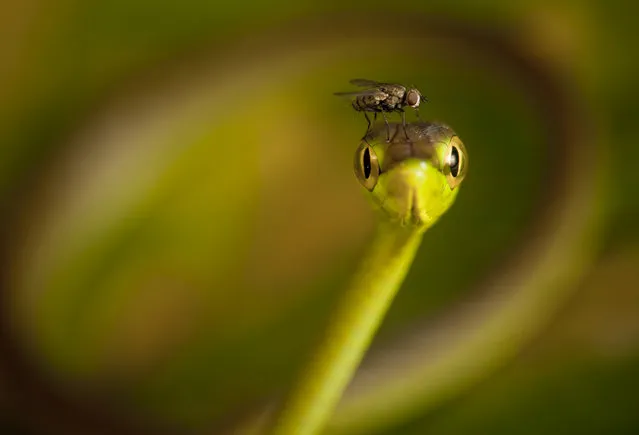
“Fly cap for a vine snake”. A fly lands on the head of a vine snake in the Choco of Colombia. (Photo and caption by Robin Moore/National Geographic Traveler Photo Contest)

“Fly cap for a vine snake”. A fly lands on the head of a vine snake in the Choco of Colombia. (Photo and caption by Robin Moore/National Geographic Traveler Photo Contest)

ATTENTION! All pictures are presented in high resolution. To see Hi-Res images – just TWICE click on any picture. In other words, click small picture – opens the BIG picture. Click BIG picture – opens VERY BIG picture.
Details
24 Jun 2013 11:36:00
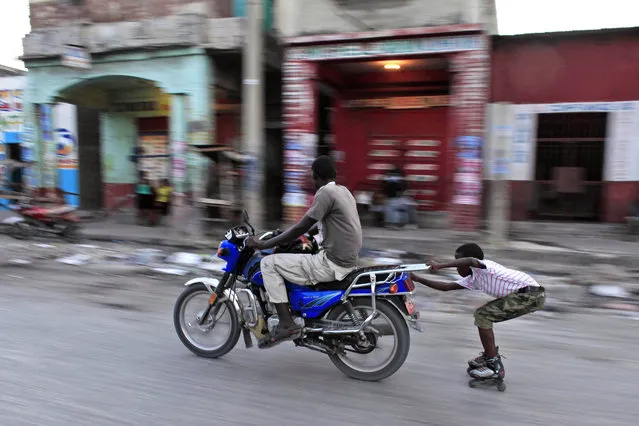
A kid wearing rollerblades hitches a ride via motorbike, in Port-au-Prince, Haiti, Sunday, October 25, 2015. The country held the first-round presidential vote Sunday. Haitians chose between 54 presidential hopefuls and a slew of legislative and municipal candidates. (Photo by Ricardo Arduengo/AP Photo)

A kid wearing rollerblades hitches a ride via motorbike, in Port-au-Prince, Haiti, Sunday, October 25, 2015. The country held the first-round presidential vote Sunday. Haitians chose between 54 presidential hopefuls and a slew of legislative and municipal candidates. (Photo by Ricardo Arduengo/AP Photo)
Details
28 Oct 2015 08:07:00
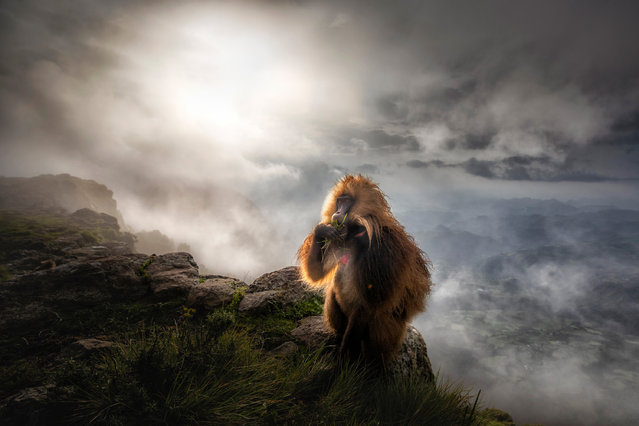
Highly commended, mammals: Gelada after the storm – Marco Gaiotti (Italy). “Gelada baboons are the only monkey species in the world that feed on grasses. They are native to the tableland of Ethiopia. Every morning large family groups wander from their sleeping places in the steep rock face, up to 1,000 metres high, to the feeding grounds at the tablelands. This image clearly depicts their feeding strategy: they pull out bunches of grass, sort the stalks and then lift them to their mouth. This shot was taken towards the end of the rainy season after a heavy storm”. (Photo by Marco Gaiotti/2019 GDT European Wildlife Photographer of the Year)

Highly commended, mammals: Gelada after the storm – Marco Gaiotti (Italy). “Gelada baboons are the only monkey species in the world that feed on grasses. They are native to the tableland of Ethiopia. Every morning large family groups wander from their sleeping places in the steep rock face, up to 1,000 metres high, to the feeding grounds at the tablelands. This image clearly depicts their feeding strategy: they pull out bunches of grass, sort the stalks and then lift them to their mouth. This shot was taken towards the end of the rainy season after a heavy storm”. (Photo by Marco Gaiotti/2019 GDT European Wildlife Photographer of the Year)
Details
31 Oct 2019 00:03:00
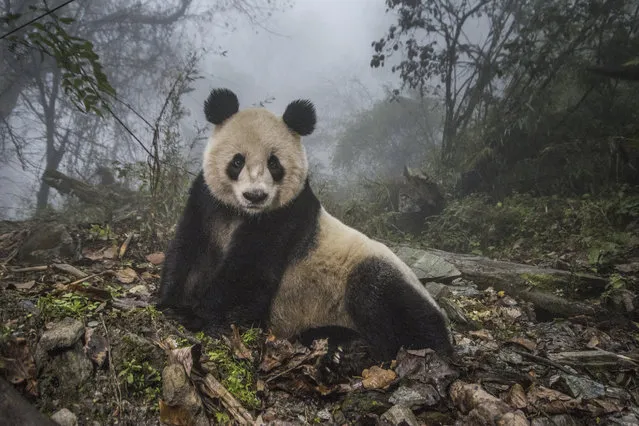
16-year-old panda, Ye Ye, rests in an enclosure at the Wolong Nature Reserve, a conservation center that trains pandas for release into the wild. This image was published in the August 2016 National Geographic magazine as part of the “Pandas Gone Wild” story. (Photo by Ami Vitale/National Geographic Creative)

16-year-old panda, Ye Ye, rests in an enclosure at the Wolong Nature Reserve, a conservation center that trains pandas for release into the wild. This image was published in the August 2016 National Geographic magazine as part of the “Pandas Gone Wild” story. (Photo by Ami Vitale/National Geographic Creative)
Details
10 Sep 2017 07:56:00
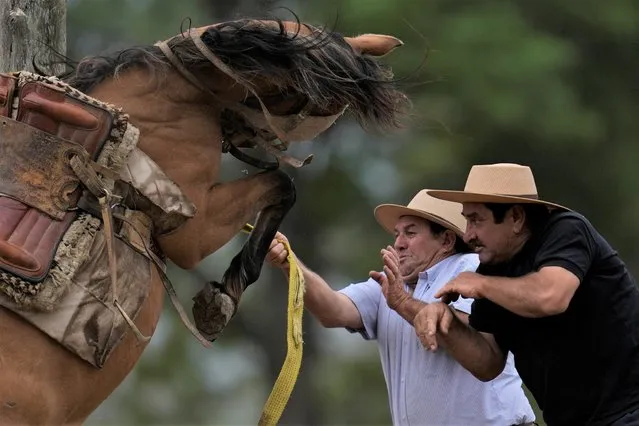
Men try to get control of a bucking horse a Tradition Day rodeo exhibition during, in San Antonio de Areco, Argentina, Sunday, November 13, 2022. Tradition Day, aimed to preserve gaucho traditions, is celebrated to honor the birth of Argentine writer Jose Hernandez, author of the country's national poem, “The Gaucho Martin Fierro”. (Photo by Natacha Pisarenko/AP Photo)

Men try to get control of a bucking horse a Tradition Day rodeo exhibition during, in San Antonio de Areco, Argentina, Sunday, November 13, 2022. Tradition Day, aimed to preserve gaucho traditions, is celebrated to honor the birth of Argentine writer Jose Hernandez, author of the country's national poem, “The Gaucho Martin Fierro”. (Photo by Natacha Pisarenko/AP Photo)
Details
04 Dec 2022 04:07:00
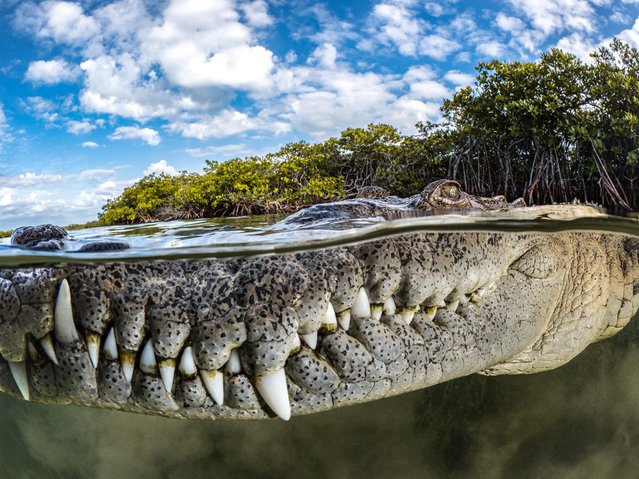
Guardian of the Mangroves – Overall Winner. Tanya Houppermans, Cuba. A curious American crocodile (Crocodylus acutus) swims right up to Tanya, at Gardens of the Queen (Jardines De La Reina), an archipelago off the coast of Cuba. It has been strictly protected since 1996, and is one of the most untouched marine ecosystems in the world. ‍ “The healthy population of American crocodiles is down to the pristine condition of the mangroves and I wanted to capture close ups of this gentle giant in its natural habitat. I hope this image can illustrate that protecting areas like this is so critical”. (Photo by Tanya Griffin Houppermans/Mangrove Photographer of the Year)

Guardian of the Mangroves – Overall Winner. Tanya Houppermans, Cuba. A curious American crocodile (Crocodylus acutus) swims right up to Tanya, at Gardens of the Queen (Jardines De La Reina), an archipelago off the coast of Cuba. It has been strictly protected since 1996, and is one of the most untouched marine ecosystems in the world. ‍ “The healthy population of American crocodiles is down to the pristine condition of the mangroves and I wanted to capture close ups of this gentle giant in its natural habitat. I hope this image can illustrate that protecting areas like this is so critical”. (Photo by Tanya Griffin Houppermans/Mangrove Photographer of the Year)
Details
05 Nov 2022 04:24:00
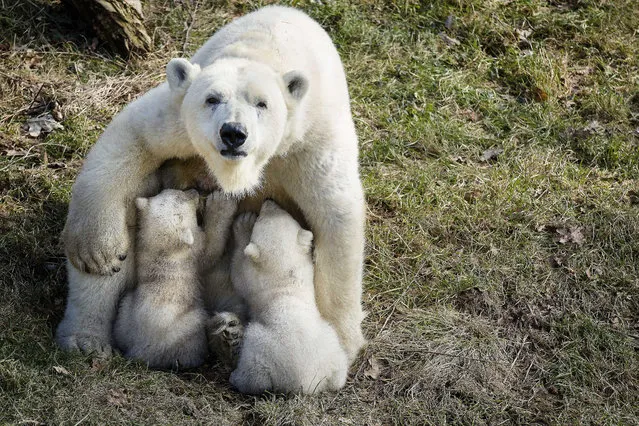
Polar bear twins make their first public appearance with their mother “Freedom” at Ouwehands Zoo Rhenen, in Rhenen, The Netherlands, 19 February 2015. The twins, who were born in November 2014, have not been named because their gender has not yet been determined. (Photo by Bart Maat/EPA)

Polar bear twins make their first public appearance with their mother “Freedom” at Ouwehands Zoo Rhenen, in Rhenen, The Netherlands, 19 February 2015. The twins, who were born in November 2014, have not been named because their gender has not yet been determined. (Photo by Bart Maat/EPA)
Details
21 Feb 2015 11:58:00
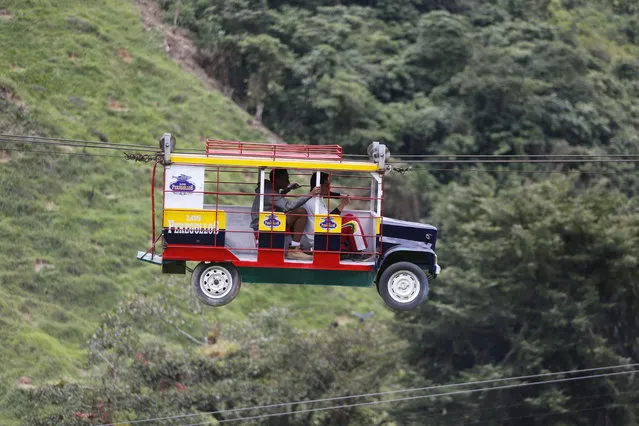
Tourists ride a cable car in the form a of a Chiva, a bus used to serve rural routes, in Pitalito, Colombia, Tuesday, April 5, 2017. The ride called “La Chiva Voladora” costs about $0.70 and you zip along about 800 meters from one side of a hill to another. (Photo by Fernando Vergara/AP Photo)

Tourists ride a cable car in the form a of a Chiva, a bus used to serve rural routes, in Pitalito, Colombia, Tuesday, April 5, 2017. The ride called “La Chiva Voladora” costs about $0.70 and you zip along about 800 meters from one side of a hill to another. (Photo by Fernando Vergara/AP Photo)
Details
21 Dec 2017 06:51:00