Loading...
Done
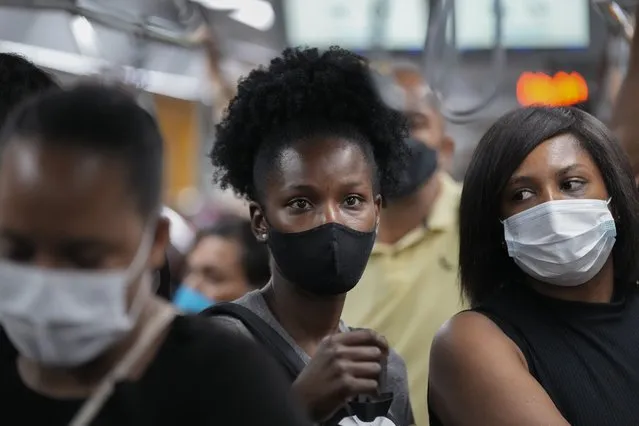
Commuters wear protective face masks as they walk through a subway station, in Sao Paulo, Brazil, Wednesday, December 1, 2021, amid the COVID-19 pandemic. Brazil joined the widening circle of countries to report cases of the omicron variant. (Photo by Andre Penner/AP Photo)

Commuters wear protective face masks as they walk through a subway station, in Sao Paulo, Brazil, Wednesday, December 1, 2021, amid the COVID-19 pandemic. Brazil joined the widening circle of countries to report cases of the omicron variant. (Photo by Andre Penner/AP Photo)
Details
02 Dec 2021 09:59:00
A girl practices martial arts during a training at a school in Syrian opposition-held village of al-Jeineh, Syria on April 11, 2021. (Photo by Khalil Ashawi/Reuters)

A girl practices martial arts during a training at a school in Syrian opposition-held village of al-Jeineh, Syria on April 11, 2021. (Photo by Khalil Ashawi/Reuters)
Details
12 May 2021 08:49:00
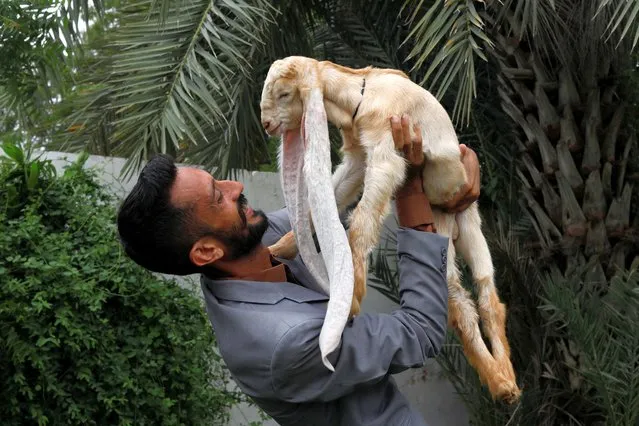
Simba, one month and four days old kid goat with 22-inch long ears, is held by his owner in Karachi, Pakistan on July 8, 2022. (Photo by Akhtar Soomro/Reuters)

Simba, one month and four days old kid goat with 22-inch long ears, is held by his owner in Karachi, Pakistan on July 8, 2022. (Photo by Akhtar Soomro/Reuters)
Details
17 Oct 2023 00:55:00
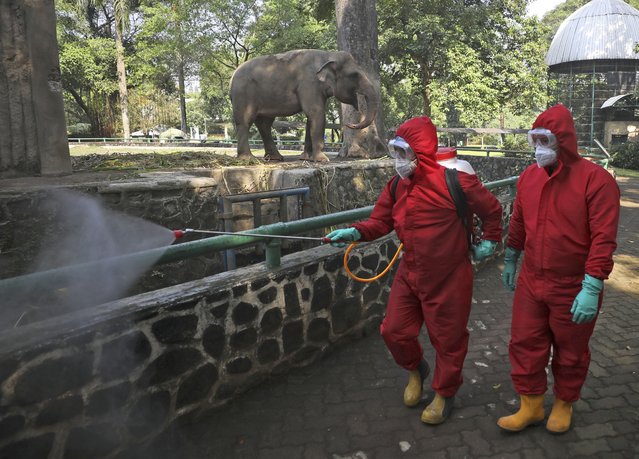
Indonesian firefighters spray disinfectant at the public area near an elephant enclosure at Ragunan Zoo prior to its reopening this weekend after weeks of closure due to the large-scale restrictions imposed to help curb the new coronavirus outbreak, in Jakarta, Indonesia, Wednesday, June 17, 2020. As Indonesia's overall virus caseload continues to rise, the capital city has moved to restore normalcy by lifting some restrictions, saying that the spread of the virus in the city of 11 million has slowed after peaking in mid-April. (Photo by Dita Alangkara/AP Photo)

Indonesian firefighters spray disinfectant at the public area near an elephant enclosure at Ragunan Zoo prior to its reopening this weekend after weeks of closure due to the large-scale restrictions imposed to help curb the new coronavirus outbreak, in Jakarta, Indonesia, Wednesday, June 17, 2020. As Indonesia's overall virus caseload continues to rise, the capital city has moved to restore normalcy by lifting some restrictions, saying that the spread of the virus in the city of 11 million has slowed after peaking in mid-April. (Photo by Dita Alangkara/AP Photo)
Details
19 Jun 2020 00:07:00
A person rides a swing hanging from a crane with hot air balloons fly in the background in Nevsehir, Turkey on October 14, 2021. Tourists and those who want to take photos set up swings on the cranes they rent and then have their photos taken in the setting created by hot air balloons in the backgrounds. (Photo by Behcet Alkan/Anadolu Agency via Getty Images)

A person rides a swing hanging from a crane with hot air balloons fly in the background in Nevsehir, Turkey on October 14, 2021. Tourists and those who want to take photos set up swings on the cranes they rent and then have their photos taken in the setting created by hot air balloons in the backgrounds. (Photo by Behcet Alkan/Anadolu Agency via Getty Images)
Details
28 Oct 2021 06:05:00
Alluvial Fan, China. A vast alluvial fan blossoms across the desolate landscape between the Kunlun and Altun mountain ranges that form the southern border of the Taklimakan Desert in China’s XinJiang Province. Image taken by the ASTER instrument on NASA’s Terra satellite on May 2nd, 2002. (Photo by NASA/GSFC/USGS EROS Data Center)

Alluvial Fan, China. A vast alluvial fan blossoms across the desolate landscape between the Kunlun and Altun mountain ranges that form the southern border of the Taklimakan Desert in China’s XinJiang Province. Image taken by the ASTER instrument on NASA’s Terra satellite on May 2nd, 2002. (Photo by NASA/GSFC/USGS EROS Data Center)
Details
07 Jan 2013 09:27:00
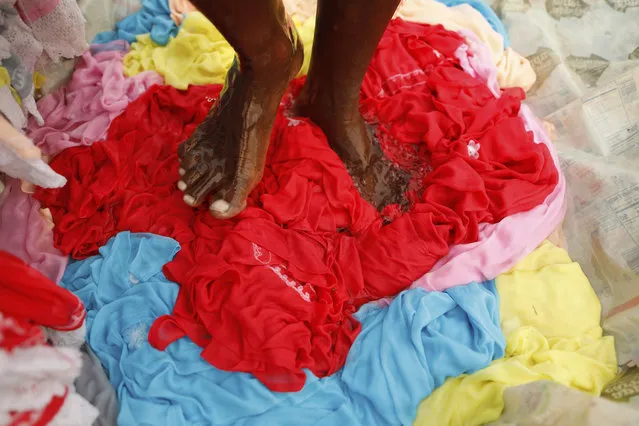
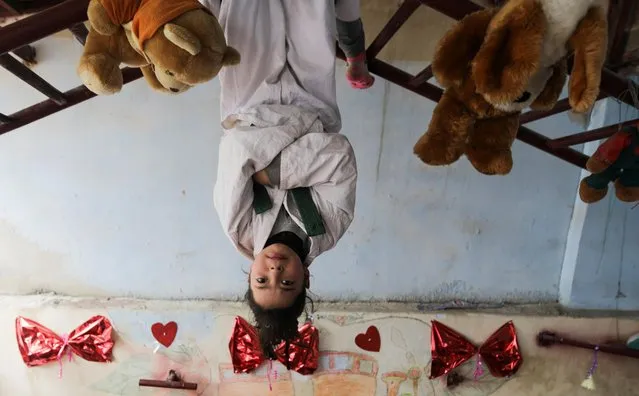
A dhobi, or a washerman washes cloths on the banks of the River Gomti in Lucknow, India, Saturday, September 12, 2020. Dhobis are traditional laundry workers who wash clothes by hand and dry them in the sun, an occupation which has been in existence for generations. Most cities in India have a Dhobi Ghat, or washermen's area, where the city's pile of clothes is laundered. This practice is still popular in India, despite of modern technology. Around 1,000 families work in Lucknow's Dhobi Ghat. However, in light of the novel coronavirus, their wages have decreased drastically. With each family earning around US$100-200 per month. (Photo by Rajesh Kumar Singh/AP Photo)

A dhobi, or a washerman washes cloths on the banks of the River Gomti in Lucknow, India, Saturday, September 12, 2020. Dhobis are traditional laundry workers who wash clothes by hand and dry them in the sun, an occupation which has been in existence for generations. Most cities in India have a Dhobi Ghat, or washermen's area, where the city's pile of clothes is laundered. This practice is still popular in India, despite of modern technology. Around 1,000 families work in Lucknow's Dhobi Ghat. However, in light of the novel coronavirus, their wages have decreased drastically. With each family earning around US$100-200 per month. (Photo by Rajesh Kumar Singh/AP Photo)
Details
25 Sep 2020 00:03:00
Two women enjoy drinks outside a pub in the soho area of central London on November 4, 2020, on the eve of a second novel coronavirus COVID-19 lockdown in an effort to combat soaring infections. English pubs call last orders at the bar for a month on Wednesday evening, as the country effectively shuts down from November 5, for the second time this year to try to cut coronavirus cases. Prime Minister Boris Johnson insisted that the lockdown for England would end “automatically” in four weeks, as he tried to placate party critics over the spiralling economic fallout. (Photo by Stephen Lock/i-Images)

Two women enjoy drinks outside a pub in the soho area of central London on November 4, 2020, on the eve of a second novel coronavirus COVID-19 lockdown in an effort to combat soaring infections. English pubs call last orders at the bar for a month on Wednesday evening, as the country effectively shuts down from November 5, for the second time this year to try to cut coronavirus cases. Prime Minister Boris Johnson insisted that the lockdown for England would end “automatically” in four weeks, as he tried to placate party critics over the spiralling economic fallout. (Photo by Stephen Lock/i-Images)
Details
06 Nov 2020 00:07:00