Loading...
Done
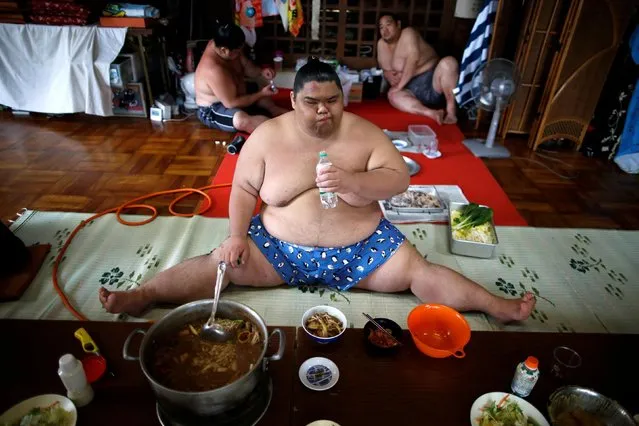
Sumo wrestler Kaiho eats a “chanko” meal in Nagoya, Japan on July 18, 2017. After ending practice at 10:30 a.m., the wrestlers mingle with fans, sign autographs and pose for photos before the first of their two daily meals. (Photo by Issei Kato/Reuters)

Sumo wrestler Kaiho eats a “chanko” meal in Nagoya, Japan on July 18, 2017. After ending practice at 10:30 a.m., the wrestlers mingle with fans, sign autographs and pose for photos before the first of their two daily meals. (Photo by Issei Kato/Reuters)
Details
20 Jul 2017 07:49:00
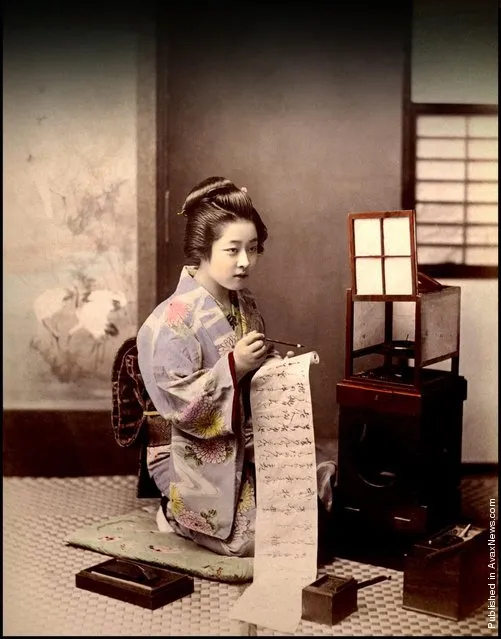
Writing Letter

“Kusakabe Kimbei (1841 – 1934) was a Japanese photographer. He usually went by his given name, Kimbei, because his clientele, mostly non-Japanese-speaking foreign residents and visitors, found it easier to pronounce than his family name. Kusakabe Kimbei worked with Felice Beato and Baron Raimund von Stillfried as a photographic colourist and assistant before opening his own workshop in Yokohama in 1881 in the Benten-dōri quarter, and from 1889 operating in the Honmachi quarter. He also opened a branch in the Ginza quarter of Tokyo”. – Wikipedia

Photo: Writing Letter. (Photo by Kusakabe Kimbei)
Details
21 Apr 2012 13:28:00
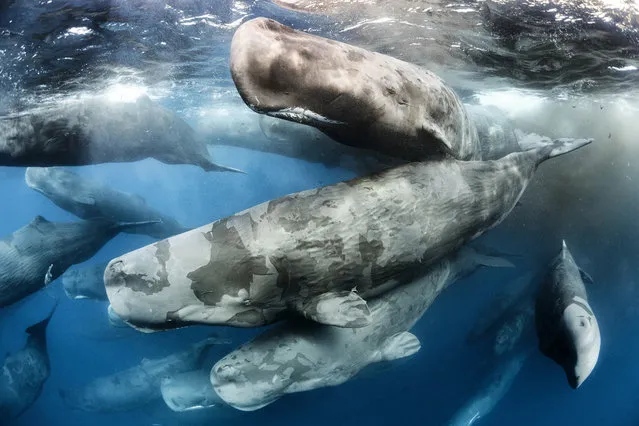
Giant gathering by Tony Wu. “The first indication that something extraordinary was going on were the blows, huge numbers of them – the exhalations of huge numbers of whales. Entering the water, the photographer witnessed an extraordinary scene. Hundreds, possibly thousands, of sperm whales were twirling and twisting through the water, bumping and rubbing against each other, and there was a cacophony of sound – the pulsation, buzz, creak and crackle of whale communication. The picture shows just a fraction of the scene, with the whales stacked up below. Undoubtedly, this was a clan gathering”. (Photo by Tony Wu/Unforgettable Underwater Photography/NHM)

A new book published by the UK Natural History Museum showcases some of the most memorable underwater photographs taken over the last few decades in its annual wildlife photographer of the year competition. Here: Giant gathering by Tony Wu. “The first indication that something extraordinary was going on were the blows, huge numbers of them – the exhalations of huge numbers of whales. Entering the water, the photographer witnessed an extraordinary scene”. (Photo by Tony Wu/Unforgettable Underwater Photography/NHM)
Details
17 Apr 2018 00:03:00
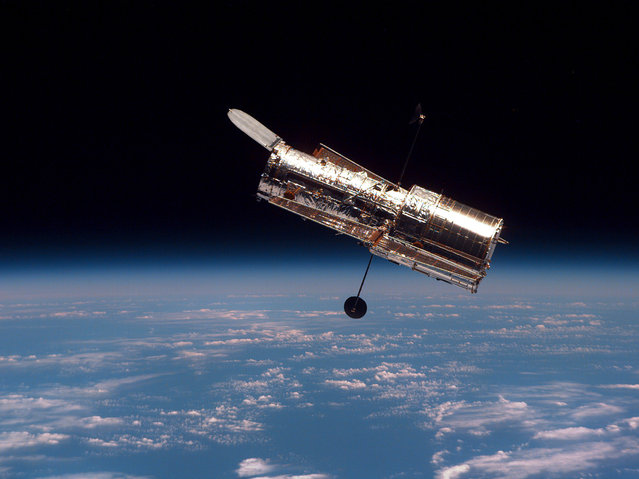
The Hubble Space Telescope is shown following its release from the space shuttle Discovery Wednesday, February 19, 1997. The Hubble Space Telescope, one of NASA'S crowning glories, marks its 25th anniversary on Friday, April 24, 2015. With more than 1 million observations, including those of the farthest and oldest galaxies ever beholden by humanity, no man-made satellite has touched as many minds or hearts as Hubble. (Photo by AP Photo/NASA)

The Hubble Space Telescope is shown following its release from the space shuttle Discovery Wednesday, February 19, 1997. The Hubble Space Telescope, one of NASA'S crowning glories, marks its 25th anniversary on Friday, April 24, 2015. With more than 1 million observations, including those of the farthest and oldest galaxies ever beholden by humanity, no man-made satellite has touched as many minds or hearts as Hubble. (Photo by AP Photo/NASA)
Details
24 Apr 2015 11:25:00
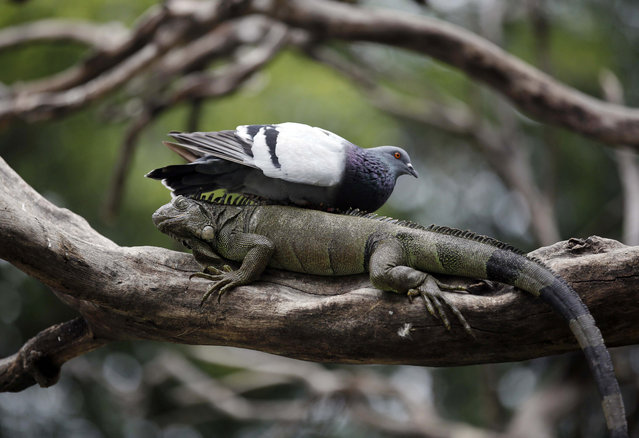
A pigeon rests on a wild iguana in a tree inside Seminario Park in Guayaquil, Ecuador, Thursday, April 3, 2014. Pigeons coexist with the wild iguanas at this park in the middle of the city surrounded by savannah. (Photo by Dolores Ochoa/AP Photo)

A pigeon rests on a wild iguana in a tree inside Seminario Park in Guayaquil, Ecuador, Thursday, April 3, 2014. Pigeons coexist with the wild iguanas at this park in the middle of the city surrounded by savannah. (Photo by Dolores Ochoa/AP Photo)
Details
05 Apr 2014 14:04:00
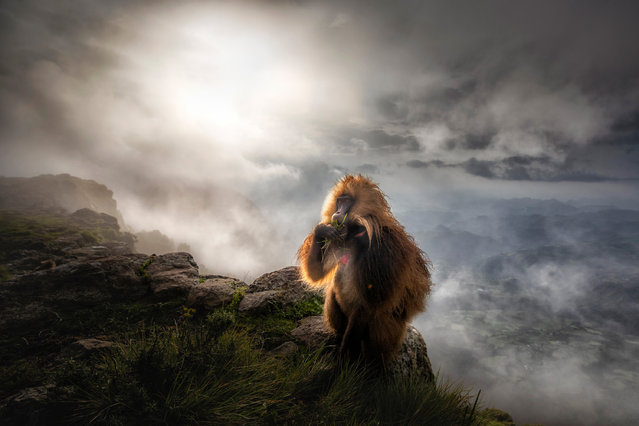
Highly commended, mammals: Gelada after the storm – Marco Gaiotti (Italy). “Gelada baboons are the only monkey species in the world that feed on grasses. They are native to the tableland of Ethiopia. Every morning large family groups wander from their sleeping places in the steep rock face, up to 1,000 metres high, to the feeding grounds at the tablelands. This image clearly depicts their feeding strategy: they pull out bunches of grass, sort the stalks and then lift them to their mouth. This shot was taken towards the end of the rainy season after a heavy storm”. (Photo by Marco Gaiotti/2019 GDT European Wildlife Photographer of the Year)

Highly commended, mammals: Gelada after the storm – Marco Gaiotti (Italy). “Gelada baboons are the only monkey species in the world that feed on grasses. They are native to the tableland of Ethiopia. Every morning large family groups wander from their sleeping places in the steep rock face, up to 1,000 metres high, to the feeding grounds at the tablelands. This image clearly depicts their feeding strategy: they pull out bunches of grass, sort the stalks and then lift them to their mouth. This shot was taken towards the end of the rainy season after a heavy storm”. (Photo by Marco Gaiotti/2019 GDT European Wildlife Photographer of the Year)
Details
31 Oct 2019 00:03:00
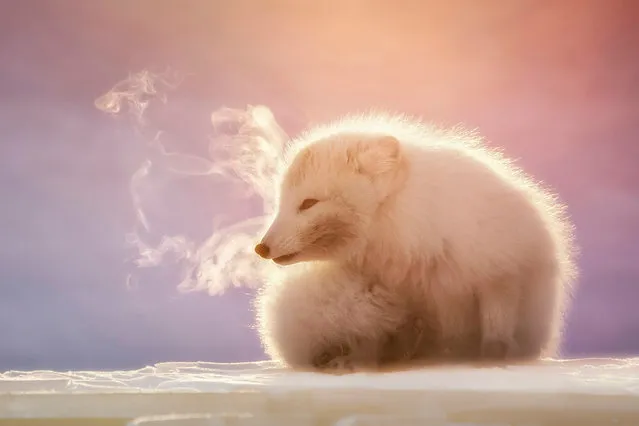
Breath of an Arctic fox by Marco Gaiotti, Italy. Marco was watching this little Arctic fox as it incessantly called another nearby. Gradually he noticed the fox’s wet breath was quickly freezing in the air after each call. It was late winter in Spitsbergen, Svalbard, and the air was -35C (-31F). Photographing Arctic foxes is often frustrating, as they are normally running around fast in search of food, but this one was very relaxed and let Marco get close enough to focus on it, with the light glowing perfectly in the background. (Photo by Marco Gaiotti/Wildlife Photographer of the Year 2021)

Breath of an Arctic fox by Marco Gaiotti, Italy. Marco was watching this little Arctic fox as it incessantly called another nearby. Gradually he noticed the fox’s wet breath was quickly freezing in the air after each call. It was late winter in Spitsbergen, Svalbard, and the air was -35C (-31F). Photographing Arctic foxes is often frustrating, as they are normally running around fast in search of food, but this one was very relaxed and let Marco get close enough to focus on it, with the light glowing perfectly in the background. (Photo by Marco Gaiotti/Wildlife Photographer of the Year 2021)
Details
05 Dec 2021 06:36:00
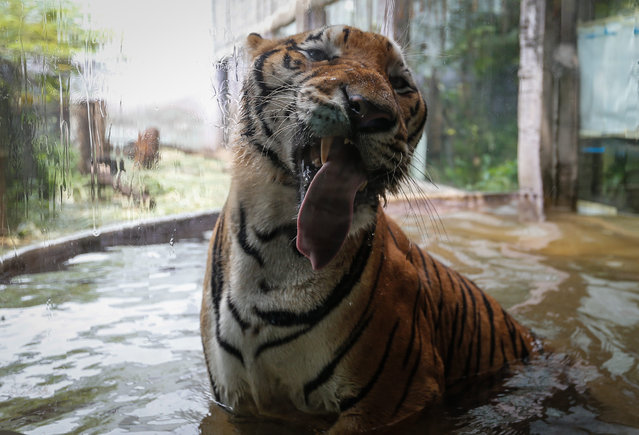
A Bengal tiger licks a glass enclosure during a presentation of Bengial tiger cubs at the Malabon Zoo in Malabon City, north of Manila, Philippines, 14 July 2016. The Bengal tiger cubs, which were born at the zoo, are two months old and named “Tiger Duterte” and “Tiger Leni”. The Malabon Zoo has one of the largest private collections of exotic and endemic animals in the Philippines. (Photo by Mark R. Cristino/EPA)

A Bengal tiger licks a glass enclosure during a presentation of Bengial tiger cubs at the Malabon Zoo in Malabon City, north of Manila, Philippines, 14 July 2016. The Bengal tiger cubs, which were born at the zoo, are two months old and named “Tiger Duterte” and “Tiger Leni”. The Malabon Zoo has one of the largest private collections of exotic and endemic animals in the Philippines. (Photo by Mark R. Cristino/EPA)
Details
17 Jul 2016 11:06:00