Loading...
Done
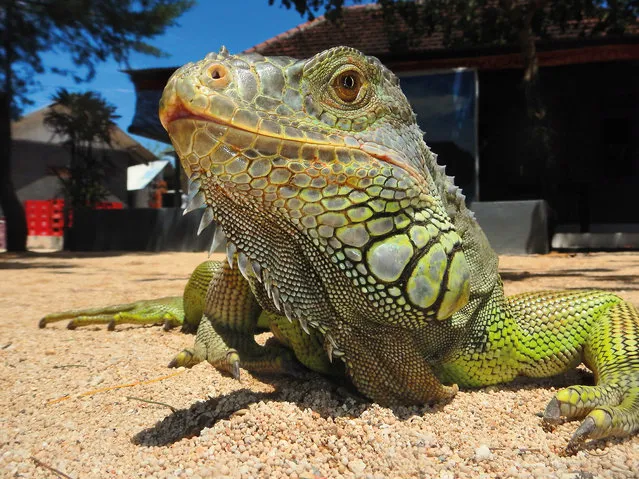
An iguana in Bali helped Julij Kopilović, age eight, from Slovenia, earn second runner-up in Amazing Animals. (Photo by Julij Kopilović/National Geographic)

An iguana in Bali helped Julij Kopilović, age eight, from Slovenia, earn second runner-up in Amazing Animals. (Photo by Julij Kopilović/National Geographic)
Details
04 Feb 2016 11:15:00
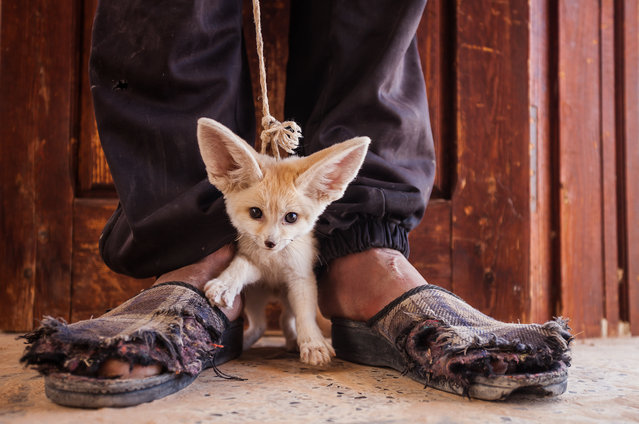
Fennec foxes are captured for the illegal pet trade. This three-month-old pup was for sale in a market in southern Tunisia. (Photo by Bruno D'Amicis/Photographers Against Wildlife Crime/Wildscreen/The Guardian)

In a new project, an international group of photographers have joined forces to use their powerful images to raise awareness and funds to help stop the illegal wildlife trade. Here: Fennec foxes are captured for the illegal pet trade. This three-month-old pup was for sale in a market in southern Tunisia. (Photo by Bruno D'Amicis/Photographers Against Wildlife Crime/Wildscreen/The Guardian)
Details
17 Oct 2017 06:05:00
Architecture of Density #119, 2009. (Photo by Michael Wolf, courtesy of Flowers Gallery)

Hong Kong art gallery director Sarah Greene said that Wolf, known for his work depicting mega-cities, has died Tuesday, April 24, 2019 night at his home. She said he was 64. Wolf won first prize in the World Press Photo competition in 2005 and 2010. Here: Architecture of Density #119, 2009. (Photo by Michael Wolf, courtesy of Flowers Gallery)
Details
29 Apr 2019 00:03:00
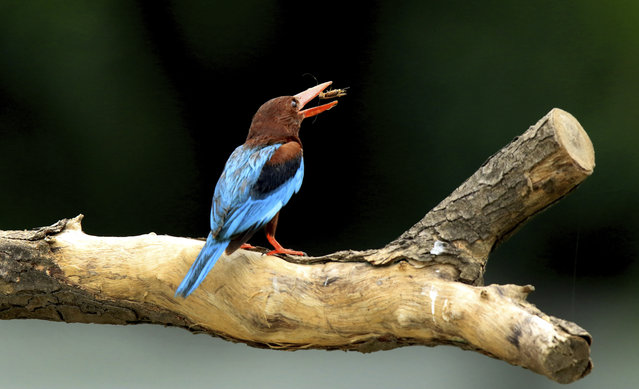
A common kingfisher sits on a branch of a tree after catching an insect in Allahabad, India, Sunday, July 9, 2017. The common kingfisher is a highly territorial bird that has to eat nearly sixty percent of its bodyweight every day. (Photo by Rajesh Kumar Singh/AP Photo)

A common kingfisher sits on a branch of a tree after catching an insect in Allahabad, India, Sunday, July 9, 2017. The common kingfisher is a highly territorial bird that has to eat nearly sixty percent of its bodyweight every day. (Photo by Rajesh Kumar Singh/AP Photo)
Details
16 Jul 2017 07:52:00
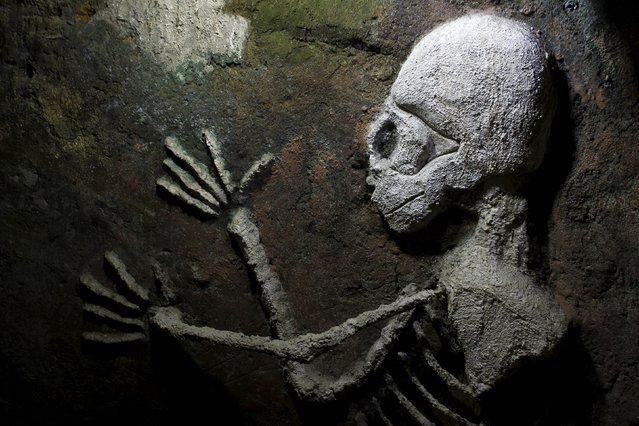
A figure of a skeleton is seen painted in a hallway of the house built underground by Manuel Barrantes in San Isidro de Perez Zeledon, Costa Rica, March 14, 2016. (Photo by Juan Carlos Ulate/Reuters)

A figure of a skeleton is seen painted in a hallway of the house built underground by Manuel Barrantes in San Isidro de Perez Zeledon, Costa Rica, March 14, 2016. Barrantes started digging through red soil and volcanic rock on his farm 12 years ago to build his subterranean house, between 15 and 63 feet (4.57 and 19.2m) underground. The dwelling, which Barrantes says provides a peaceful and comfortable home for him and his family away from noise pollution and the effects of climate change, now covers about 2,000 square feet (185.8 square metres). (Photo by Juan Carlos Ulate/Reuters)
Details
17 Mar 2016 15:34:00
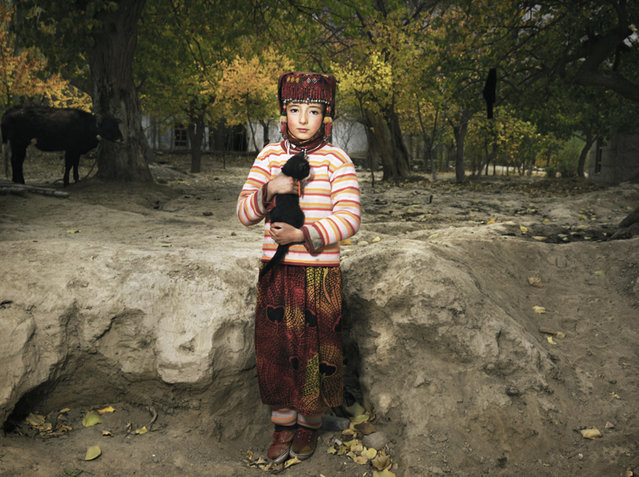
The Tashkurgan Tajik Autonomous County in Xinjiang Province People

“As a photographer, peregrinator and naturalist, I have been searching for the ultimate unworldly world. I've always been drawn to unusual travel destinations. For me, to lose myself in a different culture is a great way to find balance in my life...”. – Li Xinzhao. (Photo by Li Xinzhao)
Details
11 Feb 2013 11:26:00
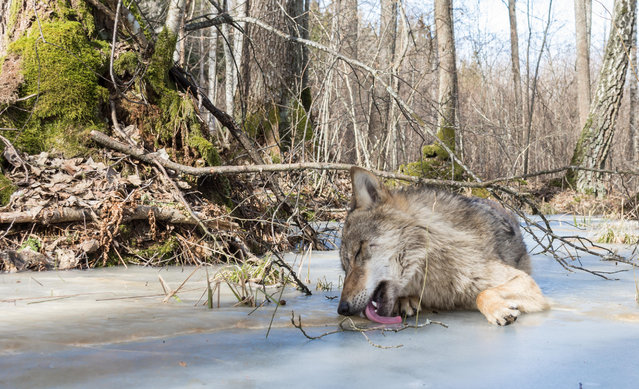
A thirsty timber wolf, Lithuania. (Photo by Erikas Plucas/Alamy Stock Photo)

A thirsty timber wolf, Lithuania, 2018. (Photo by Erikas Plucas/Alamy Stock Photo)
Details
08 Apr 2018 00:03:00
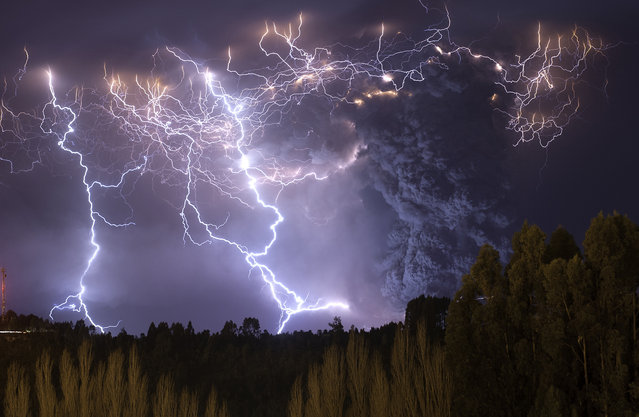
The eruption of Cordon Caulle began on June 4, 2011, located in the Region of Los Rios in Chile. For about 12 months, people and animals became accustomed to living with the daily fall of ash, which also caused problems in the air traffic in South America. The explosions and lightning during first days of the eruption could be seen from hundreds of miles around. This photograph was taken on the second night of eruption from the town of Lago Ranco. (Photo and caption by Francisco Negroni/National Geographic Traveler Photo Contest)

The eruption of Cordon Caulle began on June 4, 2011, located in the Region of Los Rios in Chile. For about 12 months, people and animals became accustomed to living with the daily fall of ash, which also caused problems in the air traffic in South America. The explosions and lightning during first days of the eruption could be seen from hundreds of miles around. This photograph was taken on the second night of eruption from the town of Lago Ranco. (Photo and caption by Francisco Negroni/National Geographic Traveler Photo Contest)

ATTENTION! All pictures are presented in high resolution. To see Hi-Res images – just TWICE click on any picture. In other words, click small picture – opens the BIG picture. Click BIG picture – opens VERY BIG picture.
Details
23 Jun 2013 11:24:00