Loading...
Done
Tridacna Gigas, or Giant Clams

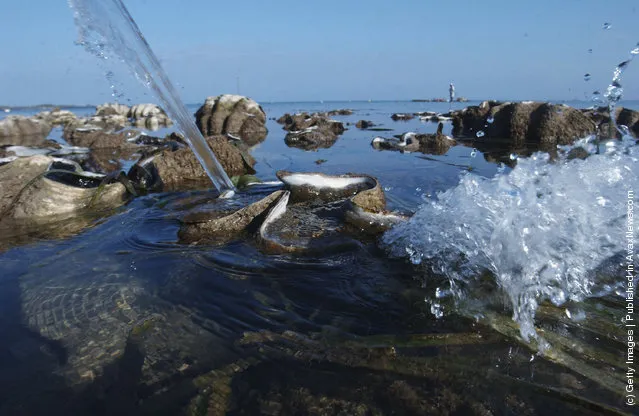
“The giant clam, Tridacna gigas (known as pā’ua in Cook Islands Māori), is the largest living bivalve mollusc. T. gigas is one of the most endangered clam species. It was mentioned as early as 1825 in scientific reports. One of a number of large clam species native to the shallow coral reefs of the South Pacific and Indian oceans, they can weigh more than 200 kilograms (440 lb) measure as much as 120 cm (47 in) across, and have an average lifespan in the wild of 100 years or more”. – Wikipedia

Photo: Tridacna Gigas, or Giant Clams spew water as a traditional fisherman passes by a small sanctuary on January 23, 2004 near Bolinao in the Northern Philippines. The clams, prime builders for coral reefs and providing shelter for spawning fish and other marine life, are exposed by low tides in the sanctuary. Overfishing and pollution throughout the country are not only threatening food security, but are also starting to choke one of the few working clam sanctuaries in the world. (Photo by David Greedy/Getty Images)
Details
01 Oct 2011 13:10:00
An overlay image of 350 photographs shows the circumpolar star and aircraft trails above Clifton Suspension Bridge in Bristol, United Kingdom on January 6, 2022. (Photo by Lee Thomas/The Times)

An overlay image of 350 photographs shows the circumpolar star and aircraft trails above Clifton Suspension Bridge in Bristol, United Kingdom on January 6, 2022. (Photo by Lee Thomas/The Times)
Details
04 Jun 2022 05:18:00
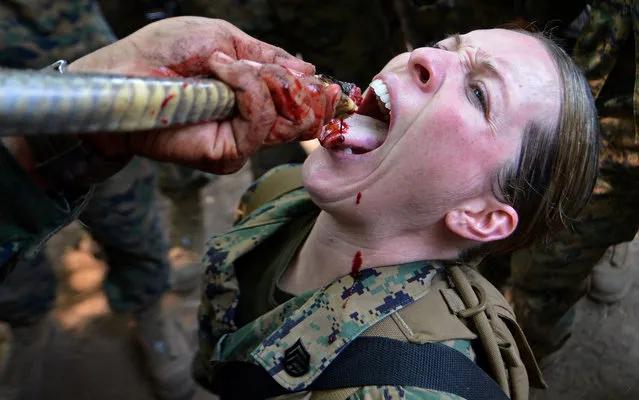
In a military base in the Thai province of Chon Buri February 20 U.S. Marines Navy with Thailand began their studies in jungle survival. The event is held in joint military exercises “Cobra Gold 2013”. During a jungle survival program February 20, 2013 taught by Royal Thai Special Forces in Sannapit, Thailand, U.S. Marines learned to catch cobras and drink their fresh blood, not to mention eat forest insects and pull the heads off of chicken. The training was part of Operation Cobra Gold 13, the 32nd edition of international military exercises hosted by the Thai. According to a U.S. Marines press release, Cobra Gold is the largest exercise of its kind in Asia and incorporates troops from five other nations in addition to the U.S. and Thailand. The Daily Mail reports that the Marines were invited to experience the local custom of drinking cobra blood after being taught to catch and kill cobras in the wild. As CNN notes, Cobra blood is believed to be a panacea and aphrodiasic in parts of Southeast Asia. In Jakarta, vendors can earn over $100 a night selling shots of cobra blood mixed with liquor. (Photo by Pornchai Kittiwongsakul/AFP Photo)

During a jungle survival program February 20, 2013 taught by Royal Thai Special Forces in Sannapit, Thailand, U.S. Marines learned to catch cobras and drink their fresh blood, not to mention eat forest insects and pull the heads off of chicken. The training was part of Operation Cobra Gold 13, the 32nd edition of international military exercises hosted by the Thai. According to a U.S. Marines press release, Cobra Gold is the largest exercise of its kind in Asia and incorporates troops from five other nations in addition to the U.S. and Thailand. The Daily Mail reports that the Marines were invited to experience the local custom of drinking cobra blood after being taught to catch and kill cobras in the wild. As CNN notes, Cobra blood is believed to be a panacea and aphrodiasic in parts of Southeast Asia. In Jakarta, vendors can earn over $100 a night selling shots of cobra blood mixed with liquor. (Photo by Pornchai Kittiwongsakul/AFP Photo)
Details
23 Feb 2013 11:52:00
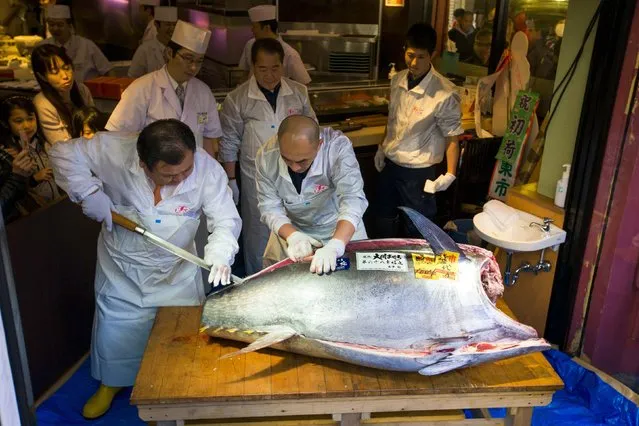
The President of the sushi restaurant chain Sushi Zanmai, Kiyoshi Kimura, cuts a blue fin tuna outside his main restaurant at the outer Tsukiji market in Tokyo January 5, 2015. The 180 kg blue fin tuna traded at a price of 4.5 million yen (37,500 USD) and was the most expensive fish at this year's New Year auction at the Tsukiji market, local media reported. (Photo by Thomas Peter/Reuters)

The President of the sushi restaurant chain Sushi Zanmai, Kiyoshi Kimura, cuts a blue fin tuna outside his main restaurant at the outer Tsukiji market in Tokyo January 5, 2015. The 180 kg blue fin tuna traded at a price of 4.5 million yen (37,500 USD) and was the most expensive fish at this year's New Year auction at the Tsukiji market, local media reported. (Photo by Thomas Peter/Reuters)
Details
06 Jan 2015 11:39:00
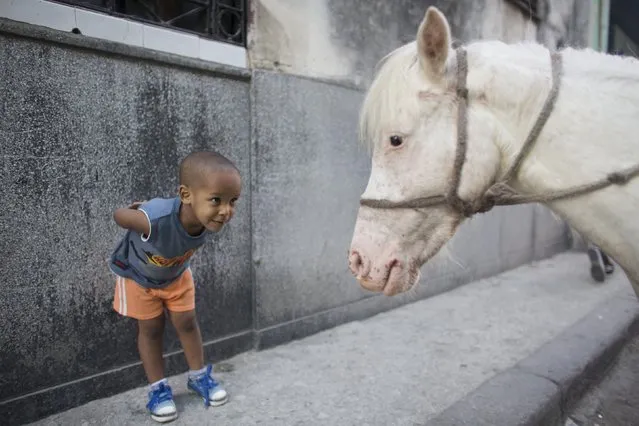
Alexo Carmona, 2, looks at Coco, a two-year-old pony, in downtown Havana, in this March 6, 2015 file photo. Nearly a quarter of a million people follow the Reuters Instagram account – and it's still growing fast. To mark the mid-point of 2015, Reuters has compiled the twenty most-liked pictures so far. This picture was 20th most popular. (Photo by Alexandre Meneghini/Reuters)

Alexo Carmona, 2, looks at Coco, a two-year-old pony, in downtown Havana, in this March 6, 2015 file photo. Nearly a quarter of a million people follow the Reuters Instagram account – and it's still growing fast. To mark the mid-point of 2015, Reuters has compiled the twenty most-liked pictures so far. This picture was 20th most popular. (Photo by Alexandre Meneghini/Reuters)
Details
18 Jul 2015 13:28:00
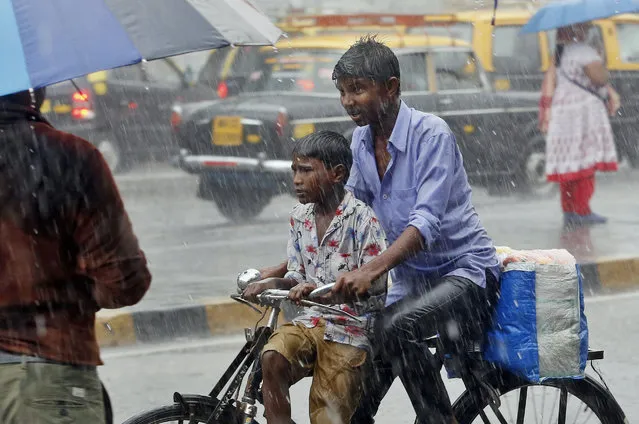
An Indian cyclist pedals with a child during heavy rain in Mumbai, Maharashtra state, India, Friday, July 24, 2015. Several parts of the city witnessed heavy rain Friday. The monsoon rains which usually hit India from June to September are crucial for farmers whose crops feed hundreds of millions of people. (Photo by Rajanish Kakade/AP Photo)

An Indian cyclist pedals with a child during heavy rain in Mumbai, Maharashtra state, India, Friday, July 24, 2015. Several parts of the city witnessed heavy rain Friday. The monsoon rains which usually hit India from June to September are crucial for farmers whose crops feed hundreds of millions of people. (Photo by Rajanish Kakade/AP Photo)
Details
27 Jul 2015 11:00:00
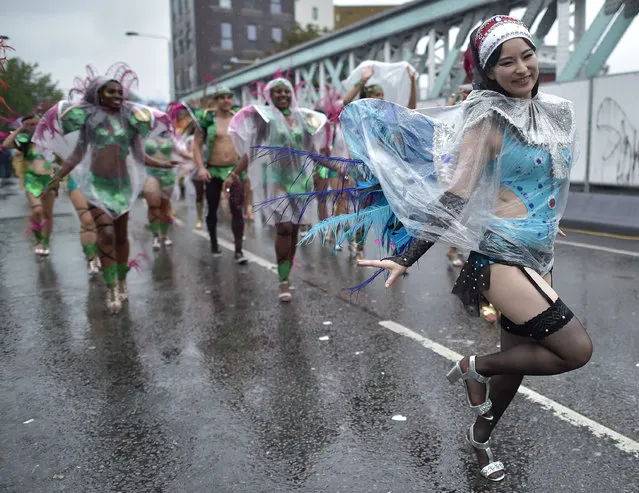
Performers in costume perform in the rain during the parade on the second day of the Notting Hill Carnival in west London on August 31, 2015. Nearly one million people are expected by the organizers Sunday and Monday in the streets of west London's Notting Hill to celebrate Caribbean culture at a carnival considered the largest street demonstration in Europe.  (Photo by Leon Neal/AFP Photo)

Performers in costume perform in the rain during the parade on the second day of the Notting Hill Carnival in west London on August 31, 2015. Nearly one million people are expected by the organizers Sunday and Monday in the streets of west London's Notting Hill to celebrate Caribbean culture at a carnival considered the largest street demonstration in Europe. The Notting Hill Carnival started in the 1960s, when the area had a large population of immigrants recently arrived from the Caribbean and was notorious for its slums – a far cry from today when it is one of London's most expensive places to live. (Photo by Leon Neal/AFP Photo)
Details
01 Sep 2015 15:17:00
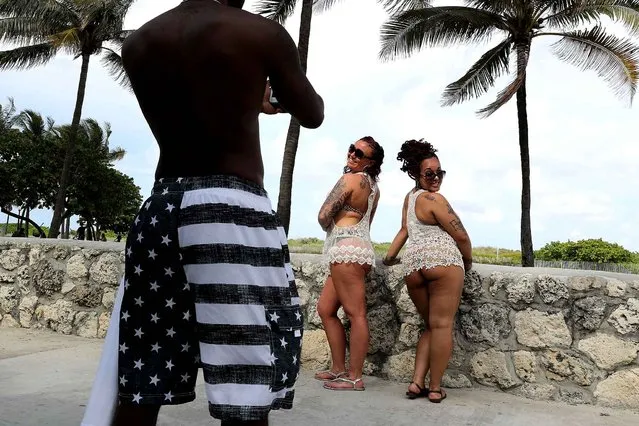
Juanita Robinson (L) from Ohio and Trenaya Blackburn pose as Quan White from Michigan takes their picture as they vacation on South Beach on May 16, 2016 in Miami Beach, Florida. The Florida government announced it broke a tourism record in the first quarter of this year, attracting 29.8 million tourists, an increase of 4.8 percent over the same time frame in 2015. (Photo by Joe Raedle/AFP Photo)

Juanita Robinson (L) from Ohio and Trenaya Blackburn pose as Quan White from Michigan takes their picture as they vacation on South Beach on May 16, 2016 in Miami Beach, Florida. The Florida government announced it broke a tourism record in the first quarter of this year, attracting 29.8 million tourists, an increase of 4.8 percent over the same time frame in 2015. (Photo by Joe Raedle/AFP Photo)
Details
05 Jun 2016 12:45:00