Loading...
Done
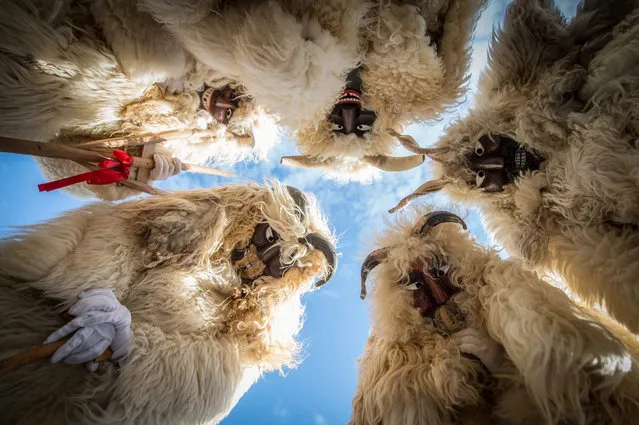
Participants wearing costumes and masks take part in the first day of the traditional carnival parade in Mohacs, Hungary, 23 February 2017. The carnival parade of so-called busos, dressed in costumes with frightening wooden masks and using various noisy wooden rattlers, is traditionally held on the seventh weekend before Easter to drive away winter. (Photo by Sandor Ujvari/EPA)

Participants wearing costumes and masks take part in the first day of the traditional carnival parade in Mohacs, Hungary, 23 February 2017. The carnival parade of so-called busos, dressed in costumes with frightening wooden masks and using various noisy wooden rattlers, is traditionally held on the seventh weekend before Easter to drive away winter. (Photo by Sandor Ujvari/EPA)
Details
25 Feb 2017 10:35:00
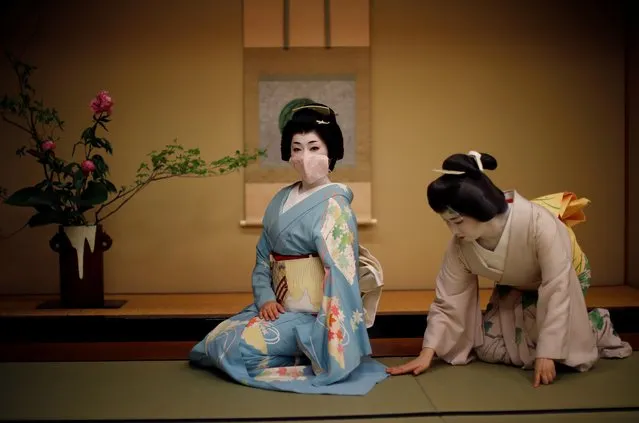
Mayu adjusts Koiku’s kimono, as Koiku wears a protective face mask while posing for a photograph, before they work at a party where they will entertain with other geisha at Japanese luxury restaurant Asada in Tokyo, Japan, June 23, 2020. The coronavirus pandemic has made Tokyo's geisha fear for their centuries-old profession as never before. Though the number of geisha - famed for their witty conversation, beauty and skill at traditional arts - has been falling for years, they were without work for months due to Japan's state of emergency and now operate under awkward social distancing rules. Engagements are down 95 percent, and come with new rules: no pouring drinks for customers or touching them even to shake hands, and sitting 2 meters apart. Masks are hard to wear with their elaborate wigs, so they mostly don't. “I was just full of anxiety”, said Mayu, 47. “I went through my photos, sorted my kimonos ... The thought of a second wave is terrifying”. (Photo by Kim Kyung-Hoon/Reuters)

Mayu adjusts Koiku’s kimono, as Koiku wears a protective face mask while posing for a photograph, before they work at a party where they will entertain with other geisha at Japanese luxury restaurant Asada in Tokyo, Japan, June 23, 2020. (Photo by Kim Kyung-Hoon/Reuters)
Details
23 Jul 2020 00:03:00
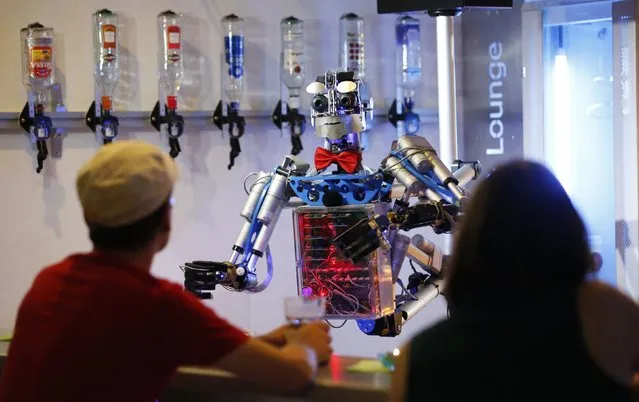
Humanoid robot bartender “Carl” interacts with guests at the Robots Bar and Lounge in the eastern German town of Ilmenau, July 26, 2013. “Carl”, developed and built by mechatronics engineer Ben Schaefer who runs a company for humanoid robots, prepares spirits for the mixing of cocktails and is able to interact with customers in small conversations. (Photo by Fabrizio Bensch/Reuters)

Humanoid robot bartender “Carl” interacts with guests at the Robots Bar and Lounge in the eastern German town of Ilmenau, July 26, 2013. “Carl”, developed and built by mechatronics engineer Ben Schaefer who runs a company for humanoid robots, prepares spirits for the mixing of cocktails and is able to interact with customers in small conversations. (Photo by Fabrizio Bensch/Reuters)
Details
22 Oct 2013 09:04:00
Photographers: Joel Robison Part3

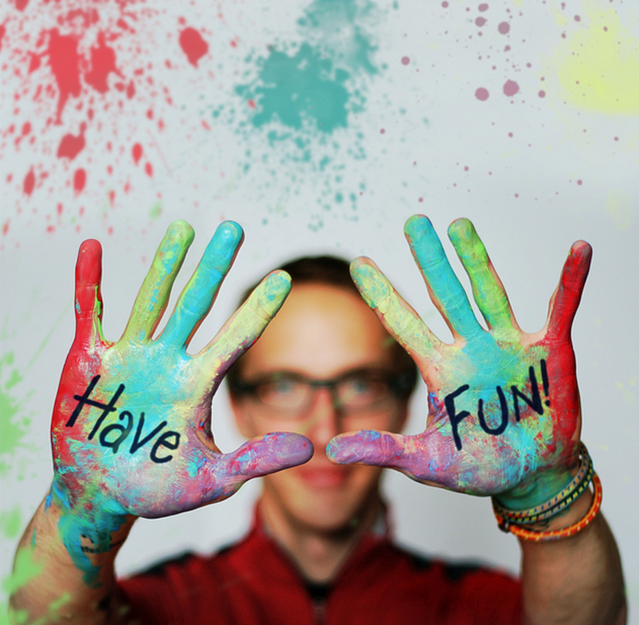
“Hi! I'm Joel, I live in a valley in British Columbia's Rocky Mountains, as close to the forest as I could possibly be! I love to run, bike, jump, eat and create and I hope that you enjoy my work as much as I enjoy creating it!” – Joel Robison. (Photo by: Joel Robison; Source: Flickr)


See Also:Photographers: Joel Robison Part1
Details
02 Nov 2013 09:03:00
241543903 Heads In Freezer Part 2

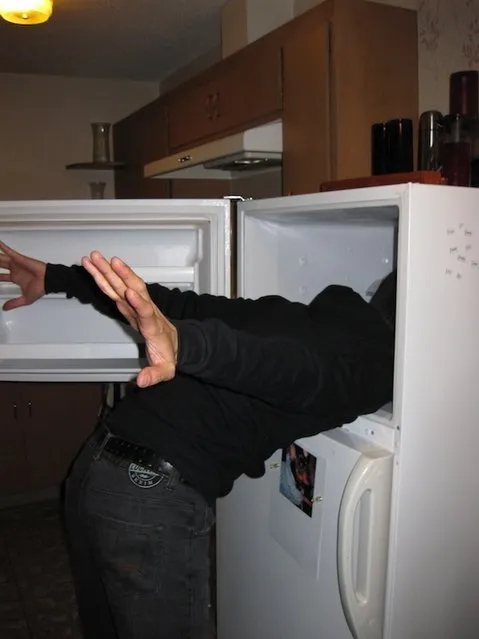
241543903 (a.k.a “Heads in Freezers”) is a numerical keyword associated with a photo meme that involves people taking pictures with their heads in the freezer & sharing them online. By tagging a series of image files with a cryptic number, a high level of search engine optimization can be easily achieved. As a result, typing “241543903” into image search engines like Google Images successfully yields pages after pages of pictures showing people’s heads in freezers.
In 2009, David Horvitz started the “Heads in Freezers” meme. Participants took photos of their heads in freezers, tagged them with “241543903” and uploaded them to social media sites like Tumblr.
Details
12 Mar 2014 10:32:00
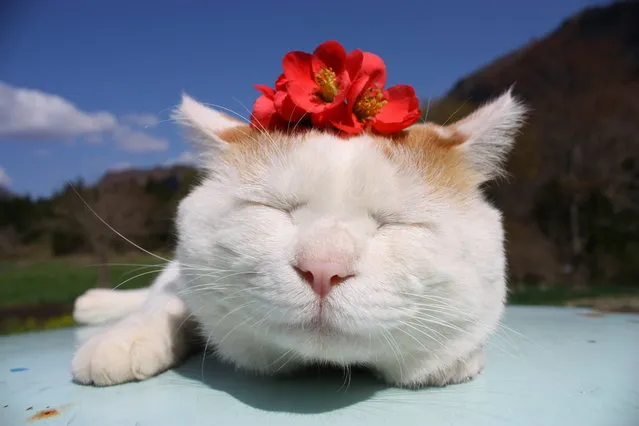
Shironeko, The Relaxed Cat Part 2

Shironeko, also known as “Basket Cat”, is a Turkish van cat called “Shiro”, which is best known for his extremely relaxed demeanor and ability to balance things on his head, similar to Oolong the Pancake Bunny. The cat has been given several nicknames by its fans, most notably “Basket Cat” and “Zen Cat.”
Details
09 Apr 2014 08:55:00


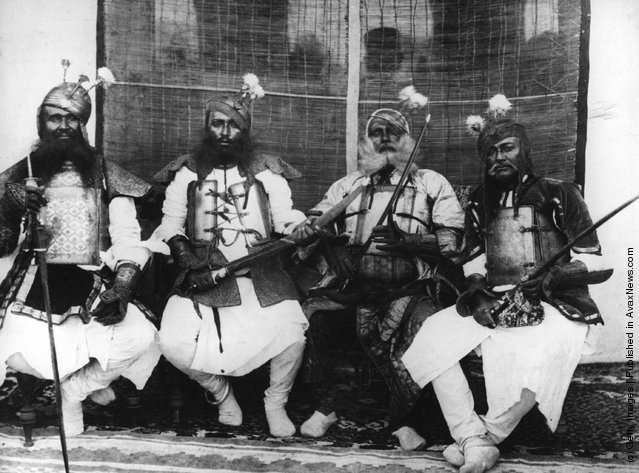
The attendants of the Sumptha Raja, Agra Durbar. (Photo by Hulton Archive/Getty Images). 1873
Details
21 Jul 2011 13:41:00
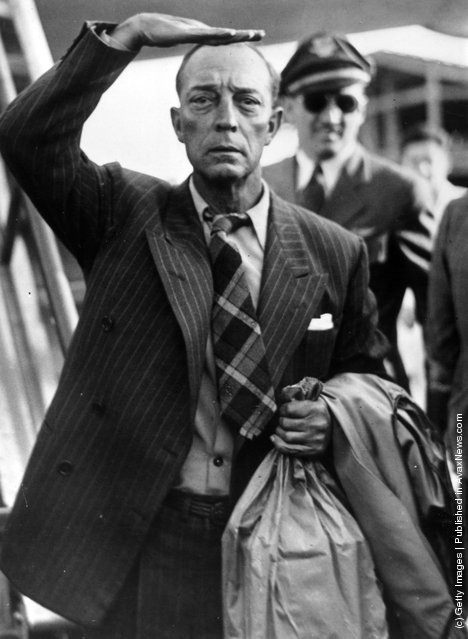
1947: Clutching a large paper bag and shading his eyes as he peers ahead, comic actor of the silent screen, Buster Keaton (1885 - 1966) arriving at Paris airport

Clutching a large paper bag and shading his eyes as he peers ahead, comic actor of the silent screen, Buster Keaton (1885–1966) arriving at Paris airport. (Photo by Keystone/Getty Images). 1st August 1947
Details
17 Feb 2012 12:05:00