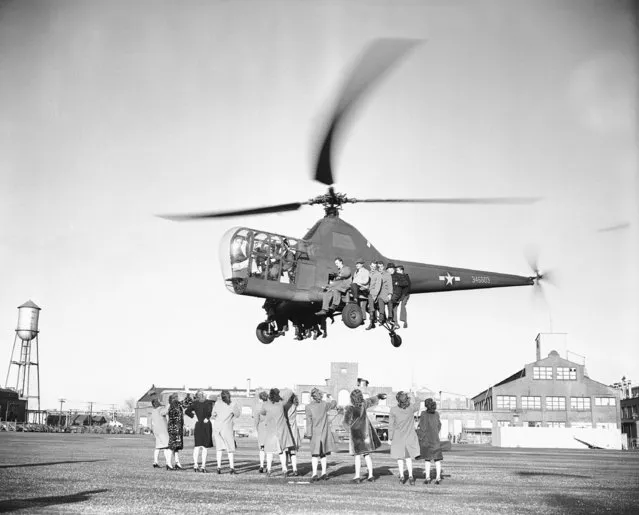
An Army Sikorsky R-5 helicopter, undergoing record trials, demonstrates its lifting power by carrying 17 persons and pilot aloft as female onlookers wave in Bridgeport, Conn., January 10, 1946. During the tests records were claimed for altitude speed and both altitude and speed with payload. (Photo by Anthony Camerano/AP Photo)
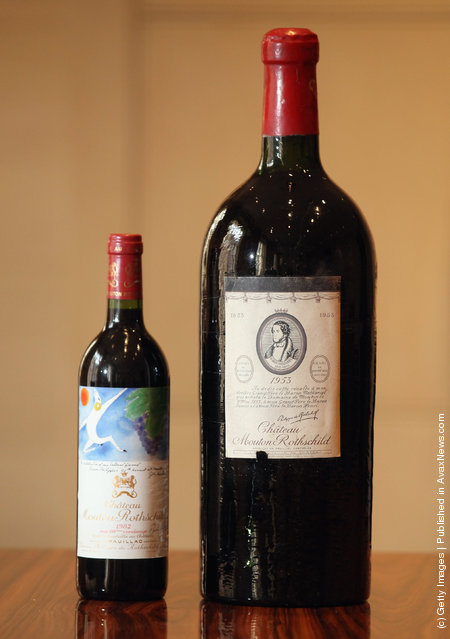
A rare Jeroboam of Chateau Mouton Rothschild from 1953 (R) and a bottle of Chateau Mouton Rothschild from 1982 on January 17, 2012 in London, England. (Photo by Oli Scarff/Getty Images)
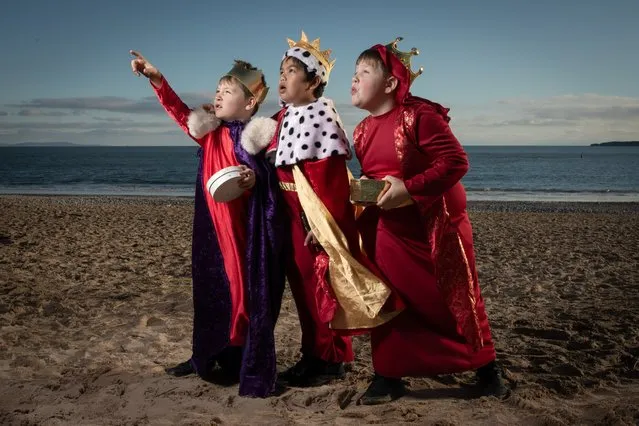
Pupils from St Teilo’s Catholic Primary School in Tenby, South Wales, perform a scene from their Nativity play in the second decade of December 2023. The three kings, played by Jack Rigby, Santos Basilnomo and Tommy Leggett, pretended to follow a star on South Beach, a stone’s throw from the school. (Photo by Joann Randles/Cover Images)
College students play with coloured powder to celebrate the festival of Holi, near Jantar Mantar in New Delhi on March 7, 2023 (Photo by Press Trust of India)
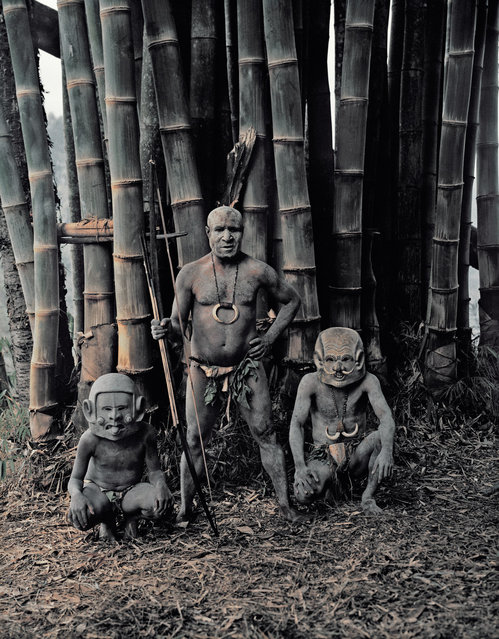
“Asaro from the Eastern Highlands”. The mudmen could not cover their faces with mud because the people of Papua New Guinea thought that the mud from the Asaro river was poisonous. So instead of covering their faces with this alleged poison, they made masks from pebbles that they heated and water from the waterfall, with unusual designs such as long or very short ears either going down to the chin or sticking up at the top, long joined eyebrows attached to the top of the ears, horns and sideways mouths. (Photo and caption by Jimmy Nelson)
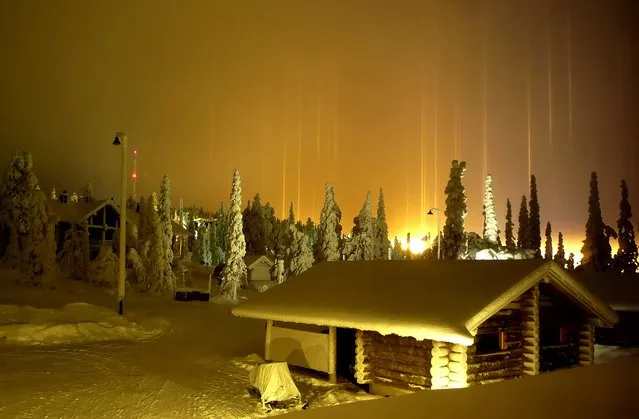
A light pillar is a visual phenomenon created by the reflection of light from ice crystals with near horizontal parallel planar surfaces. The light can come from the Sun (usually at or low to the horizon) in which case the phenomenon is called a sun pillar or solar pillar. It can also come from the Moon or from terrestrial sources such as streetlights.