Loading...
Done


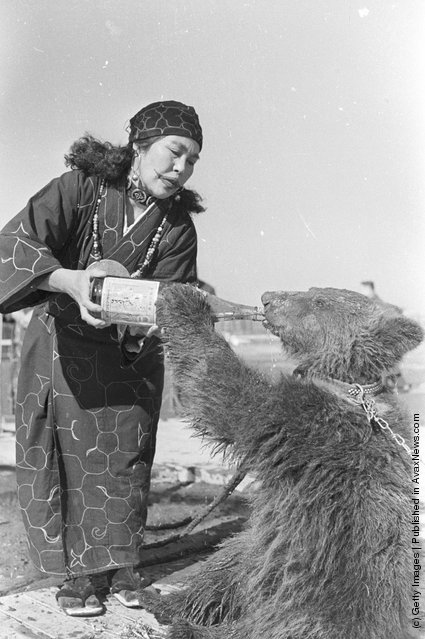
“The Ainu (アイヌ?), also called Aynu, Aino (アイノ), and in historical texts Ezo (蝦夷), are indigenous people or groups in Japan and Russia. Historically they spoke the Ainu language and related varieties and lived in Hokkaidō, the Kuril Islands, and much of Sakhalin. Most of those who identify themselves as Ainu still live in this same region, though the exact number of living Ainu is unknown. This is due to ethnic issues in Japan resulting in those with Ainu backgrounds hiding their identities and confusion over mixed heritages. In Japan, because of intermarriage over many years with Japanese, the concept of a 'pure Ainu' ethnic group is no longer feasible. Official estimates of the population are of around 25,000, while the unofficial number is upwards of 200,000 people”. – Wkipedia

Photo: A captive bear drinking from a large bottle held by an Ainu tribeswoman. (Photo by Evans/Three Lions/Getty Images). Circa 1955
Details
24 Mar 2011 14:01:00
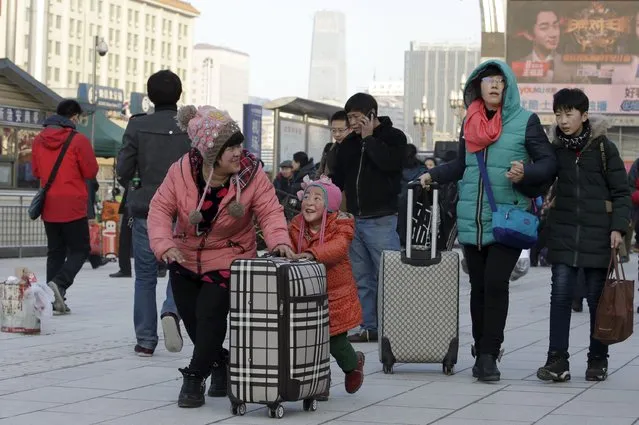
Ma Jiaqi, 5, and her mother arrive at Beijing Railway Station for their train to Changchun of Jilin province, in Beijing, China, January 25, 2016. (Photo by Jason Lee/Reuters)

Ma Jiaqi, 5, and her mother arrive at Beijing Railway Station for their train to Changchun of Jilin province, in Beijing, China, January 25, 2016. According to traffic police, over 2.9 billion trips will be made around China during the 40-day Spring Festival travel rush, which started on January 24. (Photo by Jason Lee/Reuters)
Details
26 Jan 2016 12:27:00
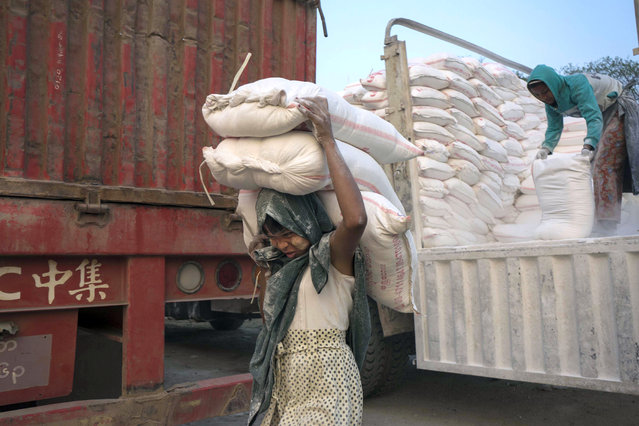
A 14 year-old Myanmar girl carries three bags of powdered-limestone to load in to a boat on the bank of Ayeyarwaddy River, on International Women's Day in Mandalay, Myanmar, Tuesday, March 8, 2016. Migrant workers living along Ayeyarwaddy riverbank earn bout 5000 Kyats (US Dollar 4) a day for loading and unloading goods. (Photro by Hkun Lat/AP Photo)

A 14 year-old Myanmar girl carries three bags of powdered-limestone to load in to a boat on the bank of Ayeyarwaddy River, on International Women's Day in Mandalay, Myanmar, Tuesday, March 8, 2016. Migrant workers living along Ayeyarwaddy riverbank earn bout 5000 Kyats (US Dollar 4) a day for loading and unloading goods. (Photro by Hkun Lat/AP Photo)
Details
09 Mar 2016 12:52:00


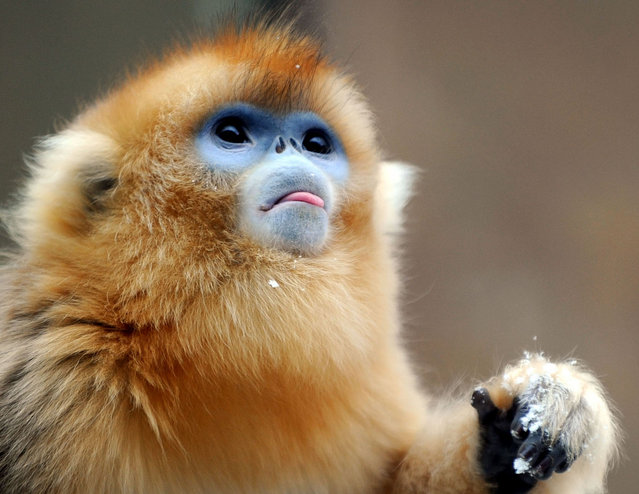
The golden monkey (Cercopithecus kandti) is a species of Old World monkey found in the Virunga volcanic mountains of Central Africa, including four national parks: Mgahinga, in south-west Uganda; Volcanoes, in north-west Rwanda; and Virunga and Kahuzi-Biéga, in the eastern Democratic Republic of Congo. It is restricted to highland forest, especially near bamboo.
Details
07 May 2012 04:39:00
“The Traveler and The Wall”. (Photo and caption by Logan Zillmer)

“The Traveler and The Wall”. (Photo and caption by Logan Zillmer)
Details
26 Nov 2013 09:41:00
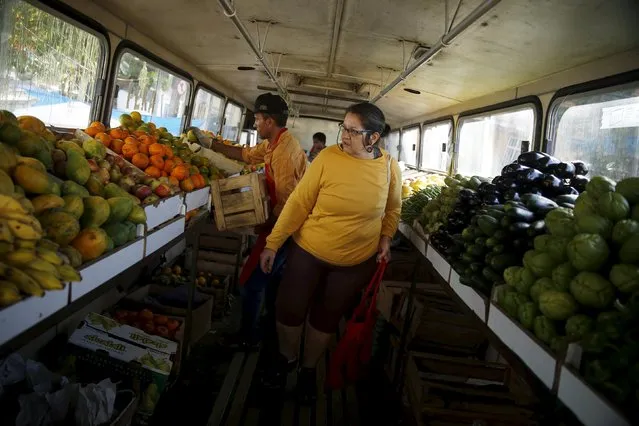
A woman looks for fruits to buy inside a bus called Sacolao in Santa Teresa neighborhood in Rio de Janeiro, Brazil, July 7, 2015. (Photo by Pilar Olivares/Reuters)

A woman looks for fruits to buy inside a bus called Sacolao in Santa Teresa neighborhood in Rio de Janeiro, Brazil, July 7, 2015. The bus, which began operating as a municipal initiative but has been taken over by a private enterprise, arrives every week in some neighborhoods to facilitate families with their grocery shopping and sells food at an affordable price, according to sellers. (Photo by Pilar Olivares/Reuters)
Details
08 Jul 2015 11:52:00
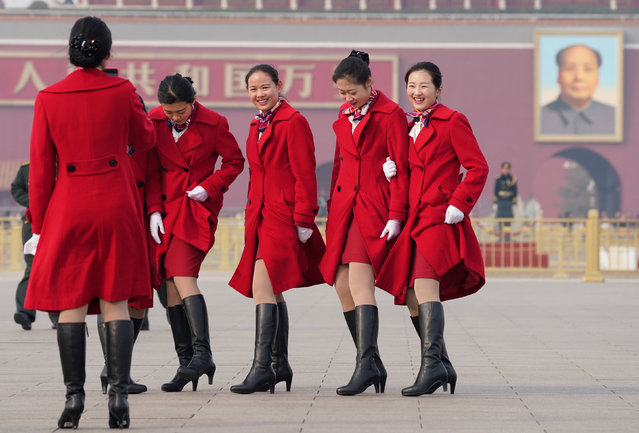
Hotel ushers pose for a photo at Tiananmen Square as delegates attend the second plenary session of the National People's Congress (NPC) in Beijing, China, March 9, 2018. (Photo by Jason Lee/Reuters)

Hotel ushers pose for a photo at Tiananmen Square as delegates attend the second plenary session of the National People's Congress (NPC) in Beijing, China, March 9, 2018. The CPPCC is the top advisory body of the Chinese political system and runs alongside the annual plenary meetings of the 13th National People's Congress (NPC), together known as “Lianghui” or “Two Meetings”. (Photo by Jason Lee/Reuters)
Details
17 Mar 2018 00:03:00
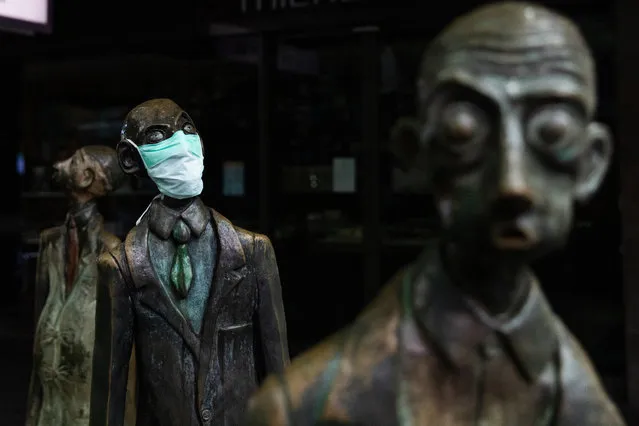
A face mask is placed on one of the 'Three business men who brought lunch' statues on Swanston street on March 29, 2020 in Melbourne, Australia. All international arrivals into Australia from midnight on Saturday will be placed into mandatory quarantine in hotels for 14 days as the Federal Government increases restrictions to stop the spread of COVID-19. All libraries, museums, galleries, beauty salons, tattoo parlours, shopping centre food courts, auctions, open houses, amusement parks, arcades, indoor and outdoor play centres, swimming pools are closed and indoor exercise activities are now banned. This is in addition to the closure of bars, pubs and nightclubs which came into effect on Monday. Restaurants and cafes are restricted to providing takeaway only. Weddings will now be restricted to five people including the couple while funerals are limited to 10 mourners. All Australians are now expected to stay at home except for essential outings such as work, grocery shopping and medical appointments. Exercising outdoors alone is still permitted. Australia now has more than 3,600 confirmed cases of COVID-19 while the death toll now stands at 16. (Photo by Asanka Ratnayake/Getty Images)

A face mask is placed on one of the 'Three business men who brought lunch' statues on Swanston street on March 29, 2020 in Melbourne, Australia. All international arrivals into Australia from midnight on Saturday will be placed into mandatory quarantine in hotels for 14 days as the Federal Government increases restrictions to stop the spread of COVID-19. (Photo by Asanka Ratnayake/Getty Images)
Details
31 Mar 2020 00:07:00