Loading...
Done
Astronomy Photographer Of The Year 2013 Part1

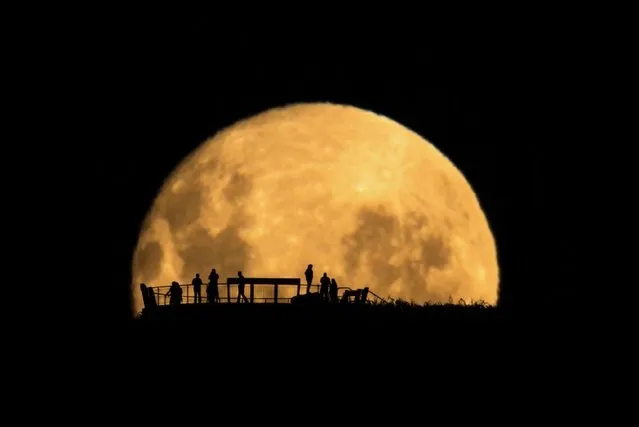
The Royal Observatory just announced its Astronomy Photographer Of The Year 2013 winners. Australian photographer Mark Gee was chosen among a thousand amateur and professional photographers around the globe to win the top title. His work is part of an exhibition of the winning photographers, which opened on Sept. 19 at the Royal Observatory Greenwich. The Royal Observatory shared with us the winners and notable mentions of the competition. Their descriptions of the prizewinners can be found below the images.
Details
04 Oct 2013 11:45:00
Visitors browse in the starry Art Museum. Shanghai, China, May 13, 2020. The exhibition hall uses a large number of mirror devices, combined with the layout of acousto-optic, to create a visual scene and spatial effect. (Photo by Costfoto/Barcroft Media via Getty Images)

Visitors browse in the starry Art Museum. Shanghai, China, May 13, 2020. The exhibition hall uses a large number of mirror devices, combined with the layout of acousto-optic, to create a visual scene and spatial effect. (Photo by Costfoto/Barcroft Media via Getty Images)
Details
21 May 2020 00:05:00
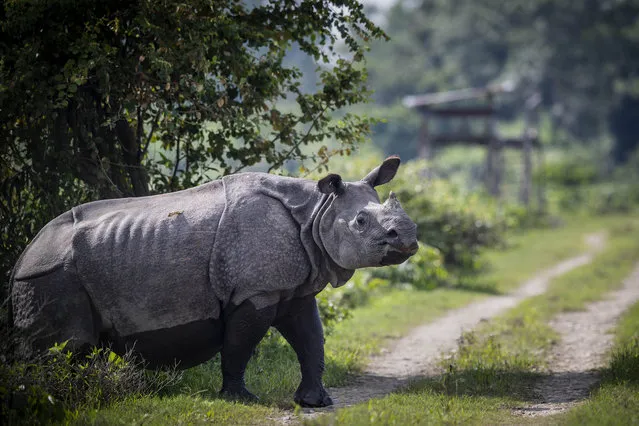
A one-horned rhinoceros crosses a road inside Kaziranga national park on the eve of the World Rhino Day in Gauhati, India, Tuesday, September 21, 2021. Kaziranga is home to nearly 2,500 one-horned rhinos and is the world’s largest habitat for the rare animal. (Photo by Anupam Nath/AP Photo)

A one-horned rhinoceros crosses a road inside Kaziranga national park on the eve of the World Rhino Day in Gauhati, India, Tuesday, September 21, 2021. Kaziranga is home to nearly 2,500 one-horned rhinos and is the world’s largest habitat for the rare animal. (Photo by Anupam Nath/AP Photo)
Details
06 Oct 2021 07:58:00
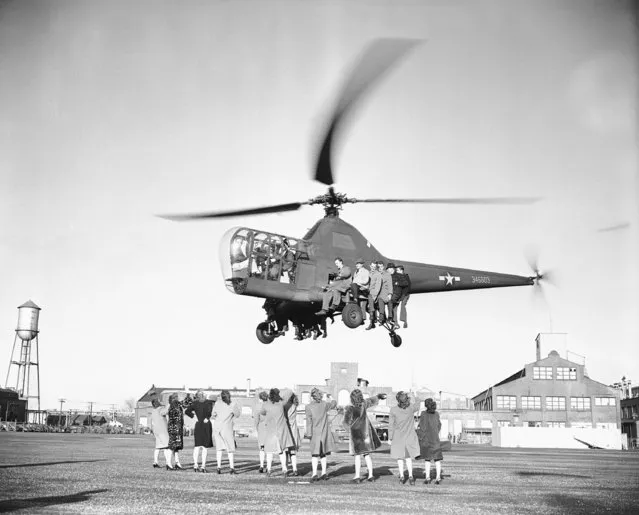
An Army Sikorsky R-5 helicopter, undergoing record trials, demonstrates its lifting power by carrying 17 persons and pilot aloft as female onlookers wave in Bridgeport, Conn., January 10, 1946. During the tests records were claimed for altitude speed and both altitude and speed with payload. (Photo by Anthony Camerano/AP Photo)

An Army Sikorsky R-5 helicopter, undergoing record trials, demonstrates its lifting power by carrying 17 persons and pilot aloft as female onlookers wave in Bridgeport, Conn., January 10, 1946. During the tests records were claimed for altitude speed and both altitude and speed with payload. (Photo by Anthony Camerano/AP Photo)
Details
19 Feb 2018 00:02:00
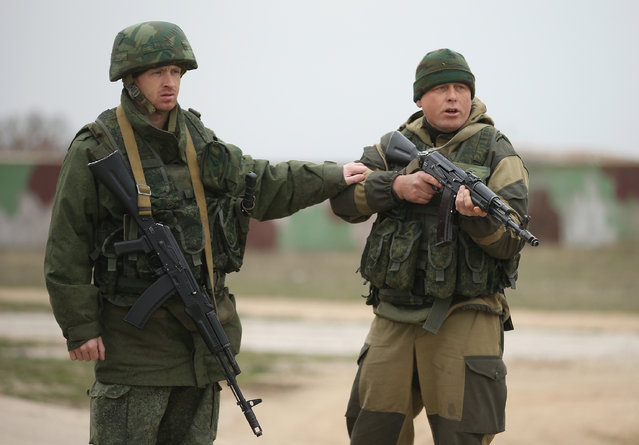
A soldier under Russian command restrains a colleague after he fired his weapon into the air and screamed orders to turn back at an approaching group of over 100 unarmed Ukrainian troops at the Belbek airbase, which the Russian troops are occcupying, in Crimea on March 4, 2014 in Lubimovka, Ukraine. (Photo by Sean Gallup/Getty Images)

A soldier under Russian command restrains a colleague after he fired his weapon into the air and screamed orders to turn back at an approaching group of over 100 unarmed Ukrainian troops at the Belbek airbase, which the Russian troops are occcupying, in Crimea on March 4, 2014 in Lubimovka, Ukraine. (Photo by Sean Gallup/Getty Images)
Details
05 Mar 2014 08:48:00
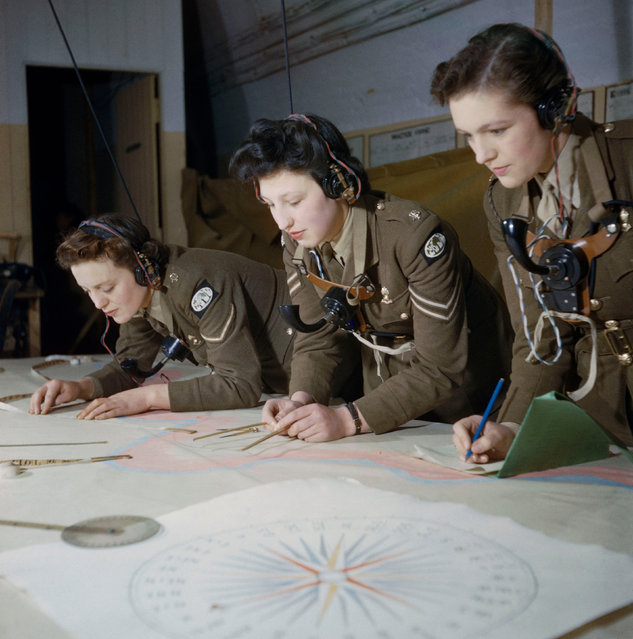
Auxiliary Territorial Service (ATS) plotters at work at Coastal Artillery Headquarters in Dover, December 1942. (Photo by Ted Dearberg/IWM/PA Wire)

Auxiliary Territorial Service (ATS) plotters at work at Coastal Artillery Headquarters in Dover, December 1942. The Auxiliary Territorial Service was the women's branch of the British Army during the Second World War. It was formed on 9 September 1938, initially as a women's voluntary service, and existed until 1 February 1949, when it was merged into the Women's Royal Army Corps. The ATS had its roots in the Women's Auxiliary Army Corps (WAAC), which was formed in 1917 as a voluntary service. During the First World War its members served in a number of jobs including clerks, cooks, telephonists and waitresses. The WAAC was disbanded after four years in 1921. (Photo by Ted Dearberg/IWM/PA Wire)
Details
13 Jul 2017 07:52:00
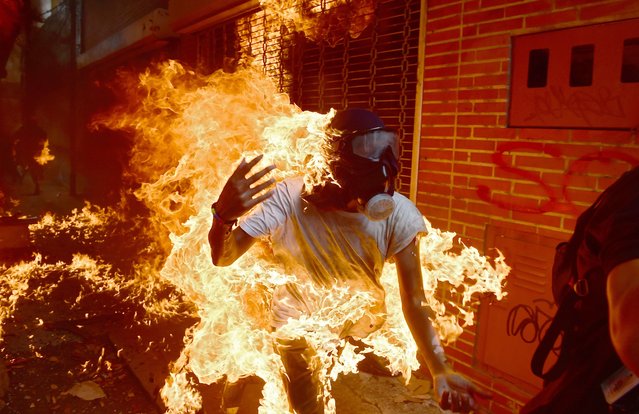
A demonstrator catches fire during clashes with riot police within a protest against Venezuelan President Nicolas Maduro, in Caracas on May 3, 2017. Venezuela's angry opposition rallied Wednesday vowing huge street protests against President Nicolas Maduro's plan to rewrite the constitution and accusing him of dodging elections to cling to power despite deadly unrest. (Photo by Ronaldo Schemidt/AFP Photo)

A demonstrator catches fire during clashes with riot police within a protest against Venezuelan President Nicolas Maduro, in Caracas on May 3, 2017. Venezuela's angry opposition rallied Wednesday vowing huge street protests against President Nicolas Maduro's plan to rewrite the constitution and accusing him of dodging elections to cling to power despite deadly unrest. (Photo by Ronaldo Schemidt/AFP Photo)
Details
20 Jan 2018 07:09:00
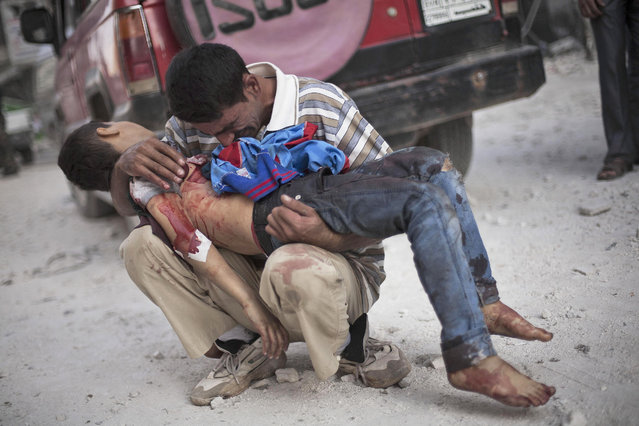
A Syrian man cries while holding the body of his son, killed by the Syrian Army, near Dar El Shifa hospital in Aleppo, Syria, Wednesday, October 3, 2012. (Photo by Manu Brabo/AP Photo)

Manu Brabo was born in Spain in 1981. After studying Photography in The School of Arts and Crafts in Oviedo, he moved to Madrid where he started Journalism in Carlos III University while he was working as a photographer for several humble newspapers and agencies. In 2011, Manu was held captive and then released by by Libyan forces. Brabo, along with fellow AP photographers were awarded the 2013 Pulitzer Prize for Breaking News Photography. Here: a Syrian man cries while holding the body of his son, killed by the Syrian Army, near Dar El Shifa hospital in Aleppo, Syria, Wednesday, October 3, 2012. (Photo by Manu Brabo/AP Photo)
Details
27 Oct 2015 08:04:00