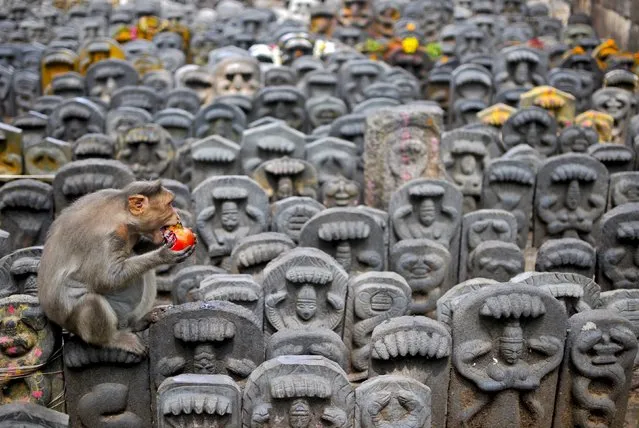
A bonnet macaque sits on consecrated idols of snakes during the Nag Panchami festival inside a temple on the outskirts of Bengaluru, India, August 19, 2015. (Photo by Abhishek N. Chinnappa/Reuters)
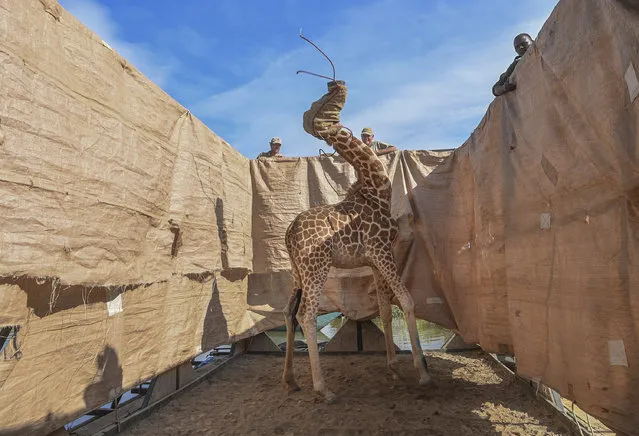
In this image released by World Press Photo, Thursday April 15, 2021, by Ami Vitale for CNN, titled Rescue of Giraffes from Flooding Island, which won the first prize in the Nature Singles category, shows A Rothschild's giraffe (Giraffa camelopardalis rothschildi) is transported to safety in a custom-built barge from a flooded Longicharo Island, Lake Baringo, in western Kenya, on Dec. 3, 2020. (Photo by Ami Vitale for CNN, World Press Photo via AP Photo)
Nature – first prize, stories. Pandemic Pigeons – A Love Story. The photographer’s daughter, Merel, cowers after Dollie flies past and perches on the balcony before entering the house in Vlaardingen in the Netherlands on 6 April 2020. “She’s still frightened when Dollie suddenly lands on the balcony railing. I hide my smile behind the camera, as I try to comfort her by saying they won’t hurt you. “I thought he was going to attack me”, she replies. As the nesting pigeons keep coming back to our place, slowly my girls have started to appreciate them – perhaps not as much as I do, but it’s a start”. (Photo by Jasper Doest/World Press Photo 2021)
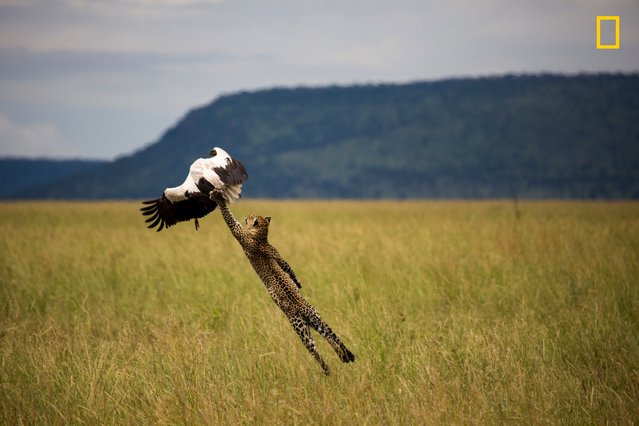
“Leopard Hunting a Stork”. “One-shot capture. I watched the leopard stalking the stork, I only had time to focus at 400mm, no time to change to high speed, I watched the stork, and as soon as it flapped its wings, I shot one shot”. (Photo by Paul Rifkin/National Geographic Travel Photographer of the Year Contest)
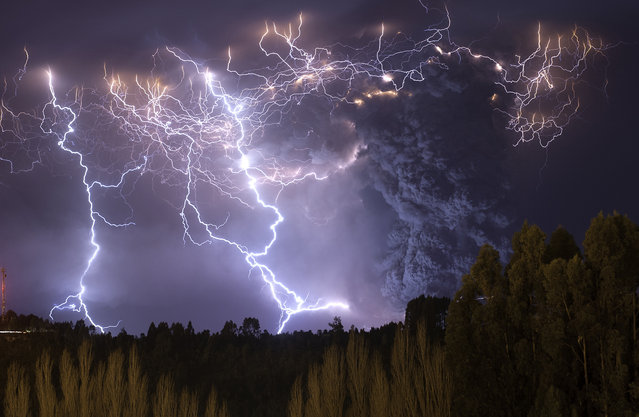
The eruption of Cordon Caulle began on June 4, 2011, located in the Region of Los Rios in Chile. For about 12 months, people and animals became accustomed to living with the daily fall of ash, which also caused problems in the air traffic in South America. The explosions and lightning during first days of the eruption could be seen from hundreds of miles around. This photograph was taken on the second night of eruption from the town of Lago Ranco. (Photo and caption by Francisco Negroni/National Geographic Traveler Photo Contest)
ATTENTION! All pictures are presented in high resolution. To see Hi-Res images – just TWICE click on any picture. In other words, click small picture – opens the BIG picture. Click BIG picture – opens VERY BIG picture.
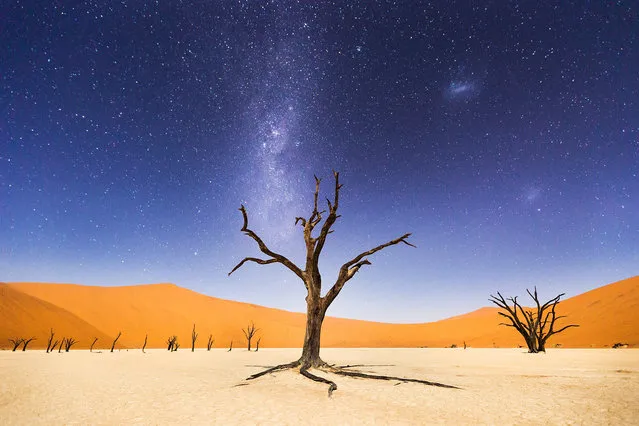
Merit: A Night at Deadvlei. The night before returning to Windhoek, we spent several hours at Deadveli. The moon was bright enough to illuminate the sand dunes in the distance, but the skies were still dark enough to clearly see the milky way and magellanic clouds. Deadveli means “dead marsh. The camelthorn trees are believed to be about 900 years old, but have not decomposed because the environment is so dry. (Photo and caption by Beth McCarley/National Geographic Traveler Photo Contest)
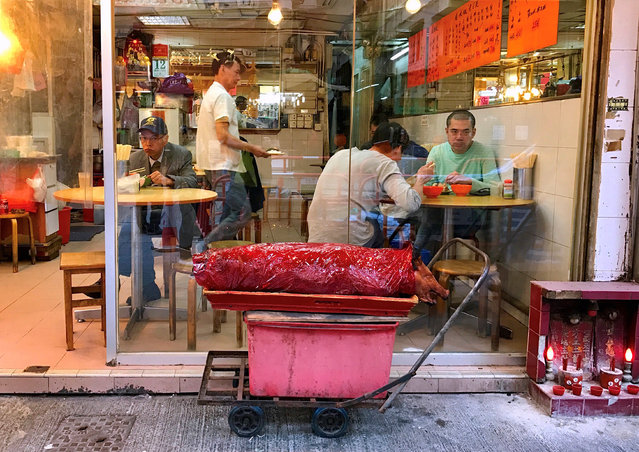
CHINA: Customers eat at a restaurant as a cooked pig sits on a cart on the street outside in Hong Kong, China, December 12, 2016. (Photo by David Gray/Reuters)
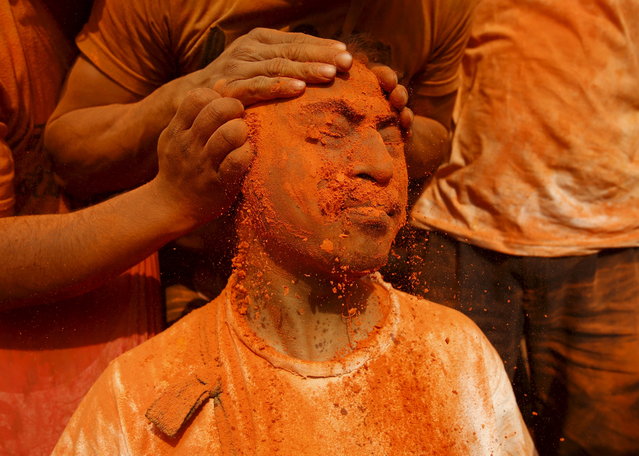
NEPAL: A devotee is smeared with a vermillion powder while celebrating the “Sindoor Jatra” vermillion powder festival at Thimi, in Bhaktapur, Nepal, April 14, 2016. (Photo by Navesh Chitrakar/Reuters)